RIYADH - Saudi academics engaged five British Members of Parliament from the Conservative Party in a lively round of constructive dialogue here Tuesday night at King Abdulaziz Center for National Dialogue.
Saudi women driving, religious freedom, Islamophobia, British Muslims issues, and the role of the National Dialogue Center were the main topics addressed.
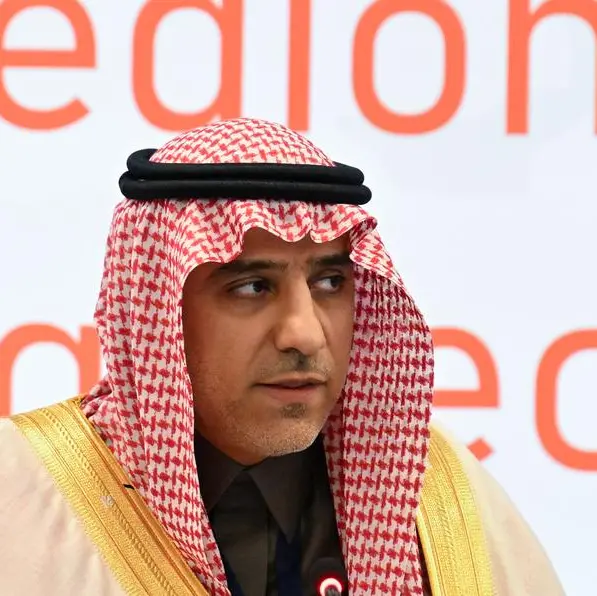
Daniel Kawczynski headed the delegation which consisted of David Lindington, Tobias Ellwood, Keith Simpson, David Wilshire, Chris Doyle and Laura Hutchings.The Saudi delegation was headed by Prince Sultan Bin Fahd, head of the political department at the Saudi Embassy in London, and Faisal Bin Muammar, secretary general at King Abdulaziz Center for National Dialogue.
The British MPs questioned the Saudi panel of the reasoning behind banning women from driving and the absence of churches in the Kingdom.
"It's hard for us to understand why Muslims can build mosques in Britain but Christians living and working in the Kingdom don't have churches to go to," said Wilshire.
Saleh Al-Manie professor of Political Studies, explained that Islam permits only one constitutional religion, which is Islam.
During the discussion session with journalists, it was explained to the MP panel that not having churches in the Kingdom was not a religious issue since Christians and Jews used to practice their religion freely in Madina during the Prophet's days; however, the ban comes from a cultural conditioning.
The Kingdom was created by uniting the Arabs under one religion, Islam, and through this process the whole peninsula, and not only Makkah, came to be the holy land in the heart of Saudis. Therefore, it is like asking Catholics why there isn't a mosque in Vatican City.
Sheikh Abdulrahman Al-Wahiq, professor in Islamic Studies, at Imam Muhammad Bin Saud University explained to the British MPs that the issue of women driving is a social and not a religious one.
"There is a consensus that it is a social issue and that society had stood against it," said Al-Wahiq.
Driving is not the most important issue Saudi women want to address, said Ehsan Bohliqa, member of the Shoura Council. "While some women do want to drive, it is not their priority - there are bigger and more important issues they want to address such as finding jobs and security."
Bohliqa elaborated on the transparent reform process under way in the Kingdom. "There is a famous resolution which we can call the women's resolution," said Bohliqa. 'It is Resolution 120 by the Council of Ministers which has nine items all expanding the roles of women, by allowing women to work, go by themselves to various government agents, and avoiding the need of a power of attorney."
The Saudi panel, discussing the danger of imposing change from outside, stressed that change could only come if it was initiated from within. The British panel agreed, citing Iraq as a good example of the drawback of foreign interference.
However, the British MPs explained how women's issues are of vital importance internationally.
"'Women's issues' is of the most important human rights standard internationally, whether it be a correct measure or not," said Lidington.
"If you look at Zaire, for example, after it solved its women's issues it went very low on the human rights organizations' priority list."
The image of Islam in the United Kingdom and Islamophobia were also discussed extensively.
"There is considerable doubt towards Islam in Britain and in Europe," said Lindington. "There is a question among British of whether Muslims, even those born in Britain, can be loyal to a non-Muslim country."
These doubts rose after the 7/7 attacks in London by homegrown terrorists some years ago.
Since the Muslim world looks up to the Kingdom, statements from Saudi Ministers and especially King Abdullah, Custodian of the two Holy Mosques, are highly regarded by British Muslims, said Lindington.
King Abdullah, during his visit to Britain last year, had said that faith in Islam is by obeying the law of the land you live in. "Such statements played heavily on British Muslims," said Lindington.
On the other hand, statements such as those made by the Church of England's highest-ranking cleric on the "unavoidable" adoption of some parts of Shariah law alongside Britain's legal system, did damage to British Muslims, said the British parliamentarians.
"His remarks made it more difficult for British Muslims," said Simpson.
Muammar explained that the National Dialogue Center has already started a dialogue program between different faiths, starting with a visit to the Vatican.
Muammar explained that the role of the National Dialogue center - and its most important achievement - was to bring people together who would normally not interact with each other.
It was pointed out that during one meeting in Makkah, the religious leaders from different sects did not interact with each other on the first day but, by the second day, they began talking to each other and interacting, which the public witnessed on TV.
By the end of the session the leaders were hugging each other when they said their good byes.
"The process of the National Dialogue in itself is important, it breaks the ice and brings people together. We are proud of our achievements and we want you to see them," said Bohliqa.
Kawczynski, as chairman of the Anglo-Saudi Friendship Group at the British Parliament, said that he would work hard to make Anglo-Saudi relations even stronger.
Kawczynski said he had always been fascinated by Saudi Arabia. "The four-day trip only reiterated your strong religious economic strength."
Kawczynski had visited over 80 countries but said that he had never had a warm reception as he experienced in the Kingdom. "This is a great credit to you," said Kawczynski.
At the end of the round table discussion Muammar presented a small surprise to the British delegation, a movie of the late Princess Alice, Countess of Athlone, during her visit with the Earl of Athlone to the Kingdom in 1938.
"We discovered a collection of movies of Prince Alice after she passed away in 1981 and we bought them," said Muammar. "It took a long time to restore the movies. King Abdullah had presented the movie to Queen Elizabeth during his visit to London."
During their five-day visit, the MP's met with Custodian of the Two Holy Mosques King Abdullah, Crown Prince Sultan, various ministers, the Shoura Council, the Human Rights Commission and the National Dialogue Center.
By Suzan Zawawi
© The Saudi Gazette 2008