PHOTO
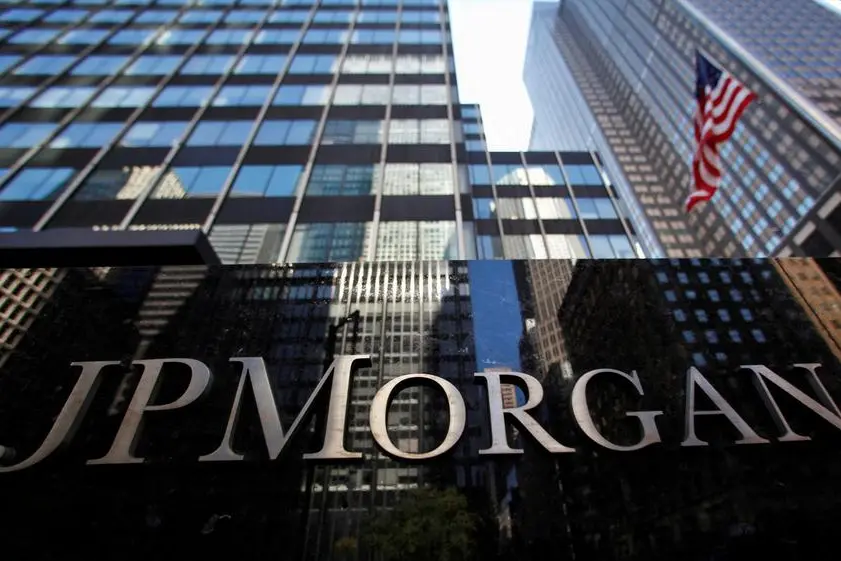
U.S. President Trump filed a $5 billion lawsuit against JPMorgan Chase and its CEO Jamie Dimon on Thursday, accusing them of debanking him by closing several of his accounts to further a political agenda.
The lawsuit, filed in a Florida state court in Miami-Dade County, accused the largest U.S. bank of violating its own policies by singling out Trump to ride the "political tide."
JPMorgan denied that it closes accounts for political or religious reasons.
"While we regret President Trump has sued us, we believe the suit has no merit," it said. "We respect the President's right to sue us and our right to defend ourselves."
Trump has also attacked other lenders including Bank of America with allegations of debanking, and recently stirred up industry opposition by demanding a 10% cap on credit card interest rates. Dimon, who has run JPMorgan for two decades and is one of the most influential figures in corporate America, told the World Economic Forum on Wednesday that capping card rates would curb access to credit for many consumers and amount to an "economic disaster."
At the same time, industry executives have cheered the administration's push for deregulation, which they say could cut red tape, boost profits and spur economic growth.
TRUMP SAYS JPMORGAN MALICIOUSLY CREATED 'BLACKLIST'
Trump accused JPMorgan of violating its principles unilaterally by shutting accounts belonging to him and his hospitality companies.
He also accused Dimon of ordering a malicious "blacklist" to warn other banks about doing business with the Trump Organization and Trump family members, as well as with Trump himself. "Plaintiffs also suffered extensive reputational harm by being forced to reach out to other financial institutions in an effort to move their funds and accounts, making it clear that they had been debanked," Trump added.
JPMorgan said it closes accounts that create legal or regulatory risk for the company. "We regret having to do so but often rules and regulatory expectations lead us to do so," it said.
Shares of JPMorgan closed up 0.5% on Thursday. Capital One Financial, another large bank, has sought to dismiss a similar lawsuit filed last March by several Trump plaintiffs, including the president's son Eric Trump. That lawsuit is still pending. The White House referred a request for comment to Trump's private lawyer, who had no immediate comment.
DEBANKING SCRUTINY INTENSIFIES
Banks have faced growing political pressure in recent years, particularly from conservatives who say lenders have for political reasons discriminated against industries such as firearms and fossil fuels.
That pressure has intensified during Trump's second White House term, with the Republican accusing some banks of refusing to serve him and other conservatives. Banks have denied that allegation.
In December, the Office of the Comptroller of the Currency, a leading bank regulator, said in a report that the nine largest U.S. banks have restricted financial services to certain industries as part of a debanking push.
The regulator did not provide specific examples of wrongdoing but said it had found large banks either refused services to some industries or required higher levels of scrutiny from 2020 to 2023. Those affected included oil and gas companies, cryptocurrency firms, tobacco and e-cigarette manufacturers, and firearm companies, it said.
The regulator found that many banks publicly disclosed restrictive policies, often tied to environmental, social and governance goals.
Many banks have since curtailed such practices and the regulator said it is continuing to review thousands of debanking complaints.
Last year, JPMorgan said it was cooperating with inquiries from government agencies and other entities regarding its policies in light of the Trump administration's push against alleged debanking. U.S. regulators have also examined whether their own supervisory policies discouraged banks from serving certain corporate customers.
Last year, federal bank regulators said they would stop policing banks based on so-called reputational risk, under which supervisors could penalize institutions for activities that were not explicitly illegal but could expose them to negative publicity or costly litigation.
Some banks viewed the reputational risk standard as vague and subjective, giving supervisors wide discretion. The industry has also urged regulators to update anti-money laundering rules, which can force banks to close suspicious accounts without explanation.
(Reporting by Manya Saini in Bengaluru, and Nate Raymond, Jonathan Stempel, David Bario, Pete Schroeder, Mike Scarcella and Lananh Nguyen; Editing by Anil D'Silva, Arun Koyyur and Edmund Klamann)