12 July 2011
MUSCAT: As troubled quarter draws to a close, the Government of Bahrain has announced the initiation of talks with representatives of various opposition groups in order to move the national reconciliation process forward and to ensure that meaningful democratic reforms are agreed and the process of change initiated, according to a MarketView by CB Richard Ellis.
The government's budgets for 2011 and 2012 have also now been agreed and suggest a vigorous programme of investment intended to reinvigorate a difficult domestic economic climate, says the survey.
The study further states that in 2011, government income is forecast to be 2.29 billion Bahraini dinars with expenditure forecast at 3.12 billion dinars -- a deficit of 836 million dinars.
In 2012, government income is forecast to be 2.35 billion dinars with expenditure forecast at 3.07 billion dinars -- a deficit of a further 726 million dinars.
The balance of funds required to support the government's projected spending over the next two years will be met by loans from the Arab Islamic Fund and other financial institutions.
Despite this affirmative action by the Bahrain government, analysts cut growth forecasts for 2011 to 2.7 per cent from 3.4 per cent. The Central Bank of Bahrain placed the annual growth forecast at 3 per cent.
Standard & Poors has publicly stated that it believes that 'Bahrain remains a key financial centre for the region'. "We think Bahrain was seen for a very long time as the centre for wholesale banking in the Gulf, with a good infrastructure, good regulation and track record," said Standard & Poors.
The central bank has issued another eight licences for financial institutions setting up in the kingdom in 2011. To date, there is little evidence that banks or businesses are leaving Bahrain although there is no doubt that international businesses with a presence in the Kingdom are maintaining a 'watching brief' on the situation.
On June 1, the 'State of National Safety' was lifted and the curfew hours which applied to specified areas of Bahrain including the main commercial district of Seef, were removed.
Causeway passengers
The number of visitors crossing the causeway from Saudi Arabia has risen steadily during May and June and the malls are reporting an increase in business. The two Kempinski hotel towers adjoining Bahrain City Centre mall are due to open in September, shortly after the conclusion of Ramadan.
The Diamond Tower and Pearl Tower will offer almost 400 rooms between them and were originally due to open for the Formula One event in March this year but were delayed due to its cancellation.
Despite the best efforts of Dubai and Qatar to attract the banking sector from Bahrain when the recent political turmoil took hold, the industry has proved that it is not merely driven by the availability of new, quality office space.
The fundamentals borne of more than 430 financial institutions, strong track record, well regarded regulatory environment and the presence of the largest market in the Middle East just across the causeway (Saudi Arabia) remain key.
Local reports record that four financial institutions have left Bahrain in 2011, although it seems two of these had long-planned a move away and the other two were merely functions from within banks (that are still in Bahrain), that have moved to Singapore.
Nevertheless, plans to expand or invest in Bahrain have no doubt been affected by the events of the first half of 2011 and the recovery in investment and business development that was forecast to take place through 2011 has been somewhat subdued as a result.
This naturally translates into a reduction in demand for office space, and the requests for new space are once again typically for smaller units.
of 100 to 150 square metres or for serviced offices. Some businesses that find themselves struggling as a result of the global and local economic environment are rationalising their requirements, cutting staff and making cost savings by moving into less expensive, less prestigious accommodation.
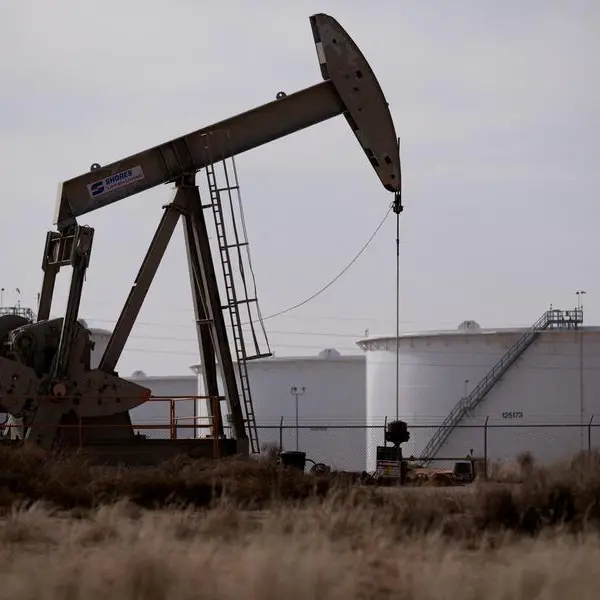
On the upside, the vigorous programme of development taking place to exploit Bahrain's oil and gas resources has generated several notable requirements for substantially sized head office properties for international oil companies.
Unfortunately, the general sluggishness in demand is being met by a significant increase in quality office supply, with absorption of new space likely to be a problem for at least a couple of years. Consequently, there is likely to be some repositioning in the market, some clearance of bottom-end properties ripe for redevelopment and refurbishment programmes.
Landlord incentives have always existed in Bahrain, however the incentives offered have not altered significantly this year.
Larger spatial requirements will inevitably induce longer rent free fit-out periods but the landlord's perceptions of the level to which they need to bow to tenant demands is to date, well out of line with tenant expectations.
Residential sector
Bahrain is a relatively complex market to summarise due to the vast array of housing requirements, by nationality, income, tenure and location all within a relatively small geographic area.
Upper-income compound rentals have been under downward pressure for some time now but prices appear to be levelling out as landlords have reached a point where, in some cases, they would rather leave the properties empty or undertake a refurbishment programme rather then reduce the rent further.
In this sector in particular there has been some 'flight to quality', although most commonly this was a 'flight to modernity', that is, newer villas, rather than better or bigger homes. This is borne of the frustration that many tenants experience with lack of maintenance programmes or other necessary expenditure by landlords.
Middle income apartment areas such as Juffair have also experienced a sharp fall in rental rates but there has been very little movement at the bottom end of the apartment rental market in areas such as central Manama, which is largely dominated by the Asian expatriate community.
Bahrainis tend to prefer to buy rather than rent and owning their own villa remains the prime ambition of most of the indigenous population. Where renting is seen as expedient in the short term, this usually takes place in the form of apartment rental in and around semi-rural villages.
The dynamics of this type of accommodation have changed little over the past two years as steady development is met by steady demand with no significant mismatch either way.
MUSCAT: As troubled quarter draws to a close, the Government of Bahrain has announced the initiation of talks with representatives of various opposition groups in order to move the national reconciliation process forward and to ensure that meaningful democratic reforms are agreed and the process of change initiated, according to a MarketView by CB Richard Ellis.
The government's budgets for 2011 and 2012 have also now been agreed and suggest a vigorous programme of investment intended to reinvigorate a difficult domestic economic climate, says the survey.
The study further states that in 2011, government income is forecast to be 2.29 billion Bahraini dinars with expenditure forecast at 3.12 billion dinars -- a deficit of 836 million dinars.
In 2012, government income is forecast to be 2.35 billion dinars with expenditure forecast at 3.07 billion dinars -- a deficit of a further 726 million dinars.
The balance of funds required to support the government's projected spending over the next two years will be met by loans from the Arab Islamic Fund and other financial institutions.
Despite this affirmative action by the Bahrain government, analysts cut growth forecasts for 2011 to 2.7 per cent from 3.4 per cent. The Central Bank of Bahrain placed the annual growth forecast at 3 per cent.
Standard & Poors has publicly stated that it believes that 'Bahrain remains a key financial centre for the region'. "We think Bahrain was seen for a very long time as the centre for wholesale banking in the Gulf, with a good infrastructure, good regulation and track record," said Standard & Poors.
The central bank has issued another eight licences for financial institutions setting up in the kingdom in 2011. To date, there is little evidence that banks or businesses are leaving Bahrain although there is no doubt that international businesses with a presence in the Kingdom are maintaining a 'watching brief' on the situation.
On June 1, the 'State of National Safety' was lifted and the curfew hours which applied to specified areas of Bahrain including the main commercial district of Seef, were removed.
Causeway passengers
The number of visitors crossing the causeway from Saudi Arabia has risen steadily during May and June and the malls are reporting an increase in business. The two Kempinski hotel towers adjoining Bahrain City Centre mall are due to open in September, shortly after the conclusion of Ramadan.
The Diamond Tower and Pearl Tower will offer almost 400 rooms between them and were originally due to open for the Formula One event in March this year but were delayed due to its cancellation.
Despite the best efforts of Dubai and Qatar to attract the banking sector from Bahrain when the recent political turmoil took hold, the industry has proved that it is not merely driven by the availability of new, quality office space.
The fundamentals borne of more than 430 financial institutions, strong track record, well regarded regulatory environment and the presence of the largest market in the Middle East just across the causeway (Saudi Arabia) remain key.
Local reports record that four financial institutions have left Bahrain in 2011, although it seems two of these had long-planned a move away and the other two were merely functions from within banks (that are still in Bahrain), that have moved to Singapore.
Nevertheless, plans to expand or invest in Bahrain have no doubt been affected by the events of the first half of 2011 and the recovery in investment and business development that was forecast to take place through 2011 has been somewhat subdued as a result.
This naturally translates into a reduction in demand for office space, and the requests for new space are once again typically for smaller units.
of 100 to 150 square metres or for serviced offices. Some businesses that find themselves struggling as a result of the global and local economic environment are rationalising their requirements, cutting staff and making cost savings by moving into less expensive, less prestigious accommodation.
On the upside, the vigorous programme of development taking place to exploit Bahrain's oil and gas resources has generated several notable requirements for substantially sized head office properties for international oil companies.
Unfortunately, the general sluggishness in demand is being met by a significant increase in quality office supply, with absorption of new space likely to be a problem for at least a couple of years. Consequently, there is likely to be some repositioning in the market, some clearance of bottom-end properties ripe for redevelopment and refurbishment programmes.
Landlord incentives have always existed in Bahrain, however the incentives offered have not altered significantly this year.
Larger spatial requirements will inevitably induce longer rent free fit-out periods but the landlord's perceptions of the level to which they need to bow to tenant demands is to date, well out of line with tenant expectations.
Residential sector
Bahrain is a relatively complex market to summarise due to the vast array of housing requirements, by nationality, income, tenure and location all within a relatively small geographic area.
Upper-income compound rentals have been under downward pressure for some time now but prices appear to be levelling out as landlords have reached a point where, in some cases, they would rather leave the properties empty or undertake a refurbishment programme rather then reduce the rent further.
In this sector in particular there has been some 'flight to quality', although most commonly this was a 'flight to modernity', that is, newer villas, rather than better or bigger homes. This is borne of the frustration that many tenants experience with lack of maintenance programmes or other necessary expenditure by landlords.
Middle income apartment areas such as Juffair have also experienced a sharp fall in rental rates but there has been very little movement at the bottom end of the apartment rental market in areas such as central Manama, which is largely dominated by the Asian expatriate community.
Bahrainis tend to prefer to buy rather than rent and owning their own villa remains the prime ambition of most of the indigenous population. Where renting is seen as expedient in the short term, this usually takes place in the form of apartment rental in and around semi-rural villages.
The dynamics of this type of accommodation have changed little over the past two years as steady development is met by steady demand with no significant mismatch either way.
© Times of Oman 2011