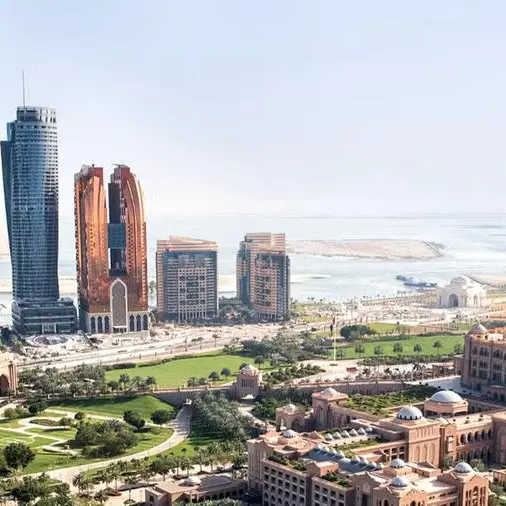
The UAE is now one of the biggest producers of desalinated water in the world to cater for a growing population, reports Nichola Jones. It’s a process that needs refining if the environment is to be protected
Without rivers and significant rainfall, the Gulf has been forced to find other methods of producing the billions of gallons of water it takes to support its growing population and with groundwater supplies estimated to dry out in 50 years, all eyes are on desalination.
To highlight the potential water crisis in the Middle East and beyond, hundreds of experts from across the globe are descending on Dubai next month as the International Desalin-ation Association (IDA) hosts its conference on The Palm between November 7 to 12.
The UAE is the second biggest producer of desalinated water in the world, pumping out more than 8.4 million cubic metres per day, which equates to more than 13 per cent of the total global desalination capacity.
IDA secretary general, Patricia Burke, said: “Water is the lifeblood of our planet. Without access to clean water, people cannot enjoy healthy, productive lives. Communities cannot thrive, and business cannot grow. Today, desalination is being recognised throughout the world as a vital aspect of helping the world’s population meet its growing thirst for fresh water.”
But the five-day event will also look to the future and give governments and companies a chance to share skills and experience on how desalination plants can develop to best quench an increasing international thirst. Burke said: “Advances in desalination technology - in terms of reduced cost and energy requirements, and increased environmental responsibility - have contributed to its being embraced by more countries and in more locations around the world.”
However, desalination in its current form comes with a hidden cost.
The process involves taking sea-water and extracting the salt so the bi-product is a high-salinity liquid.
In the UAE and most other Gulf countries it is dumped back into the sea which can be damaging to the marine life and could have have a long term effect on ecology.
Sarfraz Dairkee is a sustainable development engineer and founder member of the Emirates Green Building Council.
He says refining techniques would cost money but it is a cheaper price to pay than the harm that could ultimately be done to the environment. He said: “The concentrate produced has a very high salt level which is bad for marine life and it is pumped out at a higher temperature which is also an environmental problem.”
One of the solutions is to reduce the waste liquid down until it becomes a solid - the same substance as table salt. However the current economic crisis is likely to prevent the UAE introducing this in the near future.
Dairkee said: “It costs more to do this and I’m afraid the current market economy will not allow it.
“But eventually the tables will turn and the cost to the environment will be much higher but by then it will be too late.”
Desalination facts
There are two main forms of desalination - thermal and osmotic. Both types are used in the UAE.
In osmotic desalination, seawater is passed through a fine membrane which extracts the salt.
The thermal technique sees seawater heated which allows fresh water to escape as steam. It is then cooled and the condensation collected then produces drinking water.
The water produced in desalination plants is high grade and fit for human consumption but up to 25 per cent is used to flush toilets, irrigate land and for industrial cooling. Environmentalists are calling for this to stop.
Thermal desalination is energy-intense and produces large amounts of carbon dioxide making it damaging to the planet in the long term.
The UAE has 23 sewage and desalination plants producing 8.4million cubic metres of water per day - second only to Saudi Arabia.
GCC countries own more than half of the world’s 11,000 desalination plants.
Think about your footprint
As the UAE’s residents are gulping down more water than ever before, one environmental expert is urging the country to step back and consider its H2O ‘footprint’.
Sustainable development and water resources engineer Sarfraz Dairkee says the concept of carbon footprints has become familiar to most people but the idea that water consumption comes with its own environmental cost is not yet widely recognised.
He said: “I call it Fast Food thinking - people are not concerned about the long term impact of what we are using.”
The water footprint is calculated by the amount of water used to produce, package and transport goods and provide services.
Because of the nature of the UAE’s desert climate, many items we take for granted come at a high cost to the environment.
Before the desert was transformed into an oasis of luxury hotels, swi-mming pools and golf courses, water consumption was about 40 litres per person per day.
Now, it is about 460 litres, which makes it one of the highest in the world and almost three times the European average of 160 litres per person per day.
What’s your step?
The water footprint of some basic goods
One kilogramme of rice = 3,000 litres
Beefburger = 2,400 litres
One litre of milk = 1,000 litres
One kilogramme maize = 900 litres
One kilogramme tomatoes = 40 litres
One cup of coffee = 40 litres
One sheet of A4 paper = 10 litres
© 7Days 2009