It is important that economic diplomacy and private sector FDI are strengthened in order to ensure Japan's prosperity amid an ever-globalising world. During the Prime Minister of Japan, Mr. Shinzo Abe's official visit to Oman in January, he expressed both his desire to diversify and enhance economic cooperation between Japan and Oman in multiple fields, and his hope that more and more Japanese private companies will invest in Oman's infrastructure projects, including water and power production projects and the tourism industry.
The Government of Japan has played an active part in the financing of Oman's high priority projects through the Japan Bank for International Cooperation (JBIC), which has funded and provided loans for a number of infrastructure development projects, including the development and expansion of Sohar Industrial Port, the construction of the Sur-Quriyat road, LNG tankers, the Duqm Port Development project and Phoenix Power Company to finance the Sur IPP project.
Thirteen Japanese companies currently operate in Oman. Six of them are major business houses, and play a central role in Japan-Oman economic cooperation through their participation in wide-ranging economic activities, including general trading, shipping and investment. A leading Japanese engineering company is operating in Oman on a temporary basis for a large scale industrial project in Sohar.
I'm happy to say that the Japanese private sector is showing growing interest in new investment opportunities in Oman, especially the utilities sector. Sojitz Corporation and Shikoku Electric Power Company are involved in the Barka 3 and Sohar 2 Independent Power Projects (IPPs) as part of the multinational consortium that was awarded the BOO (Build, Own and Operate) contract in 2010.
Marubeni and Chubu Electric Power Company were awarded the contract for Sur IPP in 2011, which generates 2000 megawatts of electricity and accounts for roughly 30% of Oman's total electricity capacity, with $1.6 billion of investment. Sumitomo Corporation consortium won the contract of the Al Ghubrah IWP expansion project in 2012, which will significantly contribute to the growing water demand in Muscat. State of the art Japanese reverse osmosis technology will be used in this new plant. Mitsui E&P Middle East (MEPME) is presently investing in upstream projects in Oman.
In recognition of Japan's excellence in engineering technology and world-class work schedule management practice, a number of Japanese companies have been awarded the engineering contracts of major industrial and infrastructure projects, including LNG trains in Sur, a refinery and chemical fertilizer plant in Sohar, and desalination plants in Al Ghubrah and Barka.
One such project is the iron direct reduction plant in Sohar, which was built by a leading Japanese steel company using the most advanced environmental engineering technology. The plant boasts a highly cost-effective and eco-friendly clean production facility. The production of advanced thermal barrier paint developed by a Japanese company was started by an Omani company earlier in 2011. This high-tech insulating paint conserves energy by reducing air conditioning requirements.
Japan entered into a long-term partnership with Oman LNG (OLNG) and Qalhat LNG (QLNG), which have now merged to form Oman LNG, from an early stage of their development. Japan's leading business houses; Mitsubishi, Mitsui and Itochu and Osaka Gas all have shares in Oman LNG. Meanwhile, Mitsui has been operating a successful joint venture project in exploration and production of oil and gas in northern Oman.
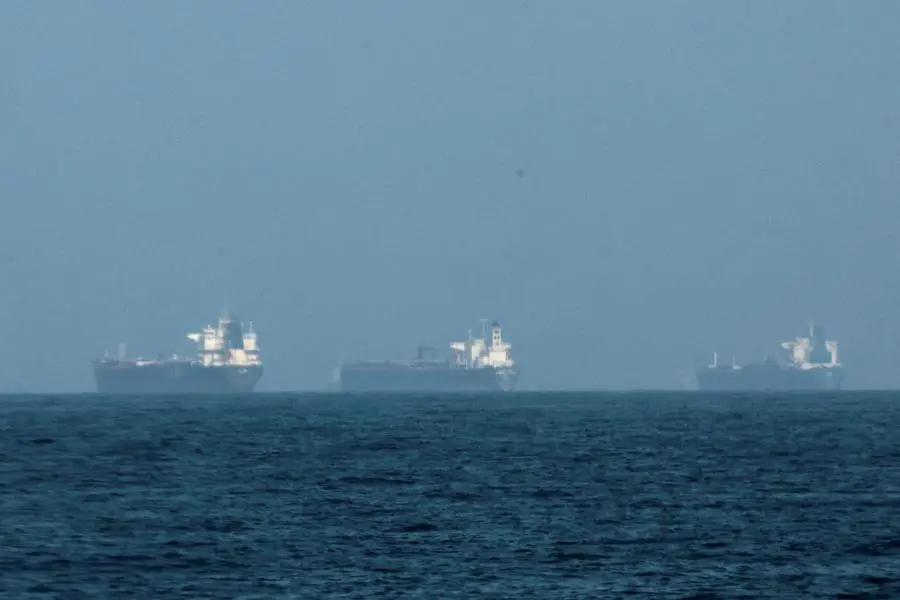
As two historically great maritime nations, Japan and Oman have developed a partnership in the shipping sector. Reputed for the most advanced shipbuilding technologies, Japanese shipyards have been awarded a contract to build a number of vessels for Oman Shipping Company. Five LNG tankers owned by OSC have been built by Japanese shipyards, in addition to a number of tankers which include very large crude carriers (VLCCs). These vessels are already in operation. Japan's cooperation is not limited to ship-building. Several Japanese companies have entered into joint ownership in the fleet of OSC vessels, holding substantial shares in all LNG tankers and others.
Among them, Mitsui OSK Line has been working closely with OSC since its inception, playing an active role in all areas of the shipping industry of Oman, including OSC corporate management, operation of the fleet of vessels, and crew training.
Lastly, Japanese companies are contributing to the Sultanate's human resources development. Mitsubishi, for example, provides an annual postgraduate scholarship programme for Omani nationals.
As Oman's economy continues to develop, I am optimistic that the robust economic relationship that Japan and Oman enjoy will continue to flourish as Prime Minister Abe hopes, particularly in light of the signing of the Bilateral Tax Agreement in January, which will encourage investment, and the substantial agreement reached during Bilateral Investment Agreement negotiations, which Japan hopes will be signed in the near future.
George Hisaeda is ambassador of Japan to the Sultanate of Oman
© Times of Oman 2014