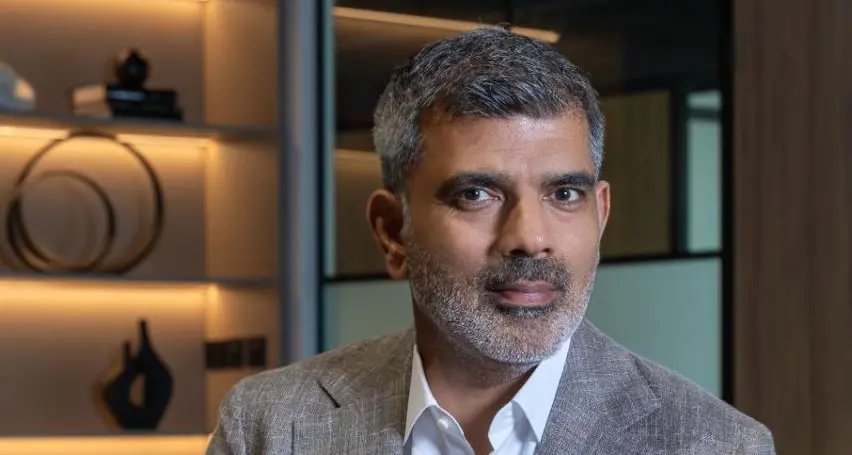
The Union of Arab Banks hopes to establish a fund to finance small and medium enterprises (SMEs) and to develop a unified strategy for the sector, Secretary General Wissam Fattouh told Zawya.
Fattouh also said the Union received approval from Arab leaders at a recent summit in Kuwait to set up a legislative authority, the Arab Banking Commission, with capital of USD 1.2 billion and whose aim is to expand the role of Arab banks internationally.
The Union of Arab Banks, set up in 1974, includes over 360 banks in 20 Arab countries operating under the umbrella of the Arab League.
The consolidated assets of Arab banks reached some USD 3 trillion at the end of 2013, according to Fattouh. Islamic banking accounted for USD 1.3 trillion, or 40%, of total assets.
SME FUND
Fattouh said the Union would push for more financing of SMEs because the sector could play a key role in economic development, youth employment and tackling poverty.
"The amount of funding Arab banks give to SMEs is still very low and doesn't exceed 8% of total loans extended," Fattouh said, citing a study released by the Union in 2011 on 139 banks in 16 countries.
"Therefore we proposed the drafting of a unified Arab strategy to support such projects and we are working with the relevant parties to activate this strategy."
He said the union, in collaboration with the World Bank, was preparing a field-based study on SME financing in the Arab world. The survey is expected to be completed in October 2014 and, depending on the results, a recommendation would be made to establish a regional fund to offer credit lines.
According to a report from the International Finance Corporation, the financing gap in the Middle East SME sector is between USD 110 billion and USD 140 billion in the Middle East. There are between 1.9 million and 2.3 million SMEs in the region, 21% of which have received loans from banks.
BANKING SECTOR GROWTH
Fattouh said the Arab banking sector had realized growth despite political instability in recent years in the region. "The banking sector realized growth of 12% during 2013, and that is three times the average economic growth of 3.4% in the Arab region," he said.
Total assets stood at USD 2.7 trillion by the end of September 2013 and total deposits reached USD 1.7 trillion while loans amounted to USD 1.5 trillion. He estimated assets at USD 3 trillion by end 2013.
The UAB secretary general said that implementation of the U.S. Foreign Account Tax Compliance Act (FATCA), which required foreign financial institutions to report to the Internal Revenue Service (IRS) about their American clients, could cost Arab banks up to USD 500,000 a year.
"FATCA imposes a high cost on banks between USD 200,000 and USD 500,000 per year," he said. "The IRS has already been approached regarding the concern, but it refuses to bear the cost, even though it appears natural that it should assume at least part of it."
ARAB BANKING COMMISSION
During last month's Arab League summit in Kuwait, a proposal to establish the Arab Banking Commission was approved with each of the region's top 22 banks contributing to raising the needed USD 1.2 billion capital.
"The reason the Commission is being launched is that despite the economic and financial weight of the Arab region, it is not adequately represented globally, particularly at the International Monetary Fund, the World Bank and Basel Committee," Fattouh said.
The commission would mainly focus on putting in place legislation specific to the Arab banking sector and garnering international recognition for such legislation, in addition to participating in the drafting of international financial and banking regulations.
© Zawya 2014