PHOTO
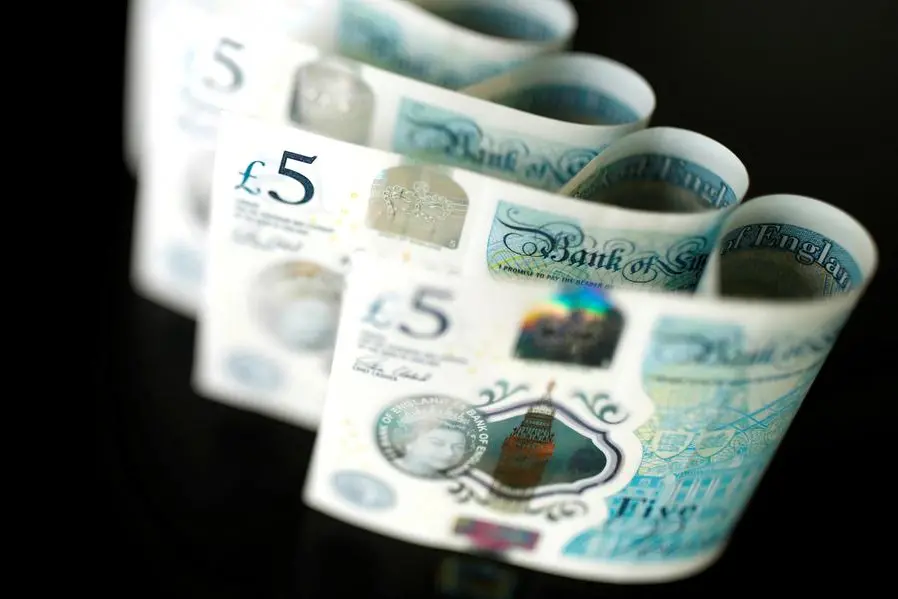
LONDON - The pound headed towards its strongest weekly performance in nearly a month on Friday, taking advantage of a dip in the dollar driven by optimism that a Middle East peace deal may be in the offing.
Sterling offered little reaction to data that showed the British economy may be starting to feel the impact of the Iran war.
The economy contracted by 0.1% in April, its first monthly drop since August, as the war-related cancellation of Formula 1 Grand Prix races and other Gulf sporting events delivered a heavy blow to the British entertainments industry, according to the Office for National Statistics.
"Perhaps the best that can be said of today's figures is that we can 'look through' them in the hopes that the latest Iran deal news proves more durable, suggesting energy costs will ease and growth will recover," Chris Beauchamp, chief market strategist at trading platform IG, said.
Next week could be key in determining the near-term direction of UK markets, including sterling, which on Friday was a touch weaker against the dollar at $1.3403, but still set for a weekly gain of 0.5%, the most in a week since mid-May.
A local election could result in a serious contender for Prime Minister Keir Starmer's job, as the Labour leader deals with near-rebellion within his own ranks and record voter dissatisfaction over his handling of the economy.
The June 18 by-election in the town of Makerfield could pave the way back to Westminster for Greater Manchester Mayor and Labour candidate Andy Burnham, who many in markets see as favouring more expansive fiscal policy than Starmer.
The UK already has very little financial wiggle room and borrowing costs are eye-wateringly high.
The Bank of England meets on June 18 and is widely expected to leave UK rates unchanged, unlike the European Central Bank, which raised euro zone rates by a quarter point on Thursday in a well-telegraphed move.
Data on inflation and consumer spending in the run-up to the decision could set the mood.
Until March, UK consumer price pressures had been the most intense among the Group of Seven richest nations for the better part of four years. In April, U.S. consumer price inflation topped that in Britain, and in May hit a three-year high of 4.3%.
Economists at RBC Capital Markets say they expect UK inflation to have accelerated at a rate of 3% in May from 2.8% in April, as higher fuel prices were offset roughly by lower food prices, meaning service sector inflation was likely to have been the biggest driver of the increase.
(Reporting by Amanda Cooper; Editing by Jan Harvey)