PHOTO
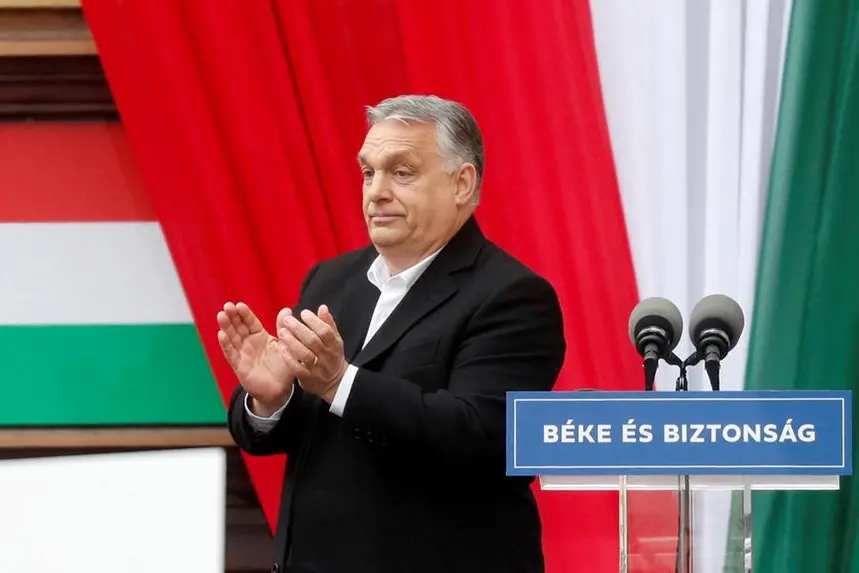
Hungary's Prime Minister Viktor Orban is more concerned about economic growth than reflation risks, which he told public radio on Friday are minimal.
Data last week showed Hungary's inflation, which scaled the European Union's highest levels at 25% a year ago, eased to an annual rate of 5.5% in December, half a percentage point below the median forecast in a Reuters survey.
"In my opinion, the risk of reflation is minimal. The real problem is whether we will be able to restore economic growth," Orban said.
Economists polled by Reuters expect economic growth to rebound to just 2.8% in 2024 following recession last year, well below the government's 3.6% forecast, which has already been downgraded from a 4% projection at the end of last year.
Rampant inflation in 2023 slammed the brakes on consumer spending and reduced consumption-related tax revenues, while it strained the government budget by pushing up expenditures linked to price growth, such as pensions and debt servicing.
Earlier this week, Hungary's central bank flagged a possible acceleration in the pace of rate cuts after lower-than-expected December inflation data, sending the forint to its lowest levels for the year.
"The mutual goal of the central bank and the government, ... should be to calmly, at the right pace, help entrepreneurs to invest ... so that the economy's growth could return to a higher level," said Orban.
The central bank has slashed borrowing costs by a combined 725 basis points since May to 10.75%, but faced with a sagging economy and a heavy 2024 election calendar, Orban's government has pressured the bank for even sharper cuts. (Reporting by Boldizsar Gyori and Gergely Szakacs: Editing by Neil Fullick)