PHOTO
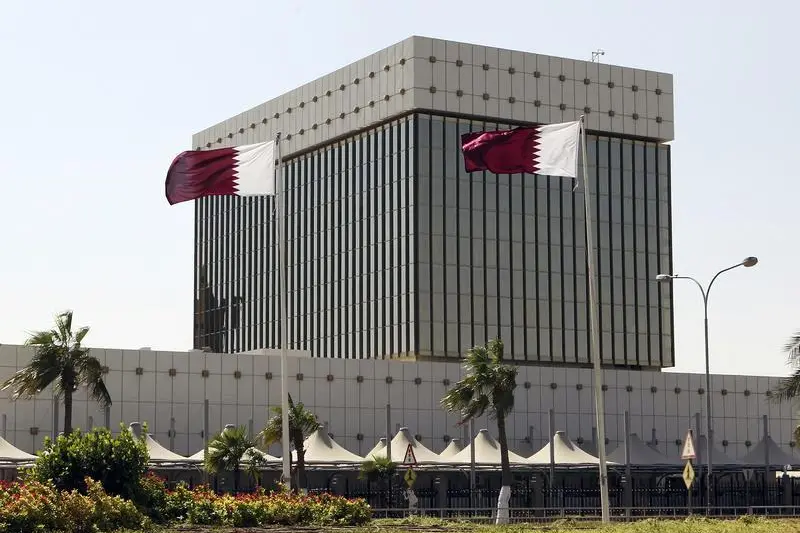
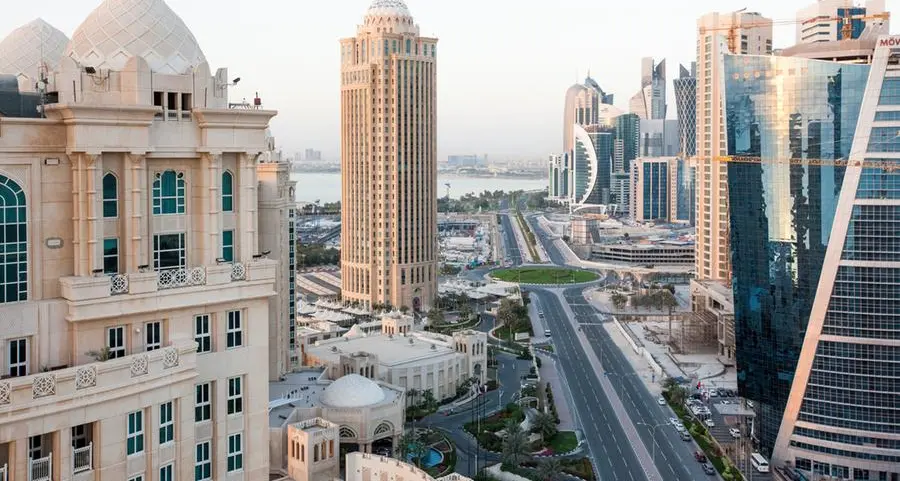
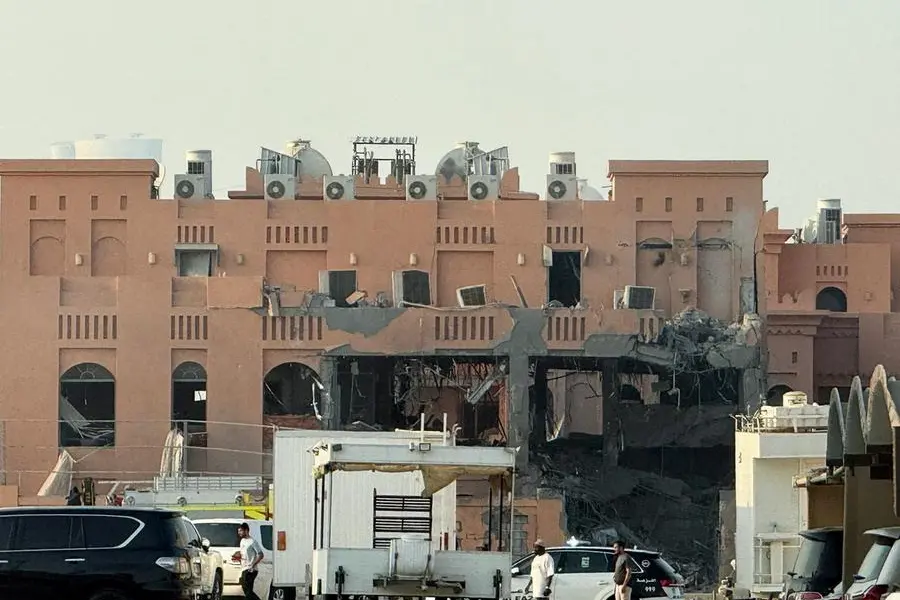
On September 9, a missile slammed into Doha. Israel claimed it was targeting Hamas figures. But the implications go far beyond a single strike. For the first time in decades, a Gulf capital — long considered politically sacrosanct even amid wars in Gaza, Lebanon, Syria, and Yemen — was pulled directly into the conflict.
The shock was immediate: an Arab-Islamic emergency summit convened, the UN scheduled a special debate, and markets began to price in new risks.
History turns on moments when the rules change. The Israeli strike in Doha was such a moment. It shattered the tacit understanding that Gulf capitals are off-limits, redrawing the map of vulnerability in the Middle East. What happens next will reverberate not only through the Gulf, but across energy markets, global trade and the fragile web of normalisation efforts linking Israel and its neighbours.
The Doha strike is more than a tactical episode in Israel’s long war with Hamas. It is a strategic inflexion point. It forces us to ask: what does this mean for the Gulf, for Oman, and for the wider world? Who stands to gain, and who stands to lose? And how should policymakers chart a course through what looks like an era of mounting instability?
The strike represents a new phase in the Middle Eastern conflict. Until now, Gulf capitals were treated as off-limits, even when regional wars escalated. By hitting Doha, Israel has expanded the battlefield. This shift forces GCC states to rethink the vulnerability of their own diplomatic, financial, and aviation hubs. The cost of protecting these hubs against drones, missiles, and cyberattacks — will only grow.
The attack also undermines one of the region’s most fragile political projects: normalisation with Israel. While diplomatic channels may remain open, the political space for economic, technological, and security cooperation has narrowed. Quiet partnerships — already sensitive — have become politically costlier to sustain.
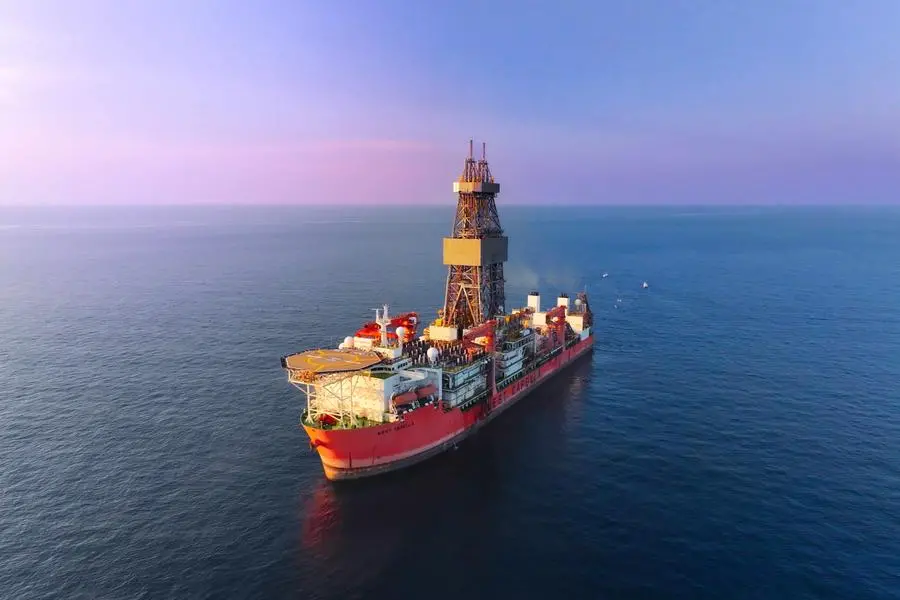
The economic consequences are immediate and global. The Middle East controls three maritime chokepoints — the Suez Canal, Bab Al Mandeb, and the Strait of Hormuz — that carry a significant portion of global energy and trade. These routes were already strained by Ansar Allah-linked disruptions in the Red Sea. The strike on Doha adds another layer of geopolitical fragility.
Insurers are repricing risk. Some shippers are rerouting vessels around the Cape of Good Hope, extending transit times and increasing costs. Even minor disruptions can add a risk premium of two to five dollars per barrel of oil.
For Europe, this means higher imported inflation at a time when energy costs are already politically toxic. For Asia, it means delays and surcharges in supply chains that fuel its manufacturing economies. For emerging markets, it means capital outflows and tighter financial conditions as investors retreat at the first sign of Middle East volatility.
Oman, like its neighbours, sits at the centre of this shifting geography. Its neutrality and reputation as a convening power may increase in value. Salalah, Duqm, and Sohar ports could serve as alternative gateways if Red Sea or Gulf routes are further disrupted. But Oman must also invest heavily in infrastructure resilience and narrative discipline to maintain confidence among investors, shippers, and partners.
Three layers of action are needed for the region, and Oman in particular, to respond.
In the short term, the priority is de-escalation and protection. GCC states should quietly coordinate on air and missile defence, focusing on integrated interoperability, counter-drone systems around diplomatic and mediation sites. Maritime security arrangements at Bab al-Mandeb and Hormuz should be reinforced, ideally with international naval partners. Governments must also be ready for cyber and disinformation campaigns designed to exploit the fog of strategic ambiguity.
In the medium term, the task is to insulate essential economic functions from political volatility. Commercial and technology deals should be structured with escrow arrangements, arbitration in neutral jurisdictions, and automatic adjustment clauses tied to conflict-risk indices. Energy planners should assume temporary chokepoint disruptions and prepare alternative supply and storage routes. Oman and Qatar could lead efforts to codify a GCC Mediation Charter, protecting neutral venues and humanitarian corridors from being targeted in future conflicts.
In the long term, resilience must be institutionalised. The Gulf needs integrated missile defence and maritime domain awareness systems. Governments should adopt data-driven dashboards tracking shipping incidents, insurance premia, and capital flows to guide real-time responses. Financial stability tools-liquidity lines, FX swap arrangements, and macro-prudential buffers — must be kept ready for shocks.
Not all actors are harmed equally by this new instability.
Winners include non-state actors and regional networks that benefit from increased Gulf vulnerability without bearing the direct costs of confrontation. They gain narrative traction and strategic leverage by highlighting the limitations of regional defence and deterrence. Meanwhile, maritime insurers, security contractors, and alternative logistics corridors stand to profit from heightened demand, as businesses seek to hedge against new and expanding risks across trade and transit routes.
Paradoxically, Gulf mediators such as Oman and Qatar may find their diplomatic role elevated — if they can safeguard their neutrality while withstanding intensified strategic pressures. This is not merely a geopolitical opportunity; it is a call to serve the greater good — to anchor de-escalation, preserve humanitarian space, and restore diplomacy as a stabilising force in a region tilting towards uncertainty.
Losers are more numerous. The normalisation coalition suffers, as deal flow slows and trust erodes. Europe and Asia face renewed inflationary pressures. And Israeli-Gulf quiet cooperation, particularly on sensitive security and technology matters, now operates under heavier political constraint.
The Doha strike underscores a deeper truth: the world is drifting into greater uncertainty and instability, and the Middle East is at the centre of this drift. For Oman and the wider GCC, the challenge is to preserve neutrality while hardening resilience. For the global economy, the lesson is that shipping and energy security remain hostage to sudden geopolitical shocks.
The attack in Doha is not just another episode in the Gaza war. It is a reminder that in today’s interconnected world, one strike in one city can ripple across continents, shaping oil prices, trade flows, diplomatic alignments, and political stability. The task for policymakers is not only to prevent escalation, but to design systems — diplomatic, defensive, and economic — that can withstand the shocks that will inevitably come.
The task for policymakers is not only to prevent escalation, but to build governance systems — diplomatic, defensive, and economic — that can withstand the geopolitical shocks that will surely come.
The author is a policy analyst.
2025 © All right reserved for Oman Establishment for Press, Publication and Advertising (OEPPA) Provided by SyndiGate Media Inc. (Syndigate.info).