PHOTO
WASHINGTON: Finance chiefs of the Group of Seven nations on Thursday agreed it was urgent to limit the cost to the global economy of the war in the Middle East and "reaffirmed the pressing need to move toward a lasting peace," according to a statement from France, which holds the G7 presidency this year.
The war was the biggest of three key topics discussed by the finance ministers and central bank governors of the world's richest democracies on the sidelines of the spring meetings of the International Monetary Fund and World Bank in Washington.
They also discussed continued support for Ukraine and developing alternative supply chains to China for rare earths and critical minerals.
"The conclusion was unanimous: it is urgent to limit the cost to the global economy of an enduring conflict. G7 members reaffirmed the pressing need to move toward a lasting peace," the statement said.
"More than ever, coordination among G7 members remains key to addressing the economic and energy impacts of the crisis. G7 members are particularly vigilant about the direct and indirect effects on the most vulnerable states."
French Finance Minister Roland Lescure told reporters earlier on Thursday that G7 countries had to be ready to act to mitigate the economic and inflation risks caused by the war's energy and supply shocks.
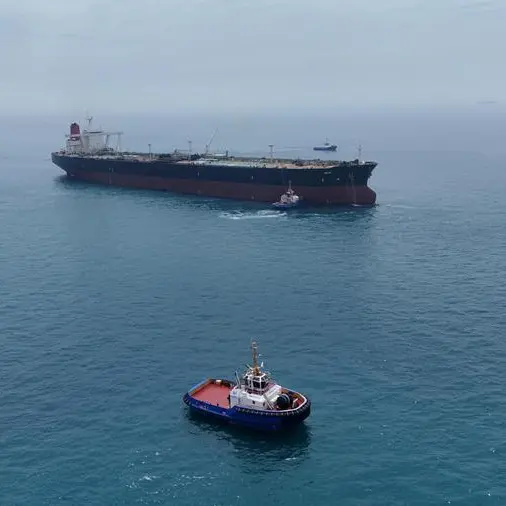
With G7 backing, the International Energy Agency last month released a record amount of oil from strategic reserves to help counter the cut-off in supplies from Gulf countries through the Strait of Hormuz. "We need to make sure that we understand where the balance of risks is tilting in the next few weeks," Lescure said after the meetings of the G7 finance ministers and central bank governors on Wednesday and Thursday.
"We are meeting again in a month's time in Paris and we want to make sure that we monitor the situation, we evaluate the impact and that if we need to act, as we did with releasing inventories a few weeks back, we will," Lescure added. He also said it was important to ensure free transit for ships through the Strait of Hormuz, adding that G7 ministers agreed that vessels should not have to "pay one dollar" to Iran to pass through the international waterway.
France holds this year's presidency of the G7, which also includes the U.S., Canada, Japan, Britain, Germany and Italy.
Bank of France Governor Francois Villeroy de Galhau added that G7 central banks also pledged to take steps necessary to prevent the Iran war's energy and commodity shock from becoming embedded into core inflation second- and third-round price impacts.
"We will act, without hesitation, if and when necessary, but we are not in a rush mode. We need to have more data" about the impact of the price shocks.
AID FOR UKRAINE
Lescure said the G7 finance leaders, meeting for the first time in person this year, also vowed to continue to aid Ukraine, including helping it prepare for next winter after a difficult winter this year with constant Russian attacks on Ukrainian energy infrastructure.
"Ukraine should never be a collateral damage of the current war in Iran," Lescure said. "Russia mustn't be getting benefits from what's happening in Iran." U.S. Treasury Secretary Scott Bessent, who skipped the G7 meeting on critical minerals on Thursday, said on Wednesday that he would not renew a 30-day temporary waiver of sanctions on Russian oil stranded at sea. The waiver, which expired on April 11, was meant to ease price pressures by releasing more oil into global markets.
The French statement said the discussion focused on Ukraine's economic reforms under its $8 billion IMF program, the need to keep up economic pressure on Russia, meeting Ukraine's energy needs, and actively contributing to the repair of the Chernobyl nuclear power plant's confinement arch. The G7 finance leaders also discussed joint efforts to create alternative supply chains for rare earths and other critical minerals to reduce their countries' dependency on China, the world's dominant supplier. Lescure said the group would keep working on "very concrete steps" that could be presented to a G7 leaders meeting in June in the French Alpine spa town of Evian-les-Bains. (Reporting by David Lawder; Editing by Andrea Ricci and Paul Simao)