PHOTO
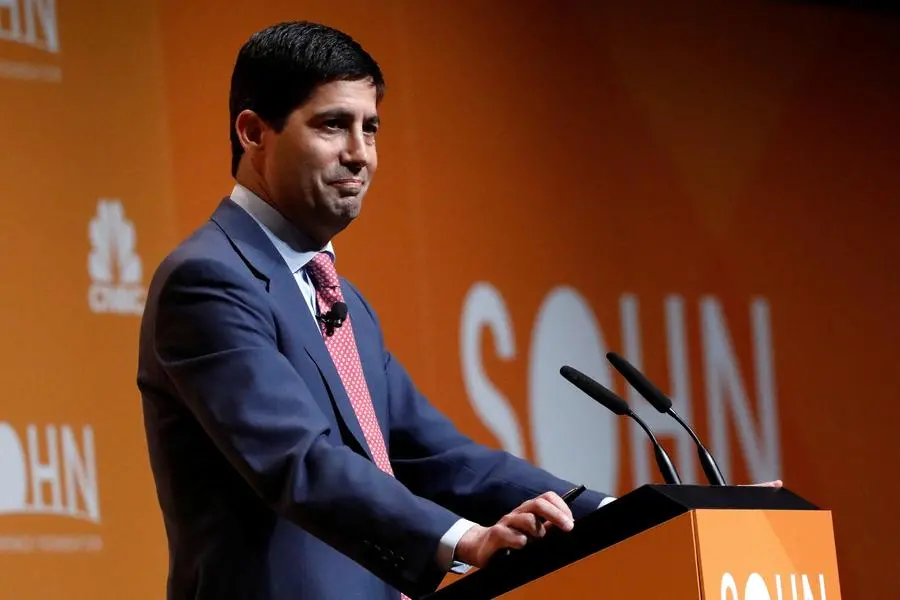
After more than a decade criticizing the U.S. central bank, former Federal Reserve Governor Kevin Warsh faces a mark-to-market moment in a Senate hearing on Tuesday when lawmakers will likely press the Fed chief nominee to flesh out his monetary policy and economic ideas and calls for fundamental change.
The hearing before the Senate Banking Committee is the next step in the 56-year-old financier's still-controversial path to the Fed chief's corner office in the central bank's headquarters in Washington.
Fed Chair Jerome Powell's last day in the top job is ostensibly May 15, but key Republicans have committed to blocking Warsh's confirmation until the Trump administration drops a criminal probe of Powell and the central bank that they consider frivolous and a threat to its independence. It's a critical moment beyond the nuts and bolts of monetary policy, as the Fed faces the most intense challenges to its standing since the years immediately following World War Two.
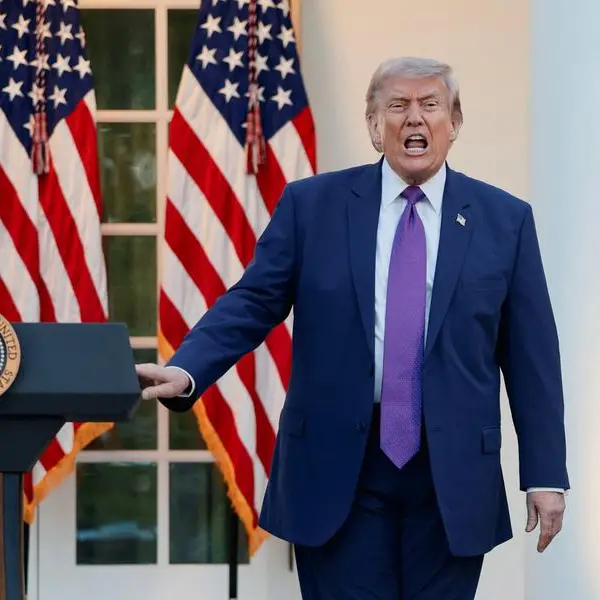
President Donald Trump has waged an aggressive campaign to gain more influence over the central bank, demanding that it push through big interest rate cuts and castigating policymakers when they failed to deliver.
Treasury Secretary Scott Bessent also has been critical of the Fed amid discussion about overhauling its operations or striking a new "accord" between the central bank and the Treasury, agencies with distinct roles whose intermingling could raise concerns about efforts to monetize the country's mounting debt.
"Does Warsh voice unconditional support for Fed independence and distance himself from the administration's call for steep rate cuts?" Deutsche Bank chief U.S. economist Matthew Luzzetti and his colleagues wrote last week in a preview of the hearing.
"Warsh will have to earn market trust and credibility around his commitment to achieving the inflation target; bona fides that always need to be earned by an incoming chair. The requirement could be more acute in the current context."
There's plenty for lawmakers to work with. Inflation is stuck above the Fed's 2% target; oil prices have skyrocketed thanks to the Iran war, though they receded last week; Trump thinks the central bank's policy rate should be cut to 1%; artificial intelligence and cryptocurrencies, two of Warsh's interests as an investor, could reshape the economy.
Warsh's tight-money, inflation-hawk reputation has morphed into a belief that lower interest rates are appropriate because of tech-driven productivity. The same thing has happened to a long-held conviction the Fed should shrink its $6.71 trillion balance sheet, a position he developed after serving as a governor when the central bank's bond holdings initially exploded.
FREQUENT CRITIC
As Trump mulled naming a successor for Powell over the past year, Warsh lobbed sharp criticisms at the Fed, calling for "regime change," saying his role would be "knocking some heads," and labeling Powell's leadership "broken," but without detailing how he would change things.
His nomination caps years of op-eds, academic lectures, and television interviews, many through his position as the Shepard Family Distinguished Visiting Fellow in Economics at Stanford University's Hoover Institution, a center of Fed criticism among analysts who regard the recent era of policymaking as recklessly experimental.
Warsh, who earned a bachelor's degree in public policy from Stanford before graduating from Harvard Law School, has spoken of being influenced by key Hoover figures including monetarist scholar Milton Friedman and economist John Taylor.
Both championed constrained forms of central banking, Friedman's rooted in growth of the money supply, Taylor's in an eponymous "Taylor Rule" relating recommended interest rates to the Fed's dual inflation and employment goals. Warsh has lauded rule-based policymaking as "aspirational" while stopping short of committing to use it, raising questions that both critics and advocates of such an approach will be keen to understand.
Warsh's recent views about interest rates, and how Trump has influenced them, are also likely to be a focus of the upcoming hearing, which will be chaired by Senator Tim Scott, who, along with other Republican lawmakers, has been complimentary of Warsh's nomination despite the divide over the conditions for proceeding with it.
WARSH'S WORLD
The nominee's ideas about interest rates echo arguments former Fed Chair Alan Greenspan made during the 1990s about the impact of productivity on inflation, while also putting Warsh in sync with Trump's call for lower rates.
Trump said he would only nominate someone he was confident would lower borrowing costs. The Fed's massive balance sheet also is a delicate issue. Expanded dramatically to fight the 2007-2009 financial crisis, large holdings of Treasuries and mortgage-backed securities are now a staple tool for controlling interest rates for the Fed to achieve its 2% inflation and maximum employment goals.
A Fed governor during that crisis two decades ago, Warsh opposed the balance sheet's seemingly open-ended growth alongside other conservative economists who felt it distorted financial markets. He chose to exit the central bank in 2011 rather than publicly break with then-Fed Chair Ben Bernanke through dissenting votes during policy debates still focused on lifting the economy out of its post-crisis sluggish growth.
The hearing on Tuesday could replay that era. Warsh joined the Fed in 2006, appointed by President George W. Bush, and was a key Bernanke adviser as a subprime housing crisis exploded into a full-blown financial meltdown that triggered not just Fed bond purchases but massive government bailouts for Wall Street.
A lawyer like Powell, with family ties to a Republican hierarchy that came to include Trump, Warsh has been lauded as much for his Wall Street smarts and people skills as his academic background.
He helped guide those controversial financial sector rescues and then returned to Wall Street to work as an adviser to billionaire investor Stanley Druckenmiller, a position that helped Warsh amass a personal fortune in excess of $100 million, according to financial disclosures filed before this week's hearing.
"In the lead-up to the crisis, Mr. Warsh failed to meaningfully identify or address the risks associated with subprime mortgages and derivatives," Senator Elizabeth Warren, the Senate Banking Committee's top Democrat, wrote in an April 15 letter to Powell demanding documents detailing Warsh's role at the Fed during the crisis.
"Since 2008, it has been well-documented that Mr. Warsh, in his role as (a) Fed Governor, failed to take seriously the risks posed by the subprime mortgage market and played a central role in helping to arrange numerous multibillion-dollar, taxpayer-funded capital infusions to financial institutions involved in the crisis," Warren wrote.
(Reporting by Howard Schneider; Editing by Dan Burns and Paul Simao)