PHOTO
In Nigeria, some infrastructure projects have been ambitious and promising. However, others have been mired in controversy, despite authorities relying on these projects to lift the population out of poverty.
One such project has been in the pipeline since the 1970s. Construction of the 1,000km coastal highway finally began this year. However, it was still shrouded in controversy.
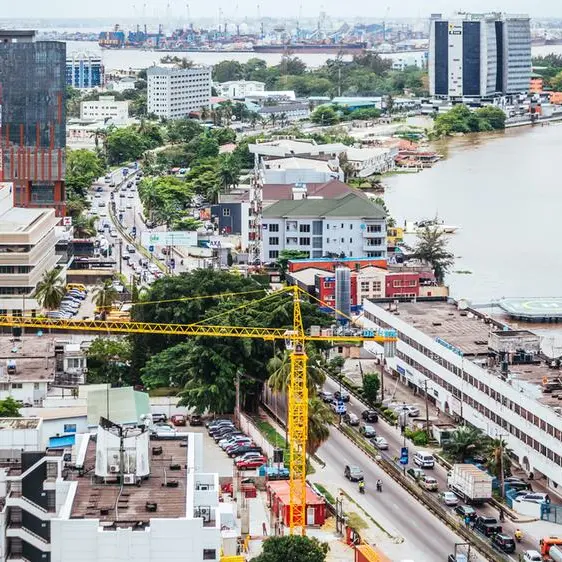
This is what happened. On April 30, 2024, bulldozers rolled onto the Oniru waterfront, a popular leisure centre in Nigeria’s commercial capital Lagos. They demolished kiosks, restaurants and other beachside businesses. A popular multimillion-naira resort was also levelled. This caused an uproar, with landowners along the planned route of the road protesting bitterly and demanding compensation.
By the time the demolitions were complete, around 750 structures in densely populated areas of this coastal state had been cleared as the project advanced on the first 100 kilometres east towards its destination in the Niger Delta city of Calabar, 700 km away.
Resurfaced visionNigerian officials admit the project is long overdue. But by delaying it, what might have been straightforward in the 1970s has only grown more complicated with time.“It was a vision of many years ago,” said Orji Uchenna Orji, an adviser to Nigeria’s public works minister, David Umahi.“The Lagos-Calabar Coastal Highway will be one of the greatest developments in the political and economic trajectory of this nation. It’s going to be a road with the biggest economic corridor in Africa and will stimulate economic development and the transportation ecosystem,” he said.
The coastal highway is considered a legacy infrastructure as Nigeria seeks to connect its nine coastal states and link them to the Sokoto-Badagry Super Highway, which will connect to the landlocked northern regions to Niger.
The first section of the Lagos-Calabar Coastal Highway, a 700- plus kilometre project, is designed to connect Lagos through Ogun, Ondo, Edo, Delta, Bayelsa, Rivers, Akwa Ibom, to Cross River.
The Sokoto Highway passes through Kebbi, Niger, Kwara, Ondo, Oyo and Ogun states, following the historical Trans-Saharan African trade routes and with the aim to improve transport links between several states.
The six-lane coastal highway will be constructed from flood-resistant materials and feature solar-powered streetlights. A railway line will run alongside the road.
The highway will also include a pedestrian walkway with ocean views, an underground drainage system and an ocean wave protector.
When construction began, machinery rolled simultaneously rolled to three locations: Lagos, Akwa Ibom and Cross River states.
Money on the moveThe road is being built by the Hitech Construction Company at a cost of N15 trillion ($11 billion). Founded in 1988, the company is majority-owned by the 79-year-old Lebanese-Nigerian contractor Gilbert Chagoury.
According to the public-private partnership (PPP) project details, the highway will be funded through the Engineering, Procurement, Construction plus Financing (EPC+F) model, with the Nigerian government contributing 10 percent of the cost and the private sector 90 percent.
Initial funding of $747 million came from a syndicated loan led by Deutsche Bank and other international and regional institutions, according to a prospectus published in July 2025. This loan will finance the first 47.5 kilometres of the project.
The financing consortium also includes First Abu Dhabi Bank, African Export-Import Bank, Abu Dhabi Exports Office, Ecowas Bank for Investment and Development, and Zenith Bank.
Ideally, the authorities see this as a future boost to transportation, trade and tourism, as well as a way of fostering national unity by connecting regions. It will reduce travel time by seven hours on a journey that usually takes about 12 hours.
President Bola Tinubu, who commissioned the first phase of the Lagos–Calabar Coastal Highway on May 31, 2025, has called for commitment to local content and technology transfer, and the empowerment of Nigerians.“It is most pleasing to note that the highway was being constructed using continuously reinforced concrete pavement instead of flexible pavement, thereby assuring durability,” the President stated.
Collateral damageHowever, critics say the project's high cost, lack of transparency, potential environmental and social impacts, and protests from affected communities demanding compensation must be addressed.
The construction of the highway will alter landscapes, displace communities and threaten biodiversity as it advances along eroding coastlines and across the ecologically sensitive Niger Delta, which has endured decades of oil pollution.
Construction has encountered fierce resistance. In Okun-Ajah, a peri-urban area home to several fishing communities, road builders deviated from the route mapped out in the impact assessment, unexpectedly earmarking several properties for demolition, including the local chief’s palace.
Okun-Ajah residents are also worried that building the highway will cause erosion, pollute freshwater and damage the fish habitat on which many of them depend for their livelihoods.
Leading activists against the project, Declan Ihekaire and Shina Loremikan, have criticised the government’s handling of the situation, emphasising that such actions discourage local and international investment.
© Copyright 2022 Nation Media Group. All Rights Reserved. Provided by SyndiGate Media Inc. (Syndigate.info).