PHOTO
On the African continent, snakebites kill thousands every year, mostly farmers, herders and children in rural areas far from hospitals. Many survivors lose limbs or sight after delayed or inadequate treatment.
But a scientific breakthrough could transform this long-ignored crisis.
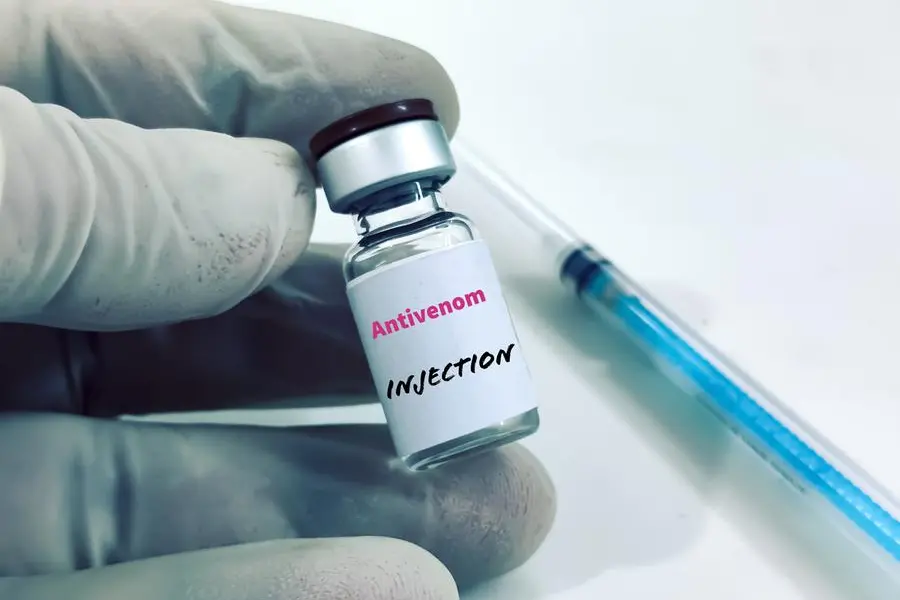
A team of scientists from the Technical University of Denmark has developed the world’s first fully lab-made, recombinant antivenom that neutralises the venom of 17 of Africa’s deadliest snakes, including cobras, mambas and puff adders.
Traditionally, scientists produce antivenoms by injecting small doses of snake venom into animals, usually horses or sheep, through a century-old process.
Over time, the animal’s immune system learns to produce antibodies that neutralise the venom’s toxins. Once enough antibodies have formed, blood is drawn from the animal, and the plasma containing these antibodies is extracted and purified.
This method results in a product with great variation in quality and a risk of serious side effects.“The antivenom works, but can cause harmful side effects – it's similar to a blood transfusion from a horse. At the same time, the quality varies because different horses are used in each production,” explained Prof Andreas Hougaard Laustsen-Kiel, who led the research team.“Instead, we have developed an antivenom that does not require us to constantly extract antibodies from animals. Instead, we used phage display technology to develop our antivenom.
This method makes it possible to select and copy effective antibody fragments (nanobodies) and later produce them on a large scale and with consistent quality. This means that we would be able to produce the antivenom in large quantities without compromising on quality."The new antivenom is designed entirely in the lab using nanobodies, tiny engineered proteins modeled on camel and llama antibodies. These nanobodies can be replicated precisely, stored safely without refrigeration, and customized to target the specific toxins that cause paralysis, bleeding, or tissue destruction.
The recombinant formula has already shown powerful results in laboratory studies. In animal tests, it prevented death and severe tissue damage after exposure to venom from snakes common in Kenya, Tanzania, Nigeria and South Africa, among other countries.
”If scaled for production, the new model could allow African countries to manufacture antivenom locally, reducing dependence on imported plasma-derived products that often fail to match regional snake species.
The new antivenom also penetrates tissue faster and deeper, helping prevent severe local damage even when treatment is delayed. And because nanobodies are smaller and more stable than conventional antibodies, they can be stored without refrigeration, making them ideal for use in remote African clinics.
The next phase will involve human clinical trials and regulatory evaluation before the antivenom can be distributed widely.
Laboratory results published in Nature last week show that the new treatment successfully neutralised venom in 17 out of 18 species tested, falling short only on one of the green mambas.
Also, although the potential impact is enormous, the scientists note that some venoms, particularly from black mambas and forest cobras, were only partially neutralised, underscoring the need for further refinement before clinical trials.
© Copyright 2022 Nation Media Group. All Rights Reserved. Provided by SyndiGate Media Inc. (Syndigate.info).