PHOTO
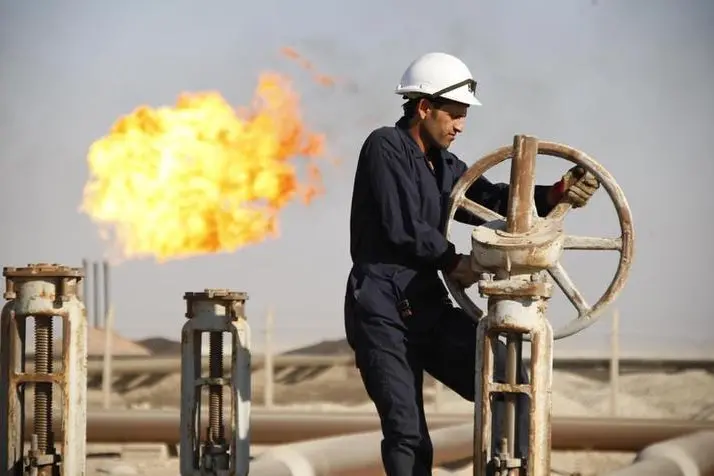
Iraq appears to have shunned Chinese companies and opted for US oil majors to operate its giant West Qurna 2 field after Russia’s Lukoil announced its intention to quit the reservoir under the pressure of mounting US sanctions.
Iraq has not made clear why it extended an exclusive invitation to US companies to manage the Southern Iraqi field, one of the world’s largest single crude reservoirs with estimated recoverable deposits of 14 billion barrels.
But Iraqi analysts believe Baghdad’s move is politically-motivated with the aim of pleasing Washington, which has been concerned over the rising influence of Chinese companies in Iraq’s oil industry.
“The rush by the Iraqi oil ministry for US companies to invest in Qurna 2 oilfield and other nearby fields is for political reasons,” said Nabil Al-Marsoumi, an Iraqi author and economics professor at Basra University in South Iraq.
“It is politics and has nothing to do with economics because their selection will not achieve Iraq’s national interests as American companies, particularly ExxonMobil, will grab nearly a third of the field’s revenues,” he told Zawya Projects.
Al-Marsoumi said ExxonMobil had operated Qurna 1 oilfield for years but failed to reach its peak production of 1.2 million barrels per day before it decided to quit the facility and hand it over to PetroChina in 2024.
ExxonMobil is set to return to Iraq after it signed a heads of agreement (HOA) with Baghdad in October 2025 for the development of the southern Majnoon oilfield, also one of the world’s largest crude reservoirs.
Iraq’s oil ministry this week issued an invitation to several major US companies operating in Iraq to submit bids for taking over West Qurna 2 Field.
Direct negotiations are underway with the invited companies, which will be allowed to submit offers and compete openly, the ministry said.
It added in a statement that transferring management of West Qurna-2 to a leading US operator would support Iraq's production stability, safeguard its market share, and ensure the continuity of state revenues.
On Tuesday, Reuters revealed that ExxonMobil has approached the Iraqi oil ministry to express its interest in buying Russian firm Lukoil's 75 percent majority stake in the West Qurna 2 oilfield.
Exxon's move would mark a major expansion of the US major's return to Iraq as the Russian company tries to offload key energy assets, it reported.
“I believe the government’s invitation to US companies to develop Qurna 2 is for pure political purposes,” emphasised Hamza Al-Jawahri, a member of Iraq’s economists’ network.
“It is clear that this invitation, addressed only to American companies, aims to achieve a kind of balance between Chinese companies that have acquired most of the oil fields in Iraq, and American companies that want to re-enter Iraq’s oil sector.”
“In the geopolitical battle between Washington and Beijing over Iraq's oil and gas resources, China appears to be winning,” S&P Global had said in late 2024.
A large number of the oil concessions awarded by Iraq to foreign companies over the past two years went to Chinese developers.
In late 2024, Iraq signed contracts with six Chinese companies and announced that projects awarded to them would boost its oil and gas production by nearly 750,000 barrels per day (bpd) and 800-850 million cubic feet per day respectively.
In May, Baghdad also signed a major contract with China’s Geo-Jade company for the development of Tuba oilfield in Basra to expand its output to 200,000 bpd.
The contract also includes the construction of an oil refinery with a capacity of 200,000 bpd, a petrochemical plant with a production capacity of 620,000 tonnes per year, a 520,000 tonnes per year fertiliser plant and two power stations, including a 400 megawatts (MW) solar power plant and a 650 MW gas-fuelled power plant.
(Reporting by N Saeed; Editing by Anoop Menon)
Subscribe to our Projects' PULSE newsletter that brings you trustworthy news, updates and insights on project activities, developments, and partnerships across sectors in the Middle East and Africa.