PHOTO
- Kuwait: Growth of 4% in 2025, supported by oil gains and new debt law unlocking fiscal flexibility
- Qatar: Economy projected to expand 2.7% in 2025, accelerating to 4.8% in 2026 on North Field LNG expansion
- UAE and Saudi Arabia: Non-oil sectors continue to drive diversification, supporting broader regional resilience
United Arab Emirates: The GCC is set for stronger growth in 2025 and 2026, as higher oil output, robust non-oil sectors, and resilient domestic demand strengthen the region’s outlook, according to the latest ICAEW Economic Insight Q3 2025 report, produced by Oxford Economics.
GCC GDP is forecast to grow by 4.1% in 2025, nearly double last year’s pace, before accelerating to 4.6% in 2026. The trajectory reflects both oil and non-oil gains, reinforcing the region’s resilience to global trade tensions, tariff headwinds and softer oil prices.
GCC: Oil rebound, non-oil resilience and fiscal contrasts
The sharp increase in oil production has lifted energy-sector growth forecasts to 4.9% in 2025 and 6% in 2026. Non-oil sectors are also expected to expand by 4% in 2025, driven by strong labour markets, credit growth and continued diversification efforts.
While global GDP growth is expected to slow to 2.7% in 2025, the GCC remains an outperformer. Saudi Arabia’s non-oil exports rose 16.5% y/y in H1, while the UAE recorded a surge of nearly 45% y/y, underscoring the region’s growing role in global trade. Fiscal positions remain mixed: deficits are forecast in Saudi Arabia, Bahrain, Kuwait and Oman, while Qatar and the UAE are projected to maintain surpluses. Headline GCC inflation is projected at 2.1% in 2025, rising moderately to 2.6% in 2026.
Kuwait: Political breakthrough supports fiscal reform
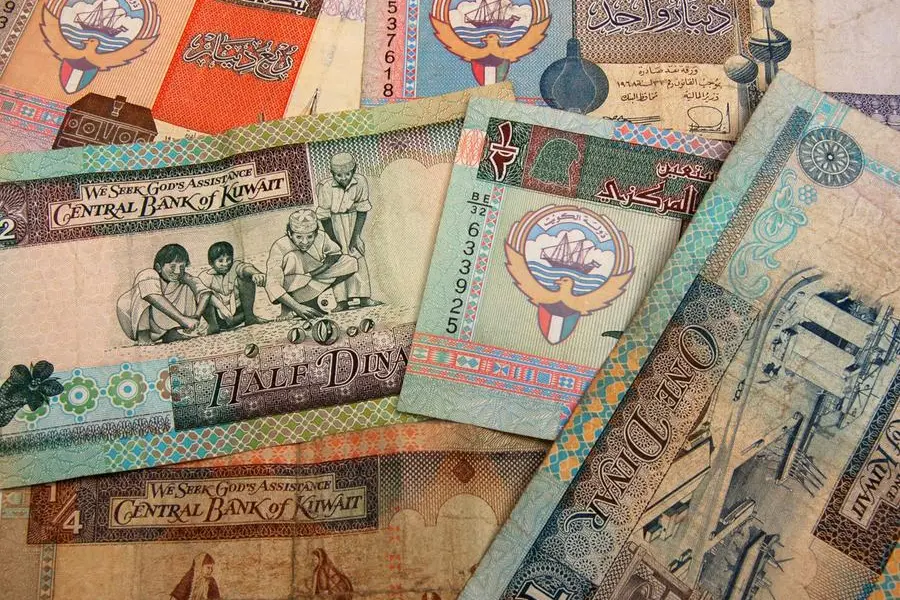
Kuwait’s GDP is expected to grow 4% in 2025, fuelled by a 7% expansion in the oil sector. Crucially, the passage of a new debt law has ended years of political gridlock, giving the government greater fiscal flexibility to finance investment and stabilise public finances. This reform marks an important step in sustaining growth while enabling longer-term diversification.
Qatar: LNG expansion anchors medium-term growth
Qatar’s economy is forecast to expand 2.7% in 2025, before accelerating to 4.8% in 2026 with the expansion of the North Field LNG projects, which will significantly boost production capacity and fiscal surpluses.
UAE and Saudi Arabia: Non-oil momentum supports diversification
Beyond oil, the region’s largest economies continue to demonstrate the role of diversification in sustaining resilience. The UAE economy is set to grow 5.1% in 2025, with non-oil GDP rising 4.7%, now accounting for 77% of total GDP. Meanwhile, Saudi Arabia is forecast to expand 4.2%, with non-oil sectors sustaining annual growth of around 5%, driven by construction, trade, and financial services. Together, these dynamics show how non-oil growth momentum is shaping the GCC’s broader economic outlook.
Hanadi Khalife, Head of Middle East, ICAEW, said: “The GCC economies are showing that diversification is more than policy. It is a measurable driver of resilience. With non-oil sectors powering growth momentum in Saudi Arabia and accounting for the majority of GDP in the UAE, alongside fiscal reforms in Kuwait, the region is successfully turning global challenges into opportunities for transformation.”
Scott Livermore, ICAEW Economic Advisor, and Chief Economist and Managing Director, Oxford Economics Middle East, said: “The GCC is not only recovering from oil production cuts; it is reshaping its growth model. While Kuwait’s fiscal reforms and Qatar’s LNG expansion provide confidence in the medium term, recent geopolitical escalations involving Qatar, and Gulf leaders’ recognition of its right to respond, add some uncertainty to the near-term outlook. Even so, the region’s mix of reforms, energy growth, and strong non-oil diversification positions it to outperform global peers.”
Media enquiries:
Layth Kamal, Mojo PR, on email icaew@mojo-me.com
About ICAEW
Chartered accountants are talented, ethical and committed professionals. ICAEW represents more than 208,000 members and students around the world.
Founded in 1880, ICAEW has a long history of serving the public interest and we continue to work with governments, regulators and business leaders globally. And, as a world-leading improvement regulator, we supervise and monitor over 12,000 firms, holding them, and all ICAEW members and students, to the highest standards of professional competency and conduct.
We promote inclusivity, diversity and fairness and we give talented professionals the skills and values they need to build resilient businesses, economies and societies, while ensuring our planet's resources are managed sustainably.
ICAEW is the first major professional body to be carbon neutral, demonstrating our commitment to tackle climate change and supporting UN Sustainable Development Goal 13.
ICAEW is a founding member of Chartered Accountants Worldwide (CAW), a global family that connects over 1.8m chartered accountants and students in more than 190 countries. Together, we support, develop and promote the role of chartered accountants as trusted business leaders, difference makers and advisers.
We believe that chartered accountancy can be a force for positive change. By sharing our insight, expertise and understanding we can help to create sustainable economies and a better future for all.
About Oxford Economics
Oxford Economics is one of the world's foremost advisory firms, providing analysis on 200 countries, 100 industries and 3,000 cities. Their analytical tools provide an unparalleled ability to forecast economic trends and their economic, social and business impact. Headquartered in Oxford, England, with regional centres in London, New York, and Singapore and offices around the world, they employ one of the world's largest teams of macroeconomists and thought leadership specialists.