PHOTO
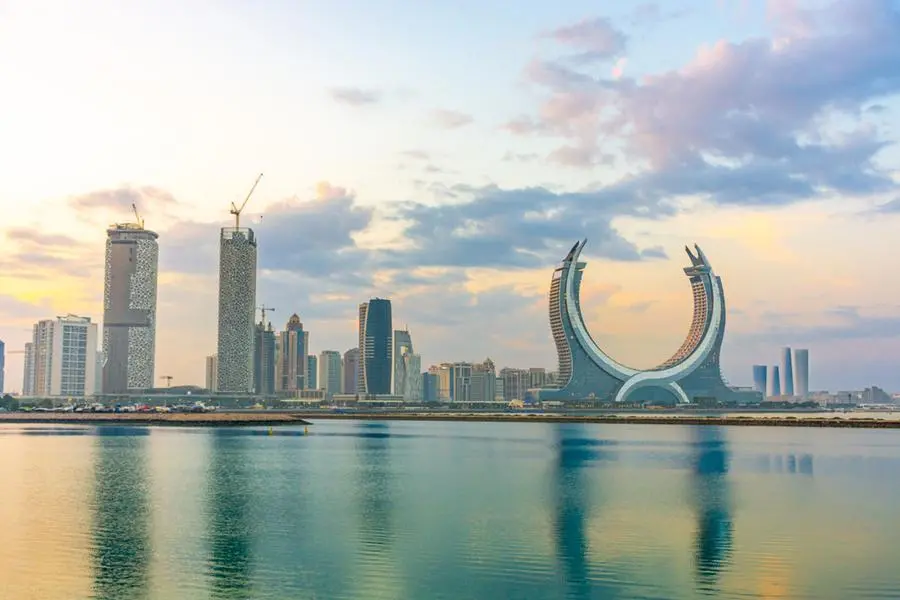
DOHA: Qatar is expected to be one of the fastest-growing economies in the region next year, with real GDP growth forecast to reach 5.2 percent, driven by rising liquefied natural gas (LNG) capacity, stronger export performance, and sustained diversification-related investment, according to Fitch Solutions’ latest MENA Macro report.
Fitch Solutions projects overall economic growth across the GCC to accelerate from 4.2 percent in 2025 to 4.8 percent in 2026, supported by higher hydrocarbon output and resilient non-oil activity. Within the bloc, Qatar, the UAE, and Saudi Arabia are expected to post the strongest growth rates, reflecting their scale, fiscal capacity, and ongoing structural reforms.
The report indicates that Qatar’s growth outlook is underpinned by the phasing out of OPEC+ production curbs and the continued expansion of its LNG production capacity, which will lift hydrocarbon output and exports.
As global demand for LNG remains strong, Qatar is well-positioned to benefit from higher export volumes, reinforcing economic momentum and external balances.
Alongside hydrocarbons, non-oil growth is expected to remain robust. Analysts at the research entity highlighted that trade agreements, strong re-export activity, expanding manufacturing capacity, and solid tourism performance will continue to support non-oil exports across the GCC, with Qatar benefiting from these regional tailwinds.
Despite a softer oil price environment, diversification momentum in Qatar and the wider Gulf is expected to persist.
According to Fitch Solutions, this is largely because a significant share of diversification-related projects is being implemented by government-related entities and investment funds, which can access financing independently without placing additional strain on public finances.
Lower borrowing costs across the region are also expected to support investment activity, encouraging capital spending and private-sector participation in key growth sectors.
On the external front, Fitch Solutions forecasts the weighted average MENA current account surplus to ease slightly from 1.8 percent of GDP in 2025 to 1.6 percent in 2026, reflecting lower oil prices and strong import growth. Among hydrocarbon exporters, the surplus is expected to narrow from 2.9 percent to 2.7 percent of GDP.
However, the country’s external position is expected to remain broadly stable in the coming year. Researchers stressed that surpluses in Qatar, the UAE, and Bahrain, as well as deficits in Saudi Arabia, Oman, and Iraq, are projected to widen or narrow by less than 0.5 percentage points in 2026, underscoring the country’s continued external resilience.
© Dar Al Sharq Press, Printing and Distribution. All Rights Reserved. Provided by SyndiGate Media Inc. (Syndigate.info).