PHOTO
Riyadh, Saudi Arabia – As the conversation around artificial intelligence shifts toward AI agents capable of autonomous action, Cisco is highlighting the importance of securing both AI agents and the broader AI supply chain across enterprise environments.
Across the Middle East, organizations are increasingly exploring AI agents for use cases spanning government services, financial services, energy and large enterprise operations.
Cisco’s AI Readiness Index 2025 underscores this momentum, as 92% of organizations in the UAE and 91% in KSA already intend to develop or deploy AI agents across a variety of use cases. At the same time, organizations continue to face practical challenges, including infrastructure limitations, workforce planning gaps, and security.
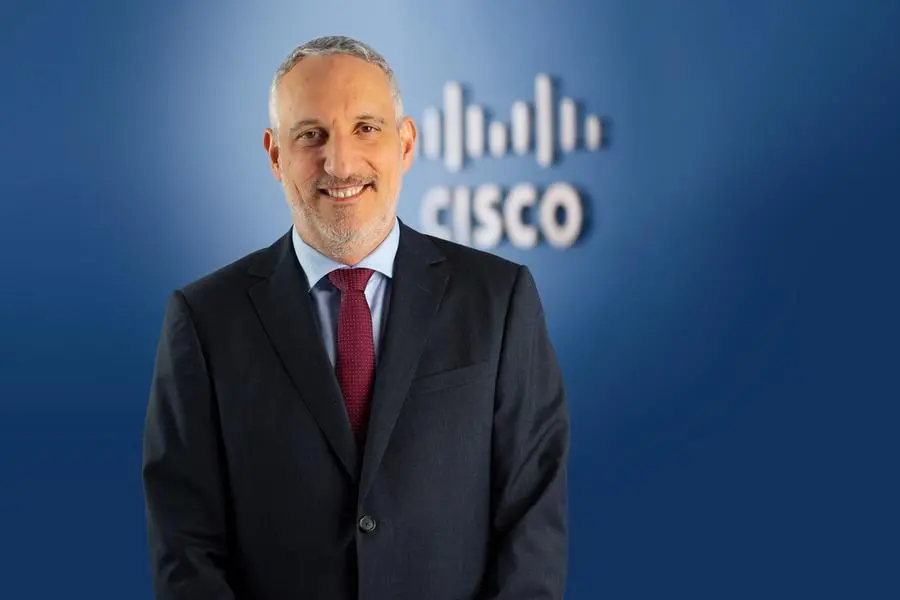
Fady Younes, Managing Director for Cybersecurity at Cisco Middle East, Türkiye, Africa and Romania, said: “As AI agents move from experimentation to real-world deployment across the Middle East, organizations are facing new security considerations. From the third-party components used to build AI systems, to how autonomous agents interact with data and tools, securing the full AI lifecycle is becoming increasingly important for maintaining digital trust and resilience.”
Cisco introduced AI Defense as a security solution for the development and deployment of enterprise AI applications. As the AI risk surface continues to expand, the platform has evolved to include AI supply chain scanning and purpose-built runtime protections for AI agents.
Securing the AI supply chain
Modern AI development relies on a wide range of third-party and open-source components such as models and datasets. While these assets accelerate innovation, third-party AI assets introduce risk. A compromised component in the supply chain effectively undermines the entire system, creating opportunities for code execution, sensitive data exfiltration, and other insecure outcomes.
Cisco AI Defense addresses AI supply chain risk by scanning model files and MCP servers in enterprise repositories to identify and flag potential vulnerabilities before deployment. This is particularly relevant for Middle East organizations operating in regulated sectors such as government, financial services, and critical infrastructure.
Protecting AI agents at runtime
A production AI application is susceptible to any number of explicitly malicious attacks or unintentionally harmful outcomes—prompt injections, data leakage, toxicity, denial of service, and more.
When Cisco AI Defense was launched, its runtime protection guardrails were specifically designed to protect against these scenarios. Bi-directional inspection and filtering prevented harmful content from both user prompts and model responses, keeping interactions with enterprise AI applications safe and secure.
With agentic AI and the introduction of multi-agent systems, there are new vectors to consider: greater access to sensitive data, autonomous decision-making, and complex interactions between human users, agents, and tools.
To meet this growing risk, Cisco AI Defense has evolved with purpose-built runtime protection for agents. AI Defense will function as an MCP gateway, intercepting calls between an agent and MCP server to combat new threats like tool compromise.
Supporting secure AI innovation in the Middle East
Cisco continues to invest in AI security research and collaboration to help organizations manage emerging risks. By combining AI security expertise with networking capabilities, Cisco AI Defense is positioned to support organizations across the Middle East as they advance national AI and digital transformation agendas.
About Cisco
Cisco (NASDAQ: CSCO) is the worldwide technology leader that is revolutionizing the way organizations connect and protect in the AI era. For more than 40 years, Cisco has securely connected the world. With its industry leading AI-powered solutions and services, Cisco enables its customers, partners and communities to unlock innovation, enhance productivity and strengthen digital resilience. With purpose at its core, Cisco remains committed to creating a more connected and inclusive future for all. Discover more on The Newsroom and follow us on X at @Cisco.
Cisco and the Cisco logo are trademarks or registered trademarks of Cisco and/or its affiliates in the U.S. and other countries. A listing of Cisco's trademarks can be found at http://www.cisco.com/go/trademarks. Third-party trademarks mentioned are the property of their respective owners. The use of the word 'partner' does not imply a partnership relationship between Cisco and any other company.