PHOTO
- UAE positioned as model for navigating AI transition while driving diversification and connectivity
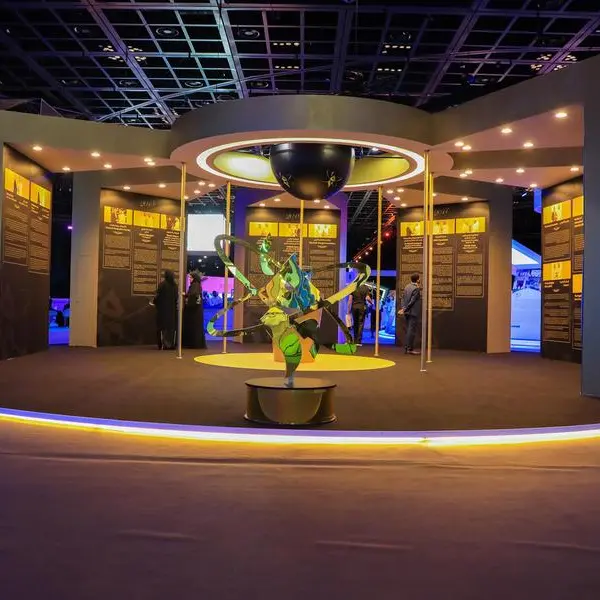
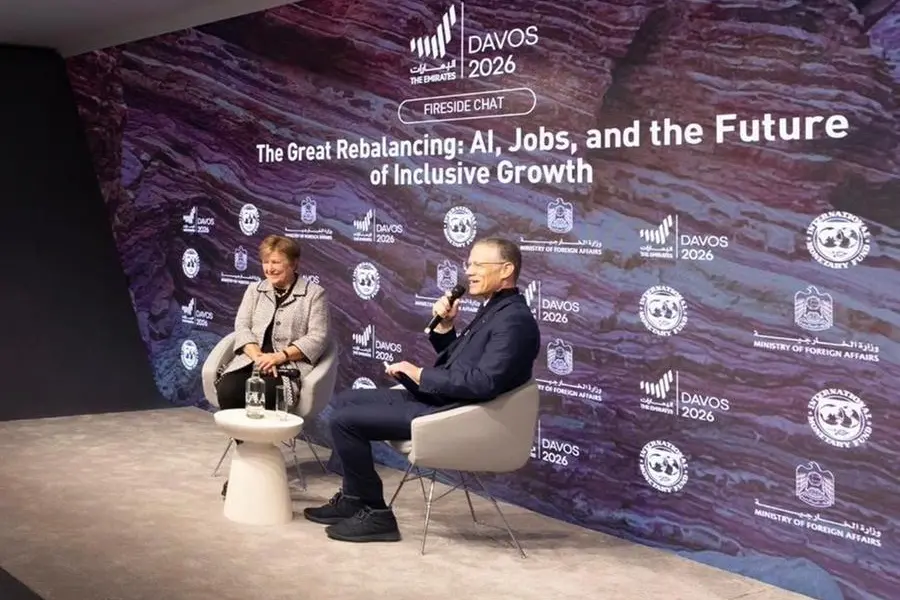
Davos, Switzerland: The United Arab Emirates hosted a high-level dialogue at the UAE Pavilion during the 2026 World Economic Forum Annual Meeting in Davos, convening global leaders to examine the shifting dynamics of the world economy, the impact of artificial intelligence (AI) on labour markets, and the future of inclusive growth amid accelerating economic and technological change.
Held under the title The Great Rebalancing: Artificial Intelligence, Jobs, and the Future of Inclusive Growth, the session brought together H.E. Badr Jafar, the UAE’s Special Envoy for Business and Philanthropy, and Ms. Kristalina Georgieva, Managing Director of the International Monetary Fund (IMF), for a fireside discussion on the risks and opportunities shaping the global economic outlook.
Drawing on the IMF’s latest assessments, Kristalina Georgieva noted that while global uncertainty remains exceptionally high – and is likely to persist – the world economy has demonstrated notable resilience, with growth holding steady and IMF projections upgraded for the period ahead. She cautioned, however, that this resilience should not be taken for granted amid profound structural transformations driven by technology, geopolitics, climate change, and demographic shifts.
“A tsunami is hitting the labour market,” said Georgieva. “AI is quickly reshaping economies. Some roles grow; others disappear. We must invest in skills and prepare communities. The world as a whole is already experiencing the arrival of AI, but I do worry about the accordion of opportunities that are much more present in some places than in others.”
Badr Jafar highlighted the UAE’s long-term strategic choice to build an economy optimized for resilience, openness, and global connectivity. “At a time when global systems are fragmenting, the UAE is doubling down on connection. We are known for open skies, open ports, and open minds – and the data shows the value of this approach,” he said.
“Last year, the UAE attracted over US$45 billion in foreign direct investment, up nearly 50% year-on-year, even as global FDI declined by 11%. We accounted for more than half of all investment flows into the Middle East, ranked second globally for new greenfield projects, behind only the United States, and welcomed in nearly 10,000 new millionaires, more than any other country worldwide. In an age of fragmentation, our connectivity is a clear strategic advantage.”
The discussion explored IMF research on global growth prospects and resilience threats, with a particular focus on labour-market transformation driven by AI. IMF estimates suggest that around 40% of global jobs will be significantly affected by AI-driven change – either enhanced, transformed, or displaced – highlighting the urgency of policy and investment choices that support communities through transition.
To enable resilient and inclusive growth, Georgieva emphasised the importance of four enabling factors: private-sector adaptability, responsible AI adoption, sustained trade flows, and sound fiscal policy. She also highlighted the critical role of public investment in education, digital infrastructure, and access to AI tools to ensure that communities can participate meaningfully in the emerging AI-driven economy.
The UAE and wider Gulf region were cited as consistent bright spots in the IMF’s global economic outlook. Georgieva pointed to three key enabling capabilities underpinning this performance: ongoing regulatory reform, including efforts to reduce bureaucracy; sustained economic diversification, exemplified by non-oil sectors now accounting for more than 75% of UAE GDP; and long-term investment in human capital, skills, and inclusion.
The session called for a rethinking of growth models to deliver economic efficiency alongside social equity, highlighting the importance of quality job creation, youth empowerment, and broadening participation in economic opportunity. Discussions also emphasised the role of governments, the private sector, and strategic philanthropy in translating AI-enabled productivity gains into inclusive and durable growth through social innovation, aligned incentives, and increased AI readiness.
The dialogue reflected the UAE’s continued commitment to shaping global economic conversations and contributing constructively to international efforts on inclusive growth, artificial intelligence, and the future of work. The session formed part of the UAE Pavilion’s broader programme at the World Economic Forum Annual Meeting, showcasing the role of responsible innovation, patient capital, and cross-sector collaboration in building a more resilient and inclusive global economy.