Dubai, UAE - 14th November, 2012: During the International Conference of Energy, Utilities and Mining organized in Atlantis Hotel-Dubai , for the first time in Dubai, by Price Waterhouse Coopers, the international leading company in the field of international professional services under the theme "New Frontiers: New Frontiers: Strategies And Regions That Are Reshaping The Future Of Energy, Utilities and Mining Sectors", in the presence of more than 500 delegates from Price Waterhouse Coopers global offices, HE Saeed Mohammed Al Tayer, MD and CEO of Dubai Electricity and Water Authority (DEWA), stressed the fact that it is almost five years since the launch of Dubai's Sustainability drive, marked by HH Sheikh Mohammed bin Rashid Al Maktoum, Vice President and Prime Minister of the UAE and Ruler of Dubai's declaration of the Green Building Initiative. Regulations were launched in January 2011. This initiative strengthens the fact that efficient use of resources in general, and energy and water in particular, has become a must rather than a choice. Through new methods of design, construction and operation of buildings, electricity and water consumption can be reduced to a large extent.
"Dubai Electricity and Water Authority is the single vertically integrated electricity and water utility in the Emirate of Dubai. We own and operate the power generation and associated desalinated water production facilities, electricity and water transmission and distribution networks. We are also responsible for the supply and sales of electricity and water to consumers," said H.E. Saeed Mohammed Al Tayer, MD and CEO of DEWA.
Currently the combined power generation and desalinated water production in Dubai is most efficiently produced using natural gas and LNG as the primary fuel (99%) and supplemented by liquid fuel - Diesel Oil as a secondary fuel (1%). Desalinated water is the main source of water supply in Dubai. For the year 2011, the water supply to the Dubai Emirate consisted of 97.6% desalinated water, and the balance 2.4 % from groundwater.
"To reduce reliance on natural gas, and the impact on the environment, whilst improving security of supply by diversifying the fuel supply mix, an integrated energy strategy for Dubai has been formulated (DIES 2030). The proposed future power generation mix will consist of a mix of gas , solar, clean coal and nuclear energy sources as follows: by 2030 : Gas - 71%; Solar - 5%; Nuclear - 12%; Clean Coal - 12%. The strategy also aims at reducing energy demand by 30% by 2030. To meet the objectives of such strategy, the total capital investment required for these initiatives is estimated to be in the region of USD 10 Billions with potential energy and water savings of around USD 20 Billions. DEWA's future fuel mix diversification strategy will also include clean coal and nuclear, possibly imports from neighboring utilities, making a significant contribution to our energy mix," said His Excellency.
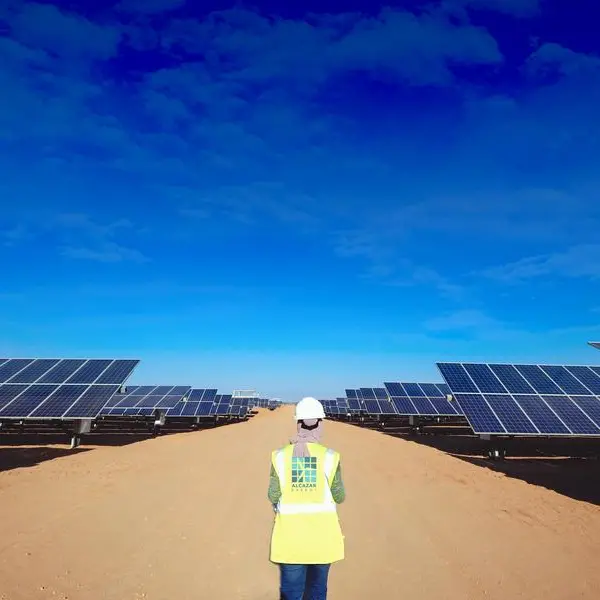
"Solar Power is the most significant and strategic renewable resource in UAE. DEWA has already ongoing plans to build a 1000MW solar plant, which upon completion, will be one of the biggest solar parks in the region, and possibly beyond. This will make a substantial contribution to Dubai's future energy needs. In addition, we have identified that distributed rooftop solar power sources can make a practical contribution to Dubai's power needs in the order of 20% or around 2500 MW by 2030. Technical, commercial and legal frameworks are currently being put in place to facilitate the integration of solar power," added His Excellency.
"Over the last decade or so, renewable energy sources have started to make useful contribution to the global energy mix, and it seems likely that this will continue this century. Natural gas, nuclear and renewable resources will gain a more substantial share. Coal is also likely to remain an important resource for many countries. We all know that renewable energy is challenging alternative. Large scale Solar and Wind Power System are variable and uncontrollable, and this is the main challenge. On the power transport highways side, new High Voltage AC and High Voltage DC interconnections with neighbours will require careful integration to avoid introducing network complexity or unwarranted consequences of reducing network reliability,"
His Excellency also said that water is of no less importance than power in Dubai. The production of desalinated water is an energy consuming process, requiring considerable amount of power, while water demand is expected to continue to increase due to the economic and population growths. To meet the continuously growing water demand, effective water management practices are in place, such as continuous optimization at the desalination plants and water leakage management. Whilst we are proud of our achievements so far, we are also fully aware that some of yesterdays or even today's conventional solutions may no longer be appropriate going forward. In common with many in the MENA region and much of the world, we have to further enhance the energy efficiency. A substantial amount of energy is used globally, and at the same time a considerable amount is wasted too. Therefore, energy efficiency is of paramount importance in any strategy, and this must cover all sectors on both supply and demand sides. On the electricity and water demand side, further enhancements of ongoing smart initiatives and the introduction of new ones will continue to reduce demands through conservation and exploitation of demand response capabilities. The end consumers have a significant contribution and role to play but we need to raise their awareness and win their hearts and minds.
DEWA is currently rolling out smart electricity and water meters, introducing smart technologies that can control various types of domestic, commercial and industrial demand to act as virtual generation; etc; these present not only new challenges but also new opportunities. Utilities live in times of great changes, a time of accelerating technological developments whilst facing future energy supply and environmental challenges. Over many decades, electricity grids have continued to evolve and serve the electricity needs of society and in doing so ensure secure and reliable supplies economically and efficiently. However, there are many new challenges now facing utilities, which need to be addressed and decisions to be made today that will shape the energy landscape in 2020 or 2030 and beyond. These challenges do generally differ between continents and countries depending on factors such as economic development, local climate, availability of fossil fuels, availability of renewable and clean energy resources, but many of them are indeed common to all.
"For the MENA region, some of these challenges are, rising population, rising demands for electricity and water, over reliance on particular fuel type such as natural gas, protecting the environment by reducing greenhouse gas emissions, the importance of maintaining security of supply and of course ensuring that it is affordable. Future strategies should aim to maintain balance between electricity and water security and affordability, sustainable economic development and the environment. There is no doubt that we are dealing with a very complex and interrelated set of issues. I very much hope that, as with so many other challenges, utilities, with other stakeholders' support can lead the way and through innovation and engineering excellence show others the way forward through creativity and engineering excellence," His Excellency concluded.
-Ends-
© Press Release 2012