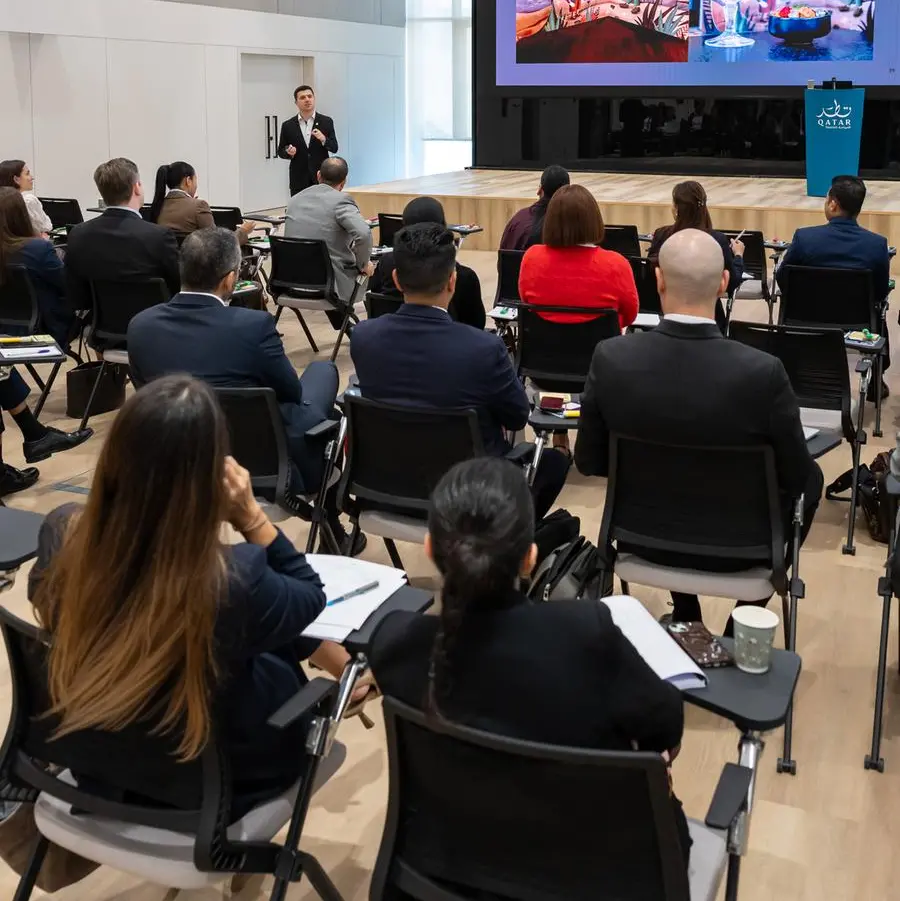
MUSCAT The German University of Technology in Oman (GUtech) successfully held a one-day seminar on quality management at their premises in Al Athaiba last month. The Introduction to Quality Management was a basic course for professionals and executives from different fields like production, quality management and planning as well as improvement process leaders.
The focus of the short course was on identifying systematically so-called waste within single process steps and eliminating them. The short-course gave the participants an overview over different quality systems and programmes as well as quality management methods. "The Quality management department provides structures and guidelines using quality management methods. In addition, each department is responsible for the transfer of these guidelines in order to secure their quality standards," stressed Eng. Markus Koehler. Furthermore the philosophy and the meaning of quality were discussed intensively. "The main purpose of the short-course was to discuss the idea behind quality management and to give an overview over different quality management methods and their application in their daily work," said Eng. Tobias Effey of the Laboratory of Machine Tools and Production Engineering at RWTH Aachen University in Germany. "To receive a certification of all processes inside a company, the company needs to plan the processes," said Effey.
During the morning session the eleven participants of the short-course learned about the idea and the use of e.g. Total Quality Management (TQM), Six Sigma or the Aachen Quality Management Model. Within groups of six the participants worked with the so-called Aachen Quality Management Model and learned how to display their company or single processes within this model.
"This model is a very helpful tool to display single processes and to identify very quickly possible problems within a process," said Eng. Markus Koehler. In the afternoon session the participants learned about specific quality methods like Quality Function Deployment (QFD), Failure Mode and Effects Analysis (FMEA) or 5s.
QFD is used to translate customer demands to technical characteristics within the early phase of product development. It helps the engineer to understand which characteristics are important to design a customer friendly product.
5s was developed by the Japanese and is an easy tool in order to secure the process of continuous improvement. 5s is based on the five Japanese words SEIRI, SEITON, SEISO, SEIKETSU, SHITSUKE which are explained in the following. Seiri: Sorting unnecessary things - Put everything away you do not directly need for your current work. Seiton: Clean up the remaining things - Everything that remains within the workspace is stored that way that it is easily accessible at any time. Seiso: Keeping the workspace clean. Seiketsu: Make the arrangements to rules - Create a clean and healthy workplace. Shitsuke: Keeping and constantly improving all points.
"I would be happy to participate in another advanced quality management course. The quality management model was new to me. In our company we have a quality management system. However now after the course I understand more the practical side of our system," said Husna Al Rawahi, Process Engineer who works at the Quality Control Department at Vale Oman.
The full-day course was conducted in cooperation with GUtech's German parent-university RWTH Aachen University and engineers Tobias Effey and Markus Koehler from the chair of Production Metrology and Quality Management at the Laboratory of Machine Tools and Production Engineering at RWTH Aachen University. Markus Koehler and his colleague Tobias Effey are experienced trainers in the field of quality management. They have been working as consultants for several industry sectors - mainly for the automotive machine tools and telecommunications industry. Both engineers have trained staff for international companies such as BMW Group, MAN and Daimler AG. Their concept of an application orientated quality management provides tools and methods to add value within the company.
At the end of the course each participant received a certificate of attendance.
-Ends-
© Press Release 2011