PHOTO
(The views expressed here are those of the author, a columnist for Reuters.)
LAUNCESTON, Australia - While prices for crude oil futures have surged and slumped in line with the latest headlines about the war between the United States and Iran, the impact of the crisis in physical markets for refined fuels has been worsening.
Another hint of a peace agreement was enough to send Brent contracts down 7.8% on Wednesday to a close of $101.27 a barrel, even though a full and sustained re-opening of the Strait of Hormuz still seems a long way off.
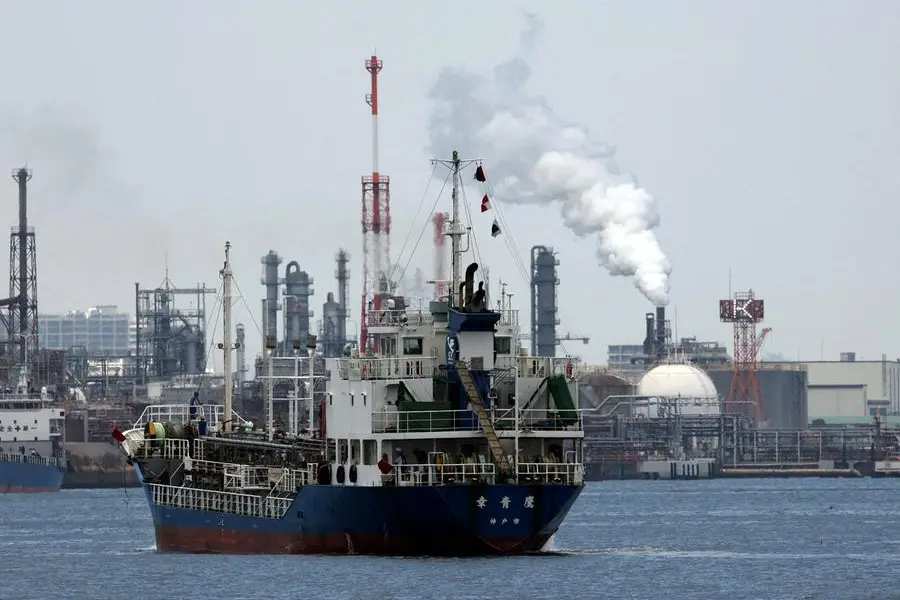
In the meantime, the effective closure of the narrow waterway through which about 20% of the world's crude and refined products moved prior to the February 28 attack on Iran by the United States and Israel is cutting volumes of refined products being shipped around Asia.
Exports of refined products such as jet fuel, diesel and gasoline fell to multi-year lows in Asia, the top energy consuming region and destination for about 80% of pre-war cargoes through the Strait of Hormuz.
The combined export volumes for these three fuel types in April in Asia was almost 3 million barrels per day (bpd) below the average for the three months prior to the start of the conflict.
Jet fuel remains the part of the barrel most under pressure, with Asia's exports of the fuel slumping to 596,000 bpd in April, down from an average of 1.54 million bpd in the three months prior to the start of the war, according to data compiled by commodity analysts Kpler.
The April figure was the lowest in Kpler records dating back to 2017 and shows that flows are only about one-third of pre-conflict levels.
The bulk of Asia's exports of jet fuel head to other Asian countries that are importers, with smaller volumes heading to Africa, Europe and North America.
India's exports of jet fuel dropped to 48,600 bpd in April, down from pre-war levels of 141,000 bpd, while China's dropped to 135,000 bpd from about 308,000 bpd.
The United Arab Emirates went from shipping an average of 106,000 bpd of jet fuel in the three months prior to the war to zero in April, according to Kpler.
The paucity of jet fuel cargoes is reflected in prices, with Singapore assessments ending at $158.91 a barrel on Wednesday, up 70% from the close of $93.45 on February 27, the day before the U.S. and Israel launched their aerial campaign against Iran.
SUPPLY SQUEEZE
Diesel is another pressure point in Asia, with the price of its building block gasoil ending at $141.30 a barrel on Wednesday, up 55% from the pre-war level.
Asia's exports of the transport fuel dropped to a nine-year low of 2.22 million bpd in April, down from an average of 3.54 million bpd in the three months before the start of the Iran war, according to Kpler.
Among regional exporters, Japan's shipments plunged to 32,600 bpd in April from pre-conflict levels of 148,600 bpd, South Korea's slipped to 451,000 bpd from 507,000 bpd, India's dropped to 371,000 bpd from 494,000 bpd while China's dropped to 22,000 bpd from 126,300 bpd.
It's a similar story for gasoline, with Asia's exports of the light vehicle fuel declining to 1.59 million bpd in April from an average of 2.28 million bpd in the three months prior to the start of the Iran war.
South Korea's shipments slumped to 181,300 bpd from pre-war levels of 377,000 bpd, while China's dropped to 47,000 bpd from 116,000 bpd.
The data shows just quickly the supply of refined products has tightened in Asia, as the region's refiners battle to secure enough crude to maintain refinery runs.
The longer the Strait of Hormuz remains closed to most vessels, the more pronounced crude shortages are likely to become in Asia, especially as commercial and strategic inventories are depleted.
Enjoying this column? Check out Reuters Open Interest (ROI), your essential new source for global financial commentary. ROI delivers thought-provoking, data-driven analysis of everything from swap rates to soybeans. Markets are moving faster than ever. ROI can help you keep up. Follow ROI on LinkedIn and X.
The views expressed here are those of the author, a columnist for Reuters.
(Editing by Kim Coghill)