PHOTO
(The author is a Reuters Breakingviews columnist. The opinions expressed are her own.)
HONG KONG - The world's largest travel rush is subdued, again. China has imposed fresh lockdowns in several northern provinces and made domestic travel difficult with testing and quarantine requirements ahead of the week-long Lunar New Year break. It’s reminiscent of worst-hit Wuhan’s abrupt shuttering on the eve of last year’s holiday and officials estimate travel will be 40% lower than in pre-pandemic times. That will dampen the typical $150 billion annual spending boom and exacerbate the imbalances of the recovery in the world’s second largest economy.
The holiday is often the only chance in the year for many Chinese - especially some 230 million migrant workers - to eat, drink, and splurge with family and friends back home. As such, it carries outsized significance for consumer spending which accounted for 54% of GDP in 2020. For example, movie ticket sales made up on average over 12% of the annual box office takings during the holiday week in 2018. Similarly, consumption of baijiu liquor, including Kweichow Moutai, can account for up to 30% of annual sales, according to Ping An Securities.
Perversely, it might not be all bad news. Although some workers rushed away on leave before the new restrictions hit, travel curbs could help factory owners who typically face a labour shortage. In a normal year, holiday-related disruption typically lasts seven weeks and output from industry and construction is only a little over an eighth of the trailing four-quarter average, Capital Economics notes. The drag is far greater than the holiday-related boost normally by transport and tourism.
That implies restrictions could support headline productivity to some extent. Indeed, retail spending has lagged while a ramp-up in industrial activity pulled GDP back to pre-pandemic levels, and China superficially benefits from the fact that final consumption is already a lower share of its output than in richer countries. But steady consumption is essential for small businesses and sustaining healthy growth, and it’s also key to President Xi Jinping’s vision to prioritise the domestic market over trade. As the strongest link in a weak global economic recovery, China’s holiday pain will be widely shared.
CONTEXT NEWS
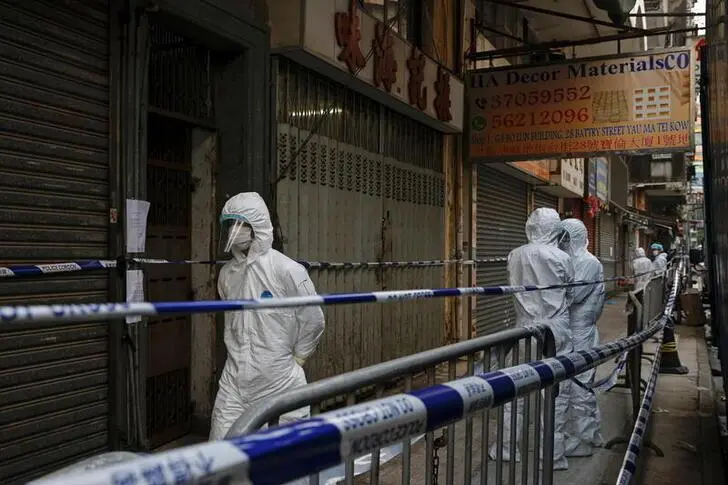
- A growing number of provinces and some districts of Beijing and Shanghai have introduced strict social distancing rules or lockdowns to fight fresh virus outbreaks ahead of China's Lunar New Year. The country’s annual week-long holiday will start on Feb. 11.
- China's National Health Commission said on Jan. 20 that people returning to the countryside will be required to go through 14 days of health monitoring on arrival, and must have been tested negative for Covid-19 within seven days before their travel date. Those in areas considered “low risk” are also advised to stay home and avoid dining out, an official at Chinese Center for Disease Control and Prevention said.
- The number of passenger trips during the upcoming travel rush is expected to be up 10% from the low base of 2020, but down 40% from 2019’s figure, a transport ministry official said at a press briefing on Jan. 20.
- China Railway has reported a nearly 60% drop year-on-year in train ticket bookings for the holiday period, and revised its forecast for railway trips down to 296 million. The operator previously expected 407 million railway passenger trips.
(The author is a Reuters Breakingviews columnist. The opinions expressed are her own.)
(Editing by Una Galani and Sharon Lam) ((yawen.chen@thomsonreuters.com; Reuters Messaging: yawen.chen.thomsonreuters.com@reuters.net))