PHOTO
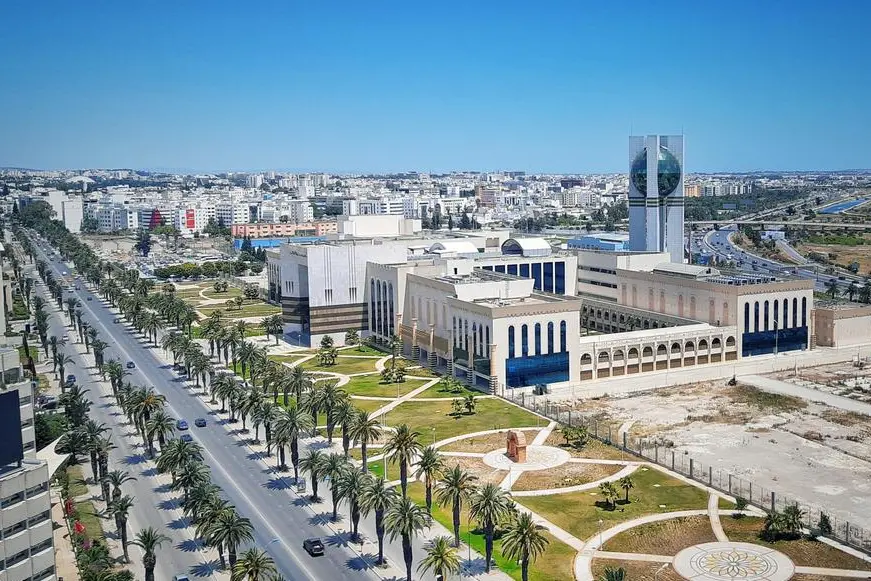
Tunis - Prime Minister Sarra Zaafrani Zenzri chaired on Tuesday a Cabinet meeting at the Government Palace in Kasbah dedicated to reviewing the development plan for the 2026–2030 period.
The Prime Minister emphasised that the plan is not merely an economic document but represents a pivotal national milestone that outlines the next phase and establishes political choices and directions in accordance with the directives of the Head of State, according to a press release from the Prime Ministry.
The statement quoted Zenzri as stressing the necessity for the plan to include projects with clear performance indicators and measures, ensuring the adoption of an integrated information system to continuously monitor and evaluate the progress of these projects.
The Prime Minister noted that the preparation of the plan followed a series of meetings with local councils, regional councils, and district councils, which played a central role by being involved in the planning process and in setting priorities for development projects.
The release also stated that, according to the President of the Republic’s vision, this plan for the first time in Tunisia adopts a bottom-up approach within a new participatory framework.
The Prime Minister confirmed that the 2026–2030 Development Plan is based on a foundational structure that ensures alignment between state policy and the development programmes and projects proposed by various councils within the framework of national unity.
It aims to establish a new development model based on the principles of social justice and equity, embodying the enduring values enshrined in the Tunisian Constitution, reflecting the choices and legitimate aspirations of Tunisians for fair and balanced development.
During the Cabinet meeting, Minister of Economy and Planning Samir Abdelhafidh presented a report on the progress of the 2026–2030 development plan, highlighting:
1. Development issues raised by councils at the local, regional, and district levels, encompassing social, economic, environmental, and institutional challenges.
2. Key reforms and measures proposed to stimulate local, regional, and district economic activity, strengthen social inclusion, improve environmental conditions, and support the institutional and legislative framework.
3. Main content proposed in state policy reports across all sectors.
4. Core challenges of the period, focusing primarily on social areas, digital transformation, developmental disparities between regions, energy transition, and financing.
According to the statement, the main pillars of the 2026–2030 development plan include enhancing social inclusion and supporting vulnerable groups by improving the quality of basic services in health, education, and public transport, implementing employment programmes, supporting young entrepreneurs; improving youth employability, particularly for university graduates and strengthening social protection.
The second pillar involves reducing developmental disparities between regions by connecting interior and less-developed areas through infrastructure development, fostering regional development dynamics, and narrowing regional inequalities.
Among the pillars also building a sustainable and inclusive economic model, based on stimulating public and private investment, increasing agricultural production and efficiency through modern technologies, controlling water consumption, developing industrial and agricultural value chains to increase added value while respecting environmental standards, integrating the informal sector, expanding trade partnerships to promising markets, and attracting more foreign investment in promising sectors.
Another pillar focuses on building water sovereignty involves improving the use of conventional water through efficient distribution across water networks, developing water-saving irrigation systems, enhancing non-conventional water resources, expanding high-quality wastewater treatment, and promoting smart agriculture and water digitisation.
The energy sovereignty pillar aims to reduce fossil fuel consumption, increase the share of renewable energy in the energy mix, leverage national potential for alternative energy sources (solar, wind, and biogas), rationalise energy use by individuals and institutions, and reform energy sector governance through improved legislation and institutional frameworks, while benefiting from the ELMED energy interconnection project.
The digital transformation pillar of the development plan focuses on the widespread digitisation of administrative services, expanding high-speed connectivity, supporting the digital transformation of the economic fabric, and adopting a national strategy for artificial intelligence.
The modern industrial model pillar is based on establishing an industrial framework rooted in a knowledge economy and clean, modern technologies to strengthen positioning within value chains.
It also supports the decentralisation of industrial infrastructure, optimises regional resources and capacities, promotes small and medium enterprises (SMEs), and enhances their competitiveness.
Efforts will also include accelerating the creation of industrial zones, focusing on smart and integrated industrial areas, supporting research and development, and technological innovation in the industrial sector.
The plan emphasises fully utilising technological and industrial hubs, upgrading technical centers, and implementing competitiveness charters for industrial activities to boost export capacity.
The final pillar of the development plan focuses on facilitating access to financing by strengthening fiscal balances, improving national savings rates, increasing state-owned resources, mobilising affordable financing and green financing resources and preparing a list of projects to be implemented through public-private sector integration. It also aims to strengthen financial inclusion for vulnerable groups.
© Tap 2025 Provided by SyndiGate Media Inc. (Syndigate.info).