PHOTO
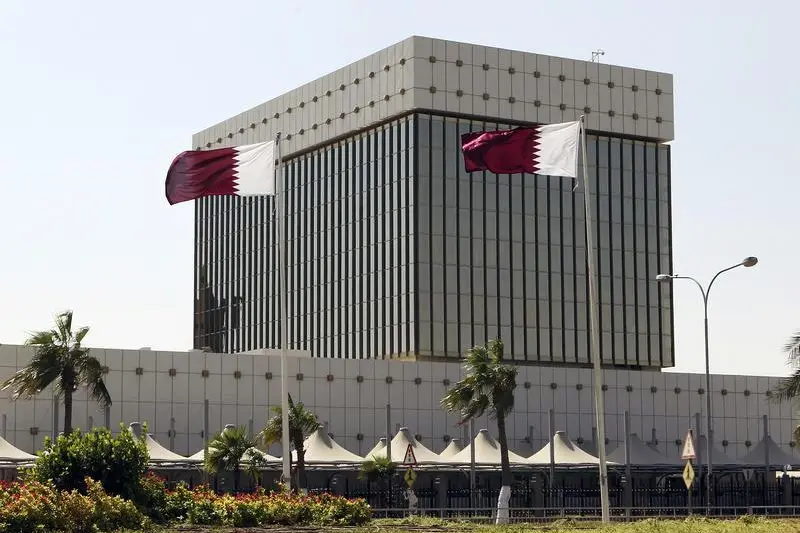
Qatar achieved the tightest ever spread for a US dollar fixed-rate sukuk in its long-awaited return to the Islamic bond market on Monday after an absence of more than a decade.
The Gulf state raised US$3bn through the sukuk as part of a US$4bn offering that included a US$1bn three-year conventional note. Both tranches landed at tight levels, but it was the spread on the sukuk that caught the eye, at just 20bp over Treasuries.
That was tighter than any US dollar fixed-rate sukuk at any tenor, according to bankers. The sukuk narrowly missed being the record spread for a non-core SSA investment-grade bond at the 10-year tenor in any format in the US dollar market. Abu Dhabi priced a US$2bn 2035 conventional bond at 18bp over Treasuries in September.
“We were prepared for it,” said a lead banker on Qatar's trade about whether the syndicate group thought it would come inside Abu Dhabi. The banker said Qatar could have achieved the feat but opted to lock in size at what was still a record spread for the sovereign.
“We were able to upsize and get US$1bn more than Abu Dhabi,” said the banker, comparing the two sovereigns' respective 10-year notes. “It was a very strong outcome with a prolific sukuk bid.”
Middle East investors took the largest share of the allocation of the sukuk tranche at 38%.
It was Qatar’s first sukuk issuance since 2012, according to IFR data, when it raised US$4bn through a dual-tranche deal. At the time it was the largest international sukuk transaction.
Skipped
While the scarcity value proved a hit as demand for the sukuk closed at more than US$8.75bn, not everyone was pleased with the tight price. A senior emerging markets portfolio manager said he “skipped participating in the issue due to the level”.
He also referenced Qatar’s recent exit from the JP Morgan Emerging Markets Bond Index as another reason for not buying the deal. “They won't benefit from a positive index inclusion technical,” he said.
Qatar (Aa2/AA/AA) formally left the EMBI at the end of August following a six-month phased removal after being reclassified as a developed market.
Holding steady
The three-year conventional bond also came at a tight level, landing at plus 15bp, with a final book of more than US$2.5bn. Books opened for the dual-tranche deal in the areas of plus 55bp for the sukuk and plus 45bp for the conventional note.
Despite the tight pricing, the sukuk tranche was steady in the aftermarket, at 99.54/99.57 on Tuesday, according to an EM trader. It was priced at 99.533.
Qatar’s deal added to the record volume of international sukuk this year. US dollar sukuk issuance had reached US$64.7bn as of November 5, according to LSEG data, with almost 90% of that coming from the GCC region. Total supply for the whole of 2024 was US$53.1bn, according to LSEG.
Equity-like
The record volume is even more impressive given the uncertainty on not just geopolitics and interest rates but also the implementation of a proposal that could transform the sukuk market, the Accounting and Auditing Organization for Islamic Financial Institution’s Shariah Standard 62.
The standard aims to transform sukuk into a more equity-like instrument, in which ownership of the underlying asset is actually transferred to the sukuk holder. This will fundamentally alter the risk profile of the instrument, but the proposal has been stuck in draft stage.
“This year there has been extensive feedback,” said Bashar Al-Natoor, global head of Islamic finance at Fitch. He said the standard “has been under revision but the timing for release and adoption remains uncertain".
“What really matters from a credit perspective is how the standard will be implemented in actual documentation,” said Al-Natoor.
The UAE's Higher Sharia Authority recently issued a resolution on the "sale of rights" in sukuk, introducing language around the transfer of assets in default scenarios. This language has been included in sukuk deals by Binghatti and Arada, two UAE property developers. The Saudi sovereign also included similar language with its first fully AAOIFI-compliant sukuk in September.
"This obligation to transfer assets is becoming more visible among GCC issuers, but in our dedicated sukuk criteria, we continue to treat these as senior unsecured, given the transfer is conditional and the current legal and regulatory complexities," said Al-Natoor. "As such, we maintain our approach of rating such sukuk as senior unsecured."
The most important question is who is going to implement the new standard, and how. “The standard itself has no teeth,” said Al-Natoor. “The actual teeth lie with the implementation by the authorities.”
Citigroup, Deutsche Bank, QNB Capital and Standard Chartered were global coordinators on Qatar's deal. Al Rayan Investment, Dubai Islamic Bank, Emirates NBD, Goldman Sachs, Islamic Corporation for the Development of Private Sector, Intesa Sanpaolo and KFH Capital Investment Company were joint lead managers.
Source: IFR