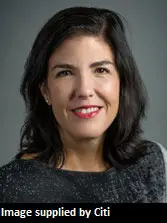
Tina Fordham, Citi's chief political analyst, has made a career out of trying to understand the impact of global events.
"A President Trump. There, I've said it," Tina Fordham says uncomfortably. Pausing, she takes a large gulp of her coffee, the first of a long day ahead, as we meet for an early 8am breakfast meeting at Citi's offices in Dubai's financial district.
As Chief Global Political Analyst at one of the biggest investment banks in the world, there is no shortage of talking point, but it's clear there is only one name on everyone's lips when Zawya interviewed her in late April while she was visiting the region for a series of meeting with Citi staff and clients.
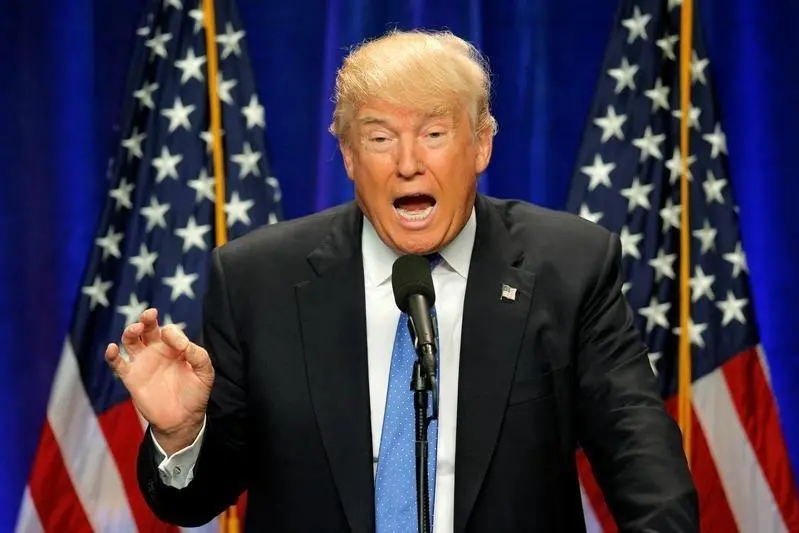
Trump "has hit a nerve" with a certain demographic in America and has become "a lightning rod for people who are the losers of globalisation," she says of the controversial Republican presidential candidate.
Across the Atlantic and a political and economic crisis is brewing in the United Kingdom (U.K.) after the country voted to leave the European Union (E.U.), but the core issues are quite similar: economic uncertainty, social divisions, and immigration.
Like Trump, those who fought the U.K. Brexit campaign mainly former London major Boris Johnson and ex-leader of the U.K. Independence Party, Nigel Farage have been described as brash and controversial in the tactics they used to appeal to British voters in the run up to the vote last month.
Understanding such events and personalities is the task Fordham faces on a daily basis. At best, her job is described as focusing on hard-to-quantify risks and how the bank can interpret and react to ongoing geopolitical and socioeconomic factors. At worst, it involves her peers in the bank looking for help in understanding what is happening in the world and what economic impact it will have.
Even though she has a postgraduate in international relations from Columbia University and Fordham was the first person to be appointed by a global bank to analyse political events when she was hired in 2001, she is keenly aware of the challenges involved in her role.
"There have been many attempts to try to model these types of phenomena. As far as I have seen they have not been successful,"
Vox Populi Risk
However, these issues, and more, were addressed in her most recent study for Citi, entitled 'Global Political Risk: The New Convergence Between Geopolitical and Vox Populi Risk and Why it Matters', which was published in January.
It describes vox populi risk as the growth in more volatile public opinion that poses ongoing, fast-moving risks to the business and investment environment. This often involves the rise in non-mainstream parties winning votes in elections, controversial candidates garnering air time using shock tactics and mass movement protests against established governments and organisations.
The one big issue that combines much of the mantra of the Trump and the Brexit campaigns is the immigration issue, but this is more than just a western challenge. The United Nations (U.N.) refugee agency in June released figures showing that a record 65.3 million people were displaced worldwide last year, a 50 percent increase in just five years.
Immigration strain
In Europe, millions of Syrians fleeing their country have sought refuge by attempting to cross the Mediterranean, which has placed a strain on European leaders and rattled the existing political landscape.
Fordham's report points out that 11 out of 17 European elections in 2015 saw a rise in votes for anti-immigration parties, showing the link between immigration and the rise in vox populi risk. At the same time, the European Parliament's latest Eurobarometer poll, published in October 2015, found that 47 percent of respondents said immigration was the biggest challenge facing the E.U. in 2014, compared to 14 percent in 2013.
Fordham says the current immigration crisis can be traced to the Middle East. "The fact that we have 60 million forcefully displaced people around the world is culmination, on the one hand, of 20 years of foreign policy failures in the Middle East, just to be direct about it.
"Immigration and terrorism are helping feed into this middle class anxiety response... Whether the media causes it or not, [it's] beside the point for me, because again, what I'm looking at is developments which might trigger policy response or lead to changes in public opinion that will lead to political outcomes".
Rise in terror attacks
While immigration is obviously a growing issue, is terrorism also on the rise, or has it simply become more headline-grabbing? Fordham's research shows the answer is clearly yes. The Global Terrorism Index, published in November 2015 by the Sydney-based Institute for Economics and Peace, found the total number of deaths from terrorism rose by 80 percent year-on-year in 2014. It also found that the number of deaths of private citizens rose 172 percent in the same period and 93 countries around the world experienced some level of terrorist activity in 2014.
"Last year almost every country in the world experienced a terrorist attack, and I think that's significant," Fordham says. While more people are killed in car accidents, she believes terror attacks have a much bigger impact on the human psyche and force leaders to react.
"Something like the Paris attack - which killed, what, a 139 people - prompts all kinds of policy moves, from the need to spend more on police, privacy, investigations and these kinds of things."
As the fallout from Brexit rumbles on in the U.K., many will now be looking to see if the U.S. follows suit and American voters will be gripped by the symptoms of vox populi risk when they go to the polls in November.
"The US presidency is relatively weak," she points out. "This is something that is never really understood... That's because of Congress and the Supreme Court and the sort of checks and balances system deliberately designed by the founding fathers so that the presidency wouldn't be able to take the country in different direction".
Whether it will be President Trump or another President Clinton, one thing seems clear: 2017 is likely to be a busy year for Tina Fordham, especially while there are those who need some kind of certainty amidst the unpredictability of current global politics.
>
Note: Tina Fordham was interviewed exclusively by Zawya during a visit to Dubai in late April. Under U.K. law, Citi executives were not allowed to publicly comment on the Brexit referendum ahead of the June 23 public vote.