PHOTO
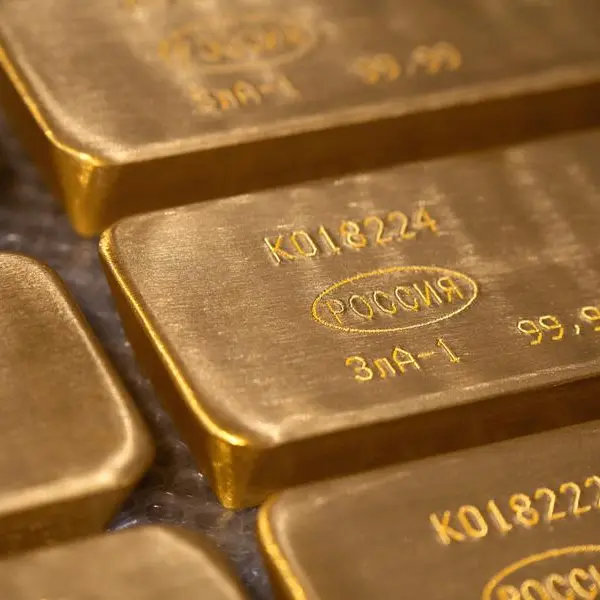
Gold prices fell on Thursday as investors braced for futures selling tied to a commodity index reshuffle, with a stronger U.S. dollar adding pressure by making the metal costlier for overseas buyers.
Spot gold fell 0.6% to $4,428.06 per ounce, as of 1115 GMT. U.S. gold futures for February delivery fell 0.6% to $4,436.30.
"Gold and silver remain under pressure as the annual commodity-index rebalancing gets underway. Over the next five days, COMEX futures could see selling in the region of $6 to $7 billion in each metal," said Ole Hansen, head of commodity strategy at Saxo Bank.
The annual Bloomberg Commodity Index rebalancing, designed to keep the index aligned with the current state of the global commodity market, begins this week.
"(The U.S.-Venezuela conflict) added a small georisk premium at the beginning of the week which is now deflating as the attention turns to the rebalancing," Hansen added.
Meanwhile, the U.S. dollar hovered near a one-month high as investors assessed mixed economic data ahead of Friday’s nonfarm payrolls report.
Data on Wednesday showed U.S. job openings dropped to a 14-month low in November while hiring resumed its sluggish tone, pointing to ebbing labor demand.
Investors are now awaiting the U.S. non-farm payrolls data for more clues on monetary policy, with markets pricing in two interest rate cuts by the Federal Reserve this year.
On the geopolitical front, the U.S. seized two Venezuela-linked oil tankers in the Atlantic Ocean on Wednesday.
Spot silver lost 3.2% to $75.64 per ounce, after hitting an all-time high of $83.62 on December 29.
HSBC sees gold hitting $5,000 per ounce in the first half of 2026 on geopolitical risks and rising fiscal debts, and expects silver to trade between $58 and $88 in 2026, driven by supply deficits, robust investment demand, and high gold prices, but warned of a market correction later in the year.
Spot platinum was down 4.2% at $2,211.94 per ounce, while palladium shed 2.4% to $1,721.61 per ounce.