PHOTO
Gold drifted lower on Wednesday after hitting a one-month peak as investors assessed the latest signals on the U.S.–Iran situation and what they could mean for the interest rate outlook.
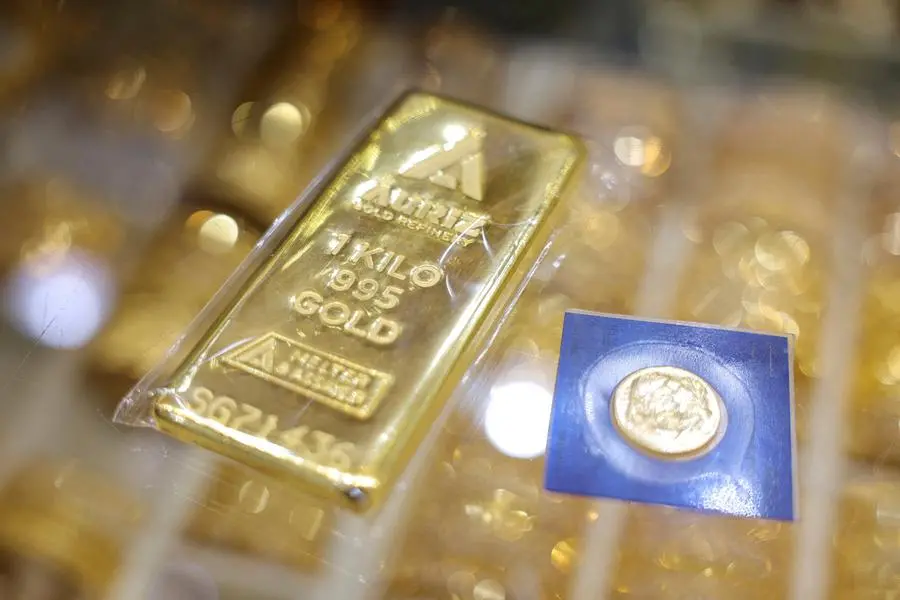
Spot gold was down 0.9% at $4,798.89 per ounce as of 1:31 p.m. ET (1731 GMT), after hitting its highest since March 18 earlier in the session. U.S. gold futures settled 0.5% lower at $4,823.60.
"Gold and silver are just seeing some mild and routine profit-taking after scaling overnight highs," said Jim Wyckoff, senior analyst at Kitco Metals.
"Gold prices have been rallying on improved risk appetite and selling off during bouts of risk aversion in recent sessions, running counter to the metal's traditional safe-haven role. Traders are currently more focused on the implications of tighter monetary policy and inflation pressures," he added. U.S. President Donald Trump said the war he launched with Israel on Iran was close to over, as the army chief of mediator Pakistan arrived in Tehran to try to prevent a renewal of the conflict.
Oil pricesedged up as shipping through the Strait of Hormuz remained constrained. Forty-five days after Iran's Revolutionary Guards declared the strait closed, transit through the waterway remains uncertain despite a two-week ceasefire. The Federal Reserve may need to wait until 2027 to cut interest rates if an extended bout of high oil prices from the Iran war delays inflation's progress towards the U.S. central bank's 2% goal, Chicago Fed President Austan Goolsbee said on Tuesday. The market currently sees a 32% chance of a U.S. rate cut this year.
Higher interest rates tend to weigh on gold by increasing the opportunity cost of holding a non-yielding asset, offsetting the metal's appeal as an inflation hedge.
Among other metals, spot silver fell 0.2% to $79.40 per ounce, while platinum rose 0.8% to $2,119.52. Palladium was down 1.1% at $1,570.10.