PHOTO
The contours of global commerce are being redefined by collaborations among nations in the Global South, forging innovative pathways for mutual growth and development. Within this transformative environment, the Sultanate of Oman and the Republic of Indonesia are strategically positioned as key players in their respective regions, demonstrating a growing convergence of interests that points towards a robust bilateral partnership.
While historical interactions have fostered a foundation of cultural understanding, the current momentum indicates a deepening engagement across political and economic spheres, suggesting the emergence of a potentially transformative economic corridor linking Southeast Asia and the Middle East.
Since the establishment of diplomatic relations in 1977, both nations have steadily cultivated meaningful connections, marked by the opening of embassies in each other's capitals – Indonesia in Muscat (2011) and Oman in Jakarta (2013).
This deepening of diplomatic ties has facilitated enhanced communication and cooperation. The shared Islamic heritage provides a natural cultural affinity, while concurrent membership in organisations such as the Organisation of Islamic Cooperation (OIC) and the Non-Aligned Movement (NAM) offers platforms for aligned action on global issues.
A key driver of this evolving relationship is the notable expansion of economic ties. As per Observatory of Economic Complexity (OEC) bilateral trade volume has witnessed substantial growth, reaching $2.22 billion in 2023, a significant increase from $464 million in 2012. This upward trajectory reflects complementary economic strengths that position both nations for mutual benefit.
An analysis of trade dynamics reveals both opportunities and areas for potential enhancement. While Indonesia historically maintained a trade surplus, the year 2023 saw a shift, with Oman's exports to Indonesia reaching $1.86 billion, contrasting with Indonesia's exports to Oman of $364 million. This imbalance is largely attributed to Oman's significant exports of semi-finished iron ($1.04 billion), refined petroleum ($539 million), and acyclic alcohol derivatives ($124 million).
Indonesia's export portfolio to Oman includes key commodities such as palm oil ($150 million), cars ($79.3 million), and refined petroleum products, showcasing Indonesia's diverse manufacturing capabilities. This complementarity in economic outputs provides a solid foundation for expanded trade activities.
Indonesian companies, such as PT Medco Energy International, have established a presence in Oman's energy sector. Furthermore, Oman's Vision 2040 programme actively encourages further Indonesian investment, particularly in sectors like real estate and tourism, with a focus on Integrated Tourism Complexes.
The people-to-people dimension of this relationship is also significant. Approximately 80,000 Indonesian workers contribute to Oman's economy, fostering grassroots connections between the two societies. Tourism flows are also on the rise, facilitated by the introduction of a visa-free agreement in 2019. These interpersonal connections contribute to a favorable environment for strengthening business relationships.
Looking ahead, digital cooperation presents an exciting avenue for growth. Recent high-level discussions have centered on collaboration in areas such as digital infrastructure, cybersecurity, and innovation.
Indonesia's thriving digital economy offers attractive opportunities for Omani investors, while Omani expertise in specific technological fields could contribute to Indonesia's development.
Oman's strategic geographic location provides Indonesian businesses with a valuable gateway to the broader MENA region. Conversely, Indonesia's membership in ASEAN and the Regional Comprehensive Economic Partnership (RCEP) offers Omani businesses potential access to the dynamic Southeast Asian market, encompassing over 650 million consumers.
Untapped trade potential exists within specific sectors. Estimates suggest that Indonesia has the capacity to increase its exports of refined petroleum to Oman by an additional $31.5 million, while Oman could potentially increase its exports of iron ore to Indonesia by $10.7 million. These figures illustrate immediate opportunities for trade expansion.
For Omani businesses seeking to enter the Indonesian market, focusing on Indonesia's large consumer base, exceeding 250 million people, is advisable. Beyond current exports, significant potential exists for expansion in sectors such as chemicals, metals, methanol, raw aluminum, gypsum, and polypropylene.
Indonesian businesses targeting Oman should leverage existing strengths in sectors including wood products, electrical appliances, textiles, furniture, and foodstuffs. As Oman continues its infrastructure development, opportunities in the construction materials sector are also expected to grow.
To advance the evolving partnership between Oman and Indonesia, both governments must prioritise reducing trade barriers, streamlining investment procedures, and fostering direct business-to-business engagement. Recent high-level business delegation visits highlight strong private sector interest in expanding bilateral cooperation.
Despite the promising potential of the Oman-Indonesia economic corridor, it remains largely underutilised. With their complementary economic capabilities, shared cultural affinities, and strategic geographic positions, the two nations are well-positioned to cultivate a deeper and mutually advantageous relationship.
Leveraging their respective strengths and regional influence, Oman and Indonesia could shape a transformative alliance that contributes not only to their national development goals but also to a more interconnected, balanced global economy.
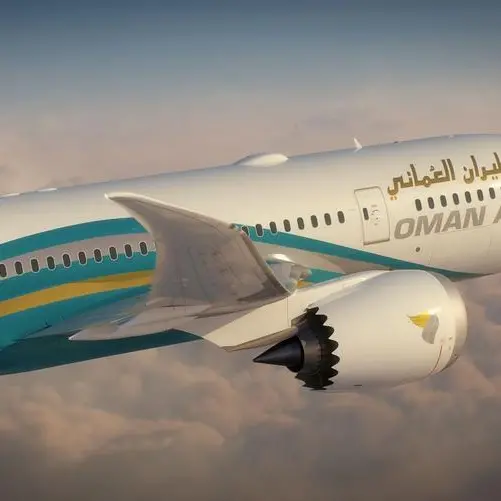
Realising this potential requires proactive efforts to enhance physical and diplomatic connectivity. Increasing direct flight connections between Oman and Indonesia is vital, particularly given Indonesia’s demographic scale and its importance as a Global South economy with high tourism and trade potential. Improved air connectivity will also strengthen cultural and societal ties.
On the trade front, the establishment of direct shipping routes between key ports would significantly facilitate bilateral commerce. Additionally, launching structured diplomatic platforms—such as a joint investment forum—would institutionalise dialogue and deepen economic cooperation. Embassies in both countries must play a catalytic role by accelerating business facilitation measures, promoting investment opportunities, and creating an enabling environment for sustained engagement.
2022 © All right reserved for Oman Establishment for Press, Publication and Advertising (OEPPA) Provided by SyndiGate Media Inc. (Syndigate.info).