PHOTO
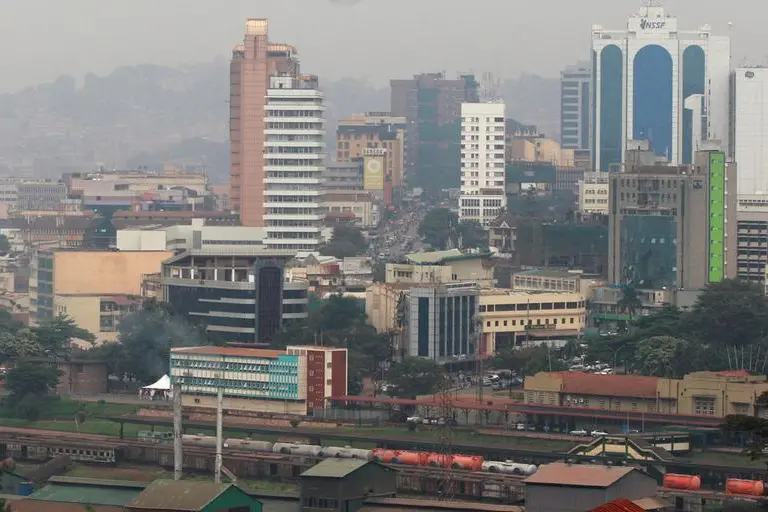
Local suppliers are pushing for at least 40 percent of the project contracts – with a target of retaining $500 million – from the first phase of Uganda’s flagship standard gauge railway.
Construction is expected to begin in April 2026 trailing neighbours Kenya and Tanzania after financing hitches set Kampala back by a decade.
Industry lobby groups recently told project managers and contractor that the delay may have been a blessing in disguise, as potential suppliers have enhanced quality of their products to match global standards, and are better organised now than they were 10 years ago.
With a contract value of €2.7 billion ($3.16 billion), the SGR is one of the largest projects being implemented in Uganda, alongside the multibillion-dollar oil and gas initiatives in the Lake Albert basin.“In this project, local content is not just a slogan, it is a work programme with clauses, milestones, and measurement,” said Perez Wamburu, project coordinator at the SGR national content symposium in Kampala on August 29.
Waiswa Bageya, permanent secretary in the Ministry of Works and Transport, said local content means leveraging this project to grow home industries’ capacity. Wherever possible, the contractor can source inputs locally.“A railway made entirely of foreign steel, by foreign labour and serviced by foreign companies would not serve our long-term interests,” he said.
The 272-kilometre main line project with 67 kilometres of sidings and 30.4 kilometres of branches will require at least 100 tonnes of steel.
Mr Bageya said Uganda has the capacity to supply cement, aggregates, and even reinforced steel and steel products that meet international standards. He said this can be done by aligning procurement policies with local industrial capacity, to accommodate Ugandan factories, quarries and workshops.
Private sector players, however, fear that no local firm has the capacity to supply 100 tonnes of steel or cement and other materials without forming a joint venture which may compromise quality.
Government executives argue that the timing of the 272-kilometre line to Kampala provides an opportunity for Ugandan companies to learn from the development of Uganda’s oil and gas upstream and midstream projects, which are now in advanced stages.
James Musherure Rujoki, senior national content officer at the Petroleum Authority of Uganda (PAU), says suppliers of goods and services should be assured of local participation in mega projects, which improves when a country has a local content policy.“Let’s look at Nigeria, which, until 2010, had only 5 percent local participation in oil projects. They introduced local content policy and right now have moved close to 50 percent,” he said, advising that where capacity is lacking, players should form joint ventures to increase their chances.
Since the development Uganda’s oilfields and the East African Crude Oil Pipeline (Eacop) kicked off in 2023, the operators TotalEnergies, China National Offshore Oil Corporation and Eacop Ltd, have awarded contracts worth $7.4 billion, of which $2.3 has gone to Ugandan companies, Musherure said..
For instance, the Ministry of Works and Transport – the line docket for the SGR Project – currently has up to Ush2 trillion ($562.8 million) worth supplier arrears, which stalls business operations for companies with limited capital backup.“Delayed payments are the biggest bottleneck that contractors face, even for World Bank-funded projects,” the Uganda Manufacturers Association said.
© Copyright 2022 Nation Media Group. All Rights Reserved. Provided by SyndiGate Media Inc. (Syndigate.info).