PHOTO
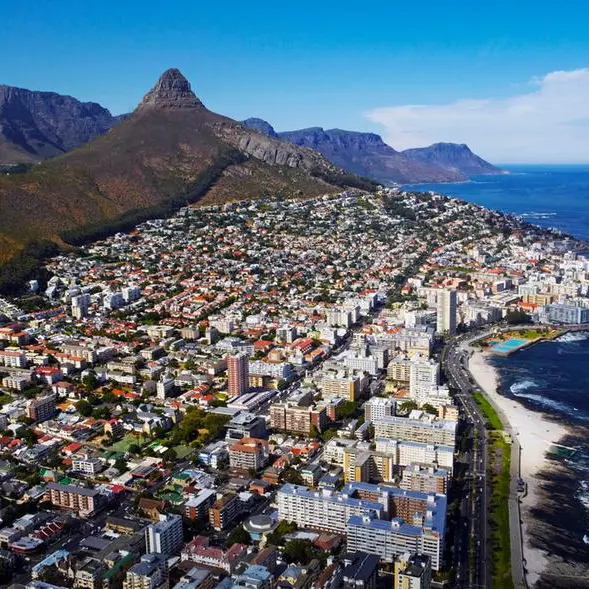
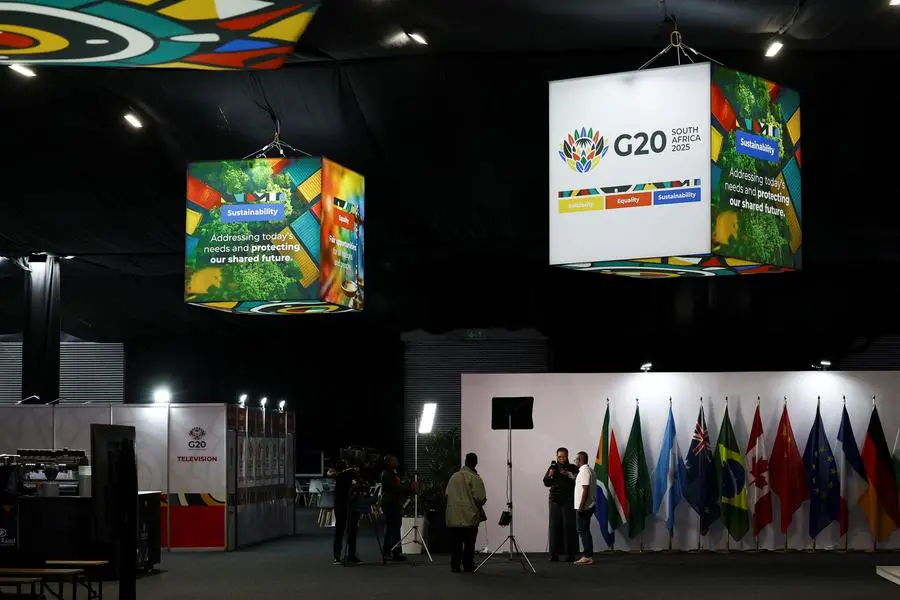
The leaders of the world’s 20 largest economies are meeting in Johannesburg this week, marking the first time that a G20 summit has taken place on African soil.
South Africa’s presidency would be historic in any circumstance.
However, the combination of a global debt crisis, an intense competition for Africa’s critical minerals, accelerating climate breakdown, and sharp geopolitical divisions, makes this summit something else; a stress test for the global order itself.
When US President Donald Trump pulled out of the summit last week, the gathering and its resolution took a turn reflecting the sharp divisions in the world order.
The world is living through overlapping crises, wars, rising inequalities and a deep erosion of trust between nations and citizens. In such an arena, international cooperation is no longer just a diplomatic nicety; it is a matter of survival.
For Africa, the priorities could not be clearer or more urgent, with life-changing implications for the continent's over one billion inhabitants.
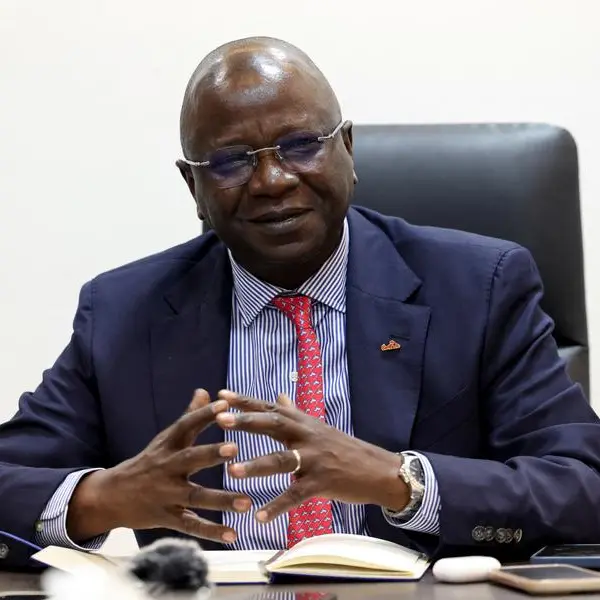
First, the African Union (AU) is advocating for the establishment of its own credit agency to alleviate the current debt burden facing African nations.“Data clearly shows that African countries pay ten times more interest than other nations do when they borrow,” says Dr Gloria Kiondo, Deputy Representative of UNDP South Africa.
Globally, public debt has hit an estimated $102 trillion, with developing countries accounting for about $31 trillion of that burden.
In 2024 alone, developing countries paid about $921 billion in interest, a record high. UN estimates suggest that 3.4 billion people now live in countries that spend more on servicing debt than on essential public services like health and education.
Africa sits at the sharpest edge of this crisis. The continent’s external debt stock reached roughly $685.5 billion in 2023, equivalent to about a quarter of its combined GDP.
Debt servicingGovernments are projected to pay nearly $89 billion in external debt service in 2025. In many countries, interest payments alone absorb 16–17 percent of government revenue, the highest share of any region, meaning more money now flows to creditors than to teachers or nurses.“It's a very direct consequence: if a government borrows, then every citizen is indebted. That is why, in the global dynamics, they say one of the most important factors is GDP per capita, which means we are distributing unfair and biased debt to every citizen,” says Dr Misheck Mutize, head of credit rating advisory APRM.
Dr Mutize was tasked with creating a new credit agency for the continent in response to African governments feeling ignored and deliberately excluded by Brentwood institutions, a situation which continues to stir tensions in global forums.
But despite the unease, African governments highlight the harsh reality of the numbers: Debt servicing is diverting funds from investments in hospitals, schools, climate resilience and jobs that Africa requires.
Last year, African governments spent an estimated $163 billion on servicing debt, up from about $61 billion in 2010. At the same time, the continent loses tens of billions of dollars annually to illicit financial flows and tax abuse, while bearing the costs of a climate crisis that it did not cause.
African policymakers and civil society insist that, in ecological and historical terms, Africa is a net creditor to the world, not a permanent debtor.
Equal partnersAfrica is not coming to Johannesburg empty-handed. In May 2025, finance ministers adopted the Lomé Declaration on Africa’s Debt, mandating the AU to articulate a Common African Position on Debt and urging member states to negotiate with creditors based on that shared framework.
This was seen as an important step towards enabling the continent to engage as an equal partner in a world order that is becoming increasingly schizophrenic, where common positions are rarely adopted.
At the summit, the G20 will come under pressure to acknowledge that its existing tools, especially the Common Framework for Debt Treatments, have been ‘too slow and too limited,’ delivering only a handful of restructurings since 2020.
For African leaders, Johannesburg is a chance to move debt from the footnotes of communiqués to the heart of a new financial compact.
“Having the G20 on African soil, with South Africa at the presidency and the AU now as full permanent member, creates a unique opportunity for the continent to influence, lead, and shape global frameworks as well as rules on financing for development, tax and debt governance, climate finance, and critical minerals, instead of just absorbing the consequences of choices imposed from elsewhere,” he says.
Contested futureIf debt represents Africa’s past entanglement with a financial system it did not design, critical minerals represent its contested future.
Across Africa’s land and seabed lie the cobalt, lithium, manganese, nickel, graphite and rare earths that will power the green transition and digital revolution.
The continent holds roughly 30 percent of global critical mineral reserves and around 70 percent of the world’s cobalt, yet it currently captures less than five percent of the value generated along the supply chain.
As the world races to decarbonise, major powers are scrambling to secure access to these minerals.
The United States has deployed its Inflation Reduction Act as an inward-looking industrial policy. The European Union has promulgated a Critical Raw Materials Act to shield its industries.
China already controls about 60 percent of refining capacity and 80 percent of global battery manufacturing, and is consolidating its lead.
The question for Africa is stark: will the continent set the terms of this new scramble, or be used as a quarry for other people’s industrialisation once again?At a high-level dialogue in Johannesburg on “Turning Mineral Wealth into Negotiating Power”, African officials, experts and activists converged around a clear message: Africa must stop exporting rocks and start exporting value.
That means using the G20 to support an African Critical Minerals Alliance with common standards on taxation, environmental and social governance, and local content.
It would also entail creating a Pan-African Green Minerals Fund to finance geological mapping, skills development, value chains, and regional industrial corridors such as the DRC–Zambia battery chain and the Lobito Corridor.‘Breaking free’Crucially, African voices are challenging a narrow, infrastructure-only vision of industrialisation.
As one framing puts it, industrialisation is not a smelter, it is an ecosystem. A smelter can be capital-intensive, export-oriented and job-poor. Real transformation lies in the web of activities before and after the smelter: geological surveying, engineering, logistics, component manufacturing, battery assembly, electric mobility, recycling and digital services."Africa must break free from the cycle of exploitative extraction of raw materials, value loss, and from continuously funding the prosperity of others. At this G20 in Johannesburg, the real test is whether partners are ready to support a bold Africa shift from shipping out raw critical minerals to producing and exporting value-added products,” said Deprose Muchena, director, Resource Futures Africa Programme.
As South Africa hands over the G20 presidency to the United States for 2026 and then to the United Kingdom in 2027, the Johannesburg summit will effectively define the terms of engagement between an increasingly assertive Global South and a West that is still struggling to adapt to a multipolar world.
Yet global realities have shifted: the war in Ukraine, conflicts in the Middle East, the rise of other economic powers and the politicisation of supply chains mean no single country can dictate terms as it might have in the past.
In this context, South Africa’s presidency is a bridge year, and it can embed African concerns, debt justice, fairer credit ratings, a just energy transition and the value-addition of critical minerals into the mainstream of G20 discussions.
In that case, it will set boundaries that even a hostile successor presidency cannot easily erase.
© Copyright 2022 Nation Media Group. All Rights Reserved. Provided by SyndiGate Media Inc. (Syndigate.info).