PHOTO
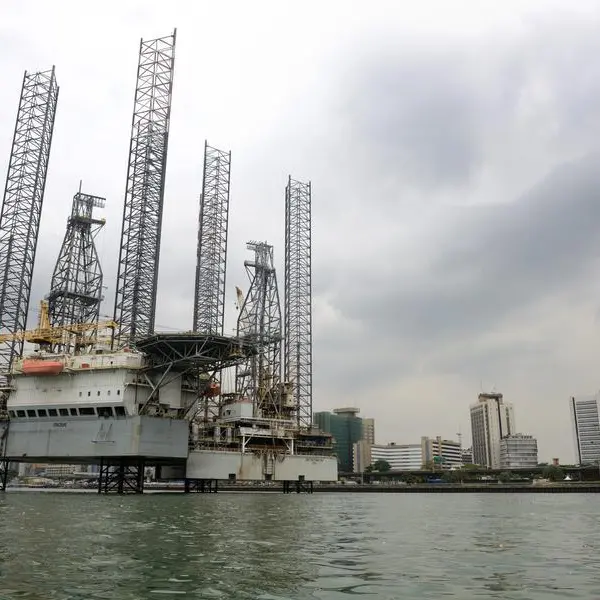
About $300billion of crude oil sales can’t be accounted for, according to an interim report by the Senate Ad-Hoc Committee on Crude Oil Theft in the Niger Delta.
The committee, which probed crude oil sales across several years, was chaired by Senator Ned Nwoko.
The Delta-North lawmaker presented the preliminary report of his findings to the Senate on Wednesday in Abuja.
The report noted that a forensic review of domestic crude proceeds and tax oil returns showed differentials, mismatches and unaccounted funds amounting to a staggering $22 billion.
Similarly, it uncovered a shortfall of $81 billion between receipts declared by the Nigerian National Petroleum Company Limited (NNPCL) and those recorded by the Central Bank of Nigeria (CBN) for 2016 and 2017, a development that shocked the Senate.
Furthermore, the panel’s review of crude oil sales from 2015 to date, indicated that over $200bn in oil proceeds remained unaccounted for globally.
The report followed months of document reviews and public hearings, tracing the problem to faulty measurement systems, weak regulatory oversight, and poor coordination among government agencies.
The panel identified the use of unverified measuring instruments, lack of meteorological control, ineffective interagency collaboration, and uncoordinated enforcement mechanisms as major enablers of crude oil theft.
The panel also faulted the suspension of the Weights and Measures Department’s activities in the upstream sector under the Petroleum Industry Act (PIA) 2021, saying the decision undermined accountability and accurate measurement in crude oil operations.
In addition, it noted that the absence of a special court to prosecute oil thieves and the non-implementation of the Host Communities Development Trust Fund (HCDTF) under the PIA had contributed to persistent sabotage and theft in oil-producing areas.
The panel projected that the unaccounted domestic crude sales proceeds amount to about $300 billion, calling for urgent local and international tracking, tracing and recovery of stolen crude oil funds for the benefit of the country.
The committee appealed to the Federal Government to mandate the Nigerian Upstream Regulatory Commission (NUPRC) to enforce international crude oil measurement standards at all production sites and export terminals or restore the Weights and Measures Department to its former regulatory role.
Moreover, it recommended that the government provide security agencies with modern surveillance technology and equipment, including unmanned aerial vehicles, to strengthen monitoring of oil facilities and detect theft and leakages in real time.
The panel called for the establishment of a Maritime Trust Fund to support the development and maintenance of maritime infrastructure, training and safety operations, as well as the creation of a special court to promptly prosecute crude oil thieves and their collaborators.
The Nwoko panel advised the immediate implementation of the Host Communities Development Trust Fund (HCDTF) to reduce community sabotage and promote inclusion in the management of oil resources.
Besides, the committee expressed concern over the growing number of abandoned and poorly decommissioned oil wells across the Niger Delta, which it said were leaking oil and gas into the environment and polluting communities.
The report recommended that such wells be ceded to the NUPRC for handover to modular refineries to increase crude availability for local consumption and reduce vandalism.
But, it noted a modest recovery in crude oil production, which increased by 9.5 per cent in 2023 from 490.95 million barrels in 2022 to 537.57 million barrels, indicating an improvement in production and security conditions.
Copyright © 2022 Nigerian Tribune Provided by SyndiGate Media Inc. (Syndigate.info).