PHOTO
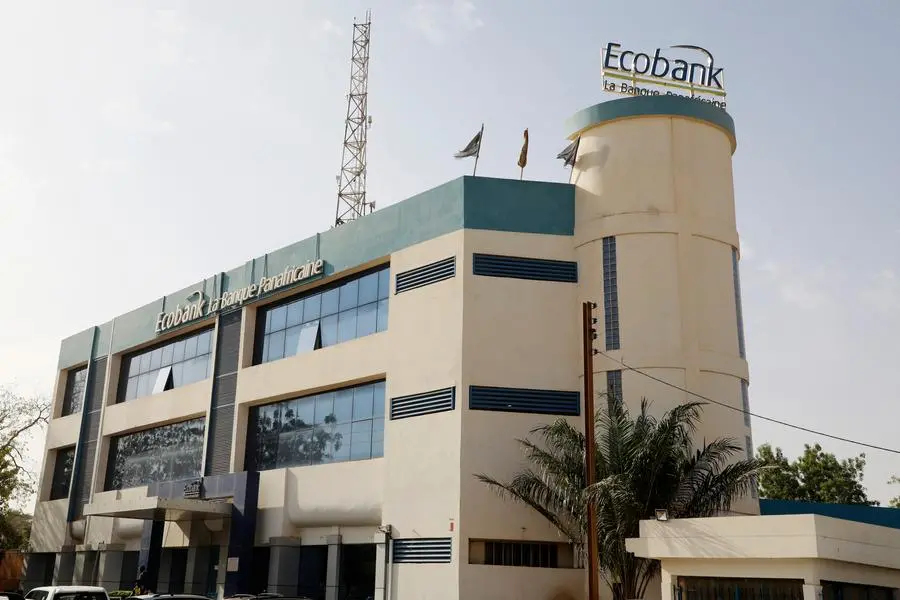
Souleymane Diagne (pictured opposite), Group Head of Trade at Ecobank is convinced that the African Continental Free Trade Area (AfCFTA) has opened up a vast and unprecedented opportunity for the continent’s SMEs, the backbone of Africa’s economy, to thrive and generate great wealth for Africa.
By opening up access to market op- portunities beyond national borders, the AfCFTA can help African SMEs to expand their production capacity, modernise their business operations, and create more jobs across their supply chains.
AfCFTA, which became operational in 2021, aims to eliminate most tariffs on goods and services traded among African Union member countries, while enabling the free movement of businesspeople and capital. According to estimates by the World Bank, the AfCFTA will increase Africa’s income by $450bn, increase in- tra-African exports by more than 81% and boost the continent’s GDP by 7% by 2035.
However, Diagne points out that African SMEs face several challenges in accessing the opportunities that the AfCFTA presents. A major obstacle holding back SMEs is limited visibility of market opportunities in different countries on the continent. Financing also remains a significant hurdle. Indeed, the International Monetary Fund (IMF) estimates that nearly half of the 40m SMEs active in sub-Saharan Africa lack access to credit, despite these enter- prises accounting for 90% of businesses on the continent and employing 60% of the workforce.
Moreover, a significant number of Af-rican SMEs operate in the informal sec- tor, which presents its own unique set of challenges. These enterprises often lack official registration, proper governance structures, and standardised accounting practices, making it difficult for them to secure loans and investments from formal financial institutions.
The informal nature of these busi- nesses also means they are less likely to benefit from government policies and initiatives aimed at supporting SMEs.
Addressing the challenges
Souleymane Diagne insists that these challenges must need to be definitively addressed for African SMEs to reap the full benefits of the AfCFTA. Ecobank is already working on smoothing out the road to prosperity and is at the forefront of empowering SMEs to overcome these challenges through its Ecobank Single Market Trade Hub.
Launched in 2021, this platform con- nects registered businesses across Africa and allows them to capitalise on oppor- tunities within the unified market created by AfCFTA.
“At Ecobank, we see Africa as more than just a continent, it is home, and we are passionate about continuing to sustain- ably transform its socio-economic land- scape using trade as a key lever,” he says.
“In this quest, Ecobank Single Market Trade Hub is a key contribution to the Af- CFTA as a key pillar under the AU Agenda 2063.”
The platform provides valuable infor- mation about the AfCFTA, enables import- ers and exporters to upload their profiles, and facilitates online matchmaking to enable businesses to find partners. Once a match is made, transactions can be seamlessly concluded using Ecobank’s trade and payment solutions, which are available across 35 African markets.
“Registration is free and open to non- Ecobank clients. The idea is to ensure there’s visibility of products and services across the continent,” Diagne explains, revealing that over 7,500 importers and exporters are profiled on the platform.
“Our vision is simple; leverage our 30m+ customer base, unrivalled expertise on the African markets, payment capabilities and unparalleled network advantage to stimu- late a truly integrated marketplace where African businesses can connect, access trade opportunities, and contract across 35 African markets,” he says.
Diagne is proud of the fact that the bank is registering significant growth in the number of successful connections achieved via the platform. “A concrete example comes from Guinea, where Kaba Textile, a textile production company, has benefited significantly from the Ecobank Trade Hub,” he notes.
Sékou Kaba, General Manager, Kaba Textile, shared his experience, stating that he discovered the platform through his relationship with Ecobank Guinea: “I was able to establish a new partnership with Vintage Shop, a clothing retail company based in Guinea. This partnership al- lowed me to strengthen my resources and achieve a transaction volume of $10,000. Through this platform, I hope to develop new partnerships and expand my inter- national relations.”
Diagne gives the example of another client, also based in Guinea and operat- ing in the paint industry, who noted that the platform contributed to increasing revenue through a collaboration with Mé- tal Guinée. “He completed a transaction exceeding $8,000 and expressed his am- bition to establish additional partnerships, pool resources, and enhance his experi- ence with other companies.”
The financial link
Diagne says that the goal is not just to provide visibility for African traders, but to build trust between African businesses and foster greater trade and investment between countries on the continent. To do this, Ecobank has partnered with other like-minded players in African finance.
“We’ve been keen to partner with stake- holders who share our vision and recently collaborated with Afreximbank to interface Ecobank’s Single Market Trade Hub with the MANSA Digital Repository platform,” he notes.
This collaboration allows users of the Ecobank Single Market Trade Hub to ac- cess MANSA’s extensive database to con- duct effective customer due diligence and know-your-customer checks.
Diagne reveals that Ecobank is cur- rently scaling up its financing for SMEs, bolstered by its recent partnership with the African Guarantee Fund (AGF). Last year, Ecobank and the AGF signed a $200m risk-sharing facility to enhance the bank’s lending capacity to SMEs, including women-owned enterprises.
This agreement marks the third re- newal of Ecobank’s collaboration with AGF. The initial guarantee, provided by AGF in 2013, covered seven countries with a total guaranteed portfolio of $50m. In 2018, the guarantee’s scope expanded to 14 countries, resulting in cumulative disbursements of $230m. The renewed $200m partnership now extends to 27 countries within Eco- bank’s African network, offering 50% coverage for qualifying SMEs across all target markets.
This partnership with AGF comes on the back of similar deals with other financial institutions aimed at boosting the bank’s lending to SMEs. “Partnerships with the AGF and other development fi- nance institutions have helped us scale the quantum of financing we provide to SMEs,” Diagne says. “We have designed long-term credit programmes for quali- fying SMEs that enable us to structure financing at scale for them,” he explains.
Ecobank Sierra Leone, for example, signed a $25m risk sharing facility with British International Investment, the UK government’s development finance insti- tution, in October 2024 to help the lender upsize its SME loan book in the country.
Commercial banks often require SMEs to provide substantial collateral to se- cure large loans to mitigate risk. How- ever, this frequently disadvantages SMEs, which typically have limited resources. By partnering with Development Finance Institutions through risk-sharing facilities – as Ecobank has done – lenders can effectively manage risk while alleviating the collateral burden on SMEs. This col- laboration presents a viable solution for supporting the growth and development of SMEs.
As the economic history of all countries shows, national wealth is almost always in direct proportion to that of SMEs, which also generate more employment than any other structures. By thus empowering the SME sector in a connected Africa, Ecobank is actively contributing to Africa’s overall prosperity and progress. n
‘We’ve been keen to partner with stakeholders who share our vision and recently collaborated with Afreximbank to interface Ecobank’s Single Market Trade Hub with the MANSA Digital Repository platform.’
© Copyright IC Publications 2022 Provided by SyndiGate Media Inc. (Syndigate.info).