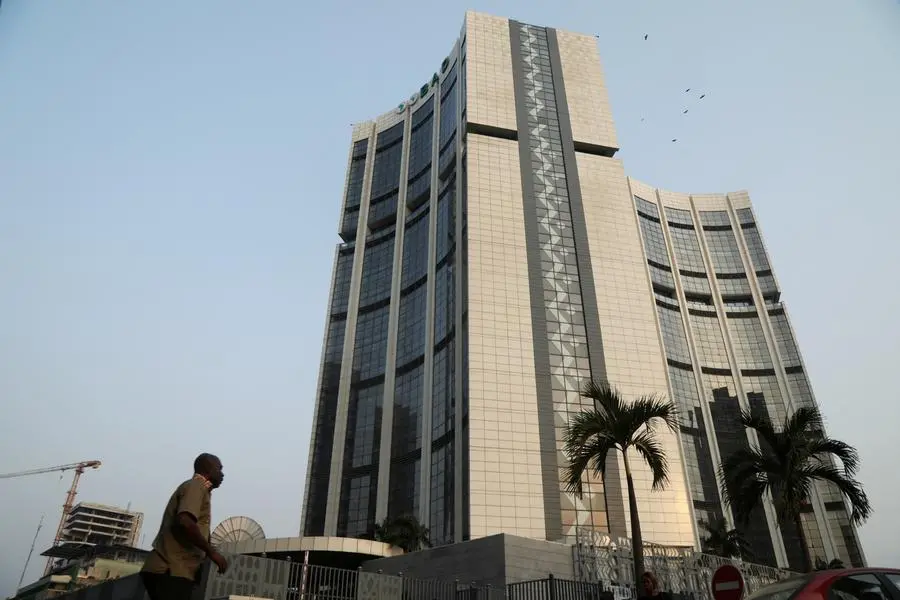
PHOTO
Africa’s annual trade financing gap is locking out small businesses from taking part in continental commerce, the African Export–Import Bank (Afreximbank) says.
Afreximbank blames part of the problem on high costs of credit, which keeps small and medium-sized enterprises (SMEs) out of intra-African trade.
In a new report titled Transforming Africa’s Trade, the continental lender cites stringent global banking regulations such as Basel IV as restrictive to small firms that want to scale up operations and integrate into regional value chains.
For example, it says that East African countries are facing unrealised intra-African export potential of $7.9 billion, a major opportunity for the region to deepen its trade within the continent, which has been hindered by market access barriers and low regional freight connectivity.
The report says SMEs, which make up 80-90 percent of businesses on the continent, have been starved of financing, with just 18 percent of the African banks creating trade finance portfolios specifically targeted at supporting intra-African trade.
"This severely limits the ability of small and medium enterprises, which make up 80-90 percent of businesses on the continent, to engage in regional trade,” the report says. “The African continental free trade area (AfCFTA) is designed to boost intra-African trade, but its success hinges on closing this gap.”Several multilateral lenders on the continent, including Afreximbank and African Development Bank (AfDB), have stepped in to bridge this trade-financing gap. Afreximbank has pledged to double intra-African trade finance to $40 billion by 2026, while AfDB’s trade finance programme has supported SMEs with $5 billion in transactions.
The alliance of African-owned and controlled multilateral financial institutions (Aamfi), along with African Central Bank, the African Monetary Fund, and the African Investment Bank – all financial institutions of the African Union – have also pledged to expand the fiscal space, coordinate monetary policy and steer continental investment.
Aamfi was launched in 2024 and seeks to reposition Africa within the global financial system by finding innovative financing solutions to advance the continent’s sustainable economic development and regional integration goals.
Aamfi members include Africa Finance Corporation (AFC), Afreximbank, Trade and Development Bank (TDB), African Reinsurance Corporation, African Trade and Investment Development Insurance, Shelter Afrique Development Bank and PTA Reinsurance Company.
Others are East African Development Bank (EADB), African Solidarity Fund, and Fund for Export Development in Africa.
The intra-African trade represents just 15 percent of total exports from African nations, and is largely made up of manufactured goods and services. The total intra African trade grew by 5.55 percent to $11.4 billion in 2024, from $10.8 billion in 2023.
The Afreximbank report notes that by removing barriers to trade and facilitating and promoting investment, the AfCFTA would boost the trade in these critical sectors and support the transformation of African economies.
The report notes that biases in international credit rating methodologies have cost Africa an estimated $75 billion in extra interest – a sum that could finance 80 percent of the continent’s annual infrastructure needs — while fragmented banking regulations, divergent antimoney laundering rules, and nonconvertible currencies have continued to keep markets thin.
The report shows that East Africa’s unrealised intra-African export potential stood at an estimated $7.9 billion in 2024, of which $1.9 billion (24 percent), was concentrated in just seven product categories: machinery and electricity, apparel, mineral resources, and agro-based products such as processed food and vegetables.“The most prominent unrealised trade opportunities were in machinery and electricity ($0.4 billion) and apparel ($400 million), followed closely by mineral resources ($300 million), reflecting the dual importance of industrial and agro-processing sectors in the region’s trade outlook,” the report says.
The report notes that sectors such as fertilisers, processed food, precious metals, and vegetables, each with $200 million in unrealised potential, point to persistent but addressable gaps in trade infrastructure, quality standards, and logistics in East Africa.“Many of these goods are already produced within East Africa, suggesting that the region’s unrealised export potential could be largely unlocked by addressing barriers to market access, improving regional freight connectivity, and investing in productive capacity and trade facilitation.”
© Copyright 2022 Nation Media Group. All Rights Reserved. Provided by SyndiGate Media Inc. (Syndigate.info).