PHOTO
For decades after independence, African countries were stuck with economic structures and payment systems tied to their former colonial rulers. This en- sured that African countries traded more with their former colonial rulers than with each other, to the extent that even pay- ments destined for other African countries were routed through European capitals first.
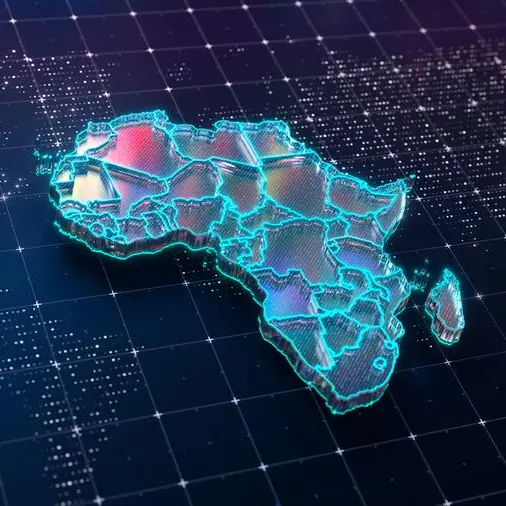
This situation left African economies fragmented, further slowing development. The Pan-African Payment and Settlement System (PAPSS) aims to change that by making instant payments possible be- tween businesses and individuals across Africa, using their local currencies.
The payment system went live on 13 January 2022, with an official launch in the Ghanaian capital, Accra. Six months later, eight African central banks had signed up, bringing the total to 28 commercial banks. PAPSS got a major boost in June 2023 when it concluded a memorandum of understanding with several lenders that already had cross-border networks across the continent. These included the Standard Bank Group of South Africa, the Ecobank Group based in Togo, and the Kenya Commercial Bank (KCB) Group, as well as the Access Bank and UBA groups, both from Nigeria.
With this partnership, the effective cov- erage of PAPSS has extended to more than 40 countries across Africa where these lenders have operations, including vast network of branches and representative offices. The latest data from PAPSS shows that 17 countries have so far signed up, extending its reach to more than 150 com-mercial banks across Africa.
Nigeria leads with 22 of its 26 com- mercial banks already signed up, followed by Ghana with 19. The central banks of French-speaking countries in West and Central Africa are reportedly now working to adapt their systems to PAPSS; officials expect all commercial banks on the conti- nent to be on board by the end of the year.
The impact is beginning to show. Trade among African countries rose from about 3.5% of Africa’s total trade a decade ago to 15% at present, Yemi Kale, the group chief economist of Afreximbank, told reporters in Abuja in June. He added that payments through PAPSS rose 10-fold in the preced- ing year. “Africa still trades more with other parts of the world,” said Kale. “But African countries are also increasingly trading with each other.”
Africa’s growing cross-border payments business is currently worth at least $329bn and is set to climb to $1trn in a decade on the back of a surge in intra-African transactions, according to Oui Capital, an Africa-focused venture capital firm in a recent report. The major drivers will be increased use of mobile money and adop- tion of fintech innovations in transactions between businesses and individuals. The main impediments have been technical and regulatory. In some countries, banks are still running old technologies that don’t work with PAPSS. Regulatory sys- tems also vary with different anti-money laundering, currency control and taxation rules applicable, sometimes from one ju- risdiction to another. While the politi- cal will has been there in most cases, the process of aligning and harmonising the regulations must go through painstaking negotiations, slowing the process.
While the banks have stepped up staff training and adoption, many small and medium businesses as well as individuals across Africa are unaware of the payment system. Solving these technical and regu- latory problems and boosting awareness of PAPSS may well be the needed catalyst to spark the next phase of explosive growth in intra-African payments.
© Copyright IC Publications 2022 Provided by SyndiGate Media Inc. (Syndigate.info).