PHOTO
In a panel discussion organised by the Africa Collective on the sidelines of the World Economic Forum, inves- tors called for more efforts to drive industrialisation through the creation of special economic zones (SEZs).
Denys Denya, senior executive vice president of the African Export- Import Bank, said that SEZs – areas within a country that have differ- ent business and trade laws – are a critical tool in overcoming some of the challenges in industrialisa- tion, as they provide a controlled environment within which critical infrastructure can be concentrated to support industrial activity.
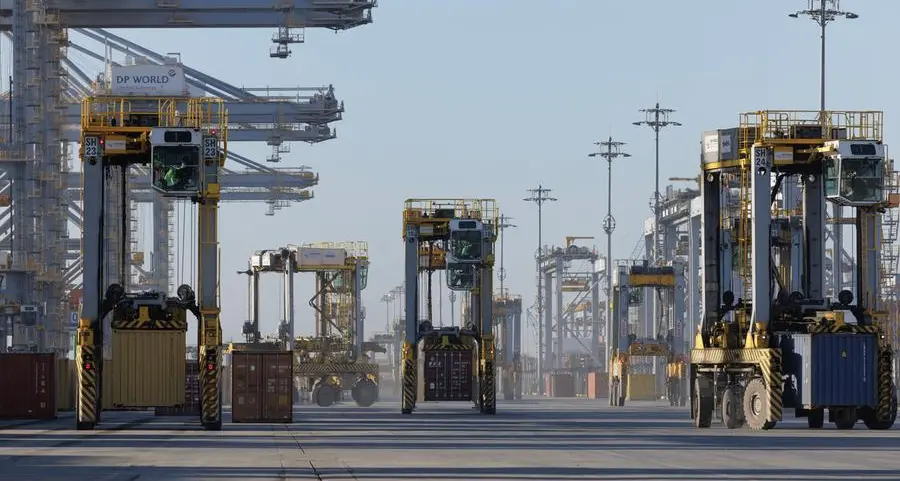
“Africa lacks infrastructure across the board, whether you’re talking about roads, ports, or en- ergy,” he said, noting that SEZs provided an integrated solution.
Bhavin Vyas, chief sustainability officer at ARISE Integrated Indus- trial Platforms, a major SEZ inves- tor on the continent, explained that the zones enable value retention, job creation and sustainable eco- nomic growth across the African continent.
“One of the biggest aspects of industrialisation is to create jobs, which means retaining more value within the continent, reducing poverty, and providing trickle-down economic benefits across the value chain,” he argued.
Vyas explained that Arise IIP’s strategy centres on transforming Africa’s natural resources – traditionally exported in raw form with minimal value retained – into finished goods within the continent.
From sourcing and storing to processing and exporting, the company’s design- build-finance-operate model ensures value addition at every stage of the supply chain. “Whether it’s a t-shirt, cocoa, or furni- ture from timber, we’re creating globally competitive brands that put Africa on the map,” he said.
This model also addresses global chal- lenges, including supply chain inefficien- cies and climate concerns. By localising production in countries like Benin, Arise says it has drastically reduced the carbon footprint of exported goods.
“An average t-shirt used to travel 5,000km, but by sourcing and transform- ing within Africa, we save 70% in carbon emissions,” Vyas noted, emphasising the dual impact of industrialisation in reduc- ing poverty and combating climate change.
Industrialisation must be built on quality
Amani Abou-Zeid, the African Union’s Commissioner for Infrastructure, En- ergy and Digitalisation, cautions, how- ever, against Africa becoming a low-wage manufacturing hub or a ‘T-shirt factory’ for the world.
“The industrialisation we need is not based on residuals from China or low wag- es,” she said. “It must be a value-addition industrialisation, built on quality, stand- ards, and the use of technology, including AI and robotics. This approach will propel the continent to the developed stage we aspire to, ensuring the well-being of our people.
“Africa is not and should not be a sweatshop for the world,” Abou- Zeid asserted. “With our people, technology, and energy, we are capable of competing globally and diversifying value chains for the world.”
The Lobito corridor, a US-backed major infrastructure scheme that embraces multiple countries in Central Africa, is expected to host SEZs in a bid to improve value ad- dition around critical minerals.
Louis Watum Kabamba, Min- ister of Industry and Develop- ment of SMEs in the DRC, said the initiative will transform the region’s approach to resource uti- lisation. “We have come to re- alise, especially in the DRC, that the pit-to-port model inherited from colonial times is no longer viable,” he explained.
“This cannot continue and that’s one of the reasons why we’re thinking very seriously of adding value.” Rather than continuing to export raw materials, the DRC aims to start making and exporting, for example, battery-grade products that go into the fabrication of precursors for batteries. “Finally, we can start making these batteries,” Kabamba said.
Africa is not and should not be a sweatshop for the world.
© Copyright IC Publications 2022 Provided by SyndiGate Media Inc. (Syndigate.info).