PHOTO
LONDON/SYDNEY - The dollar eased on Thursday ahead of U.S. jobs data that could either support or challenge market expectations of a Fed interest rate hike this year, while oil slid again and chipmaker stocks struggled after a stellar quarter.
Money market pricing currently indicates expectations of one U.S. Federal Reserve rate hike by October and around a 40% chance of a second move by year-end.
If the U.S. payrolls data, due on Thursday this month because of a holiday on Friday for Independence Day, comes in hot that would underscore those expectations, and likely send U.S. yields and the dollar higher, while a weaker print could challenge that market pricing.
Economists polled by Reuters expect a rise of 110,000 jobs for June. But forecasts range widely from gains of 25,000 to 200,000, suggesting high chances of a surprise. The jobless rate is forecast to stay steady at 4.3%.
The data will be watched almost as closely in Tokyo as in Washington as the yen teeters around a 40-year low against the U.S. currency, causing traders to brace for the possibility Japanese authorities will step in to support their currency.
In a sign of those concerns, the yen jumped suddenly in early European trading on Thursday, sending the dollar down 0.9% to 161.15 yen. It was not immediately clear what had driven the move, but analysts said it was more muted than after previous interventions.
"If this was caused by intervention, the move was small. The Japanese government might have stepped in the market in case the U.S. jobs data is strong. I was thinking the government would step in when the yen falls to 163-164 level," said Takeshi Ishida, strategist at Kansai Mirai Bank.
"The intervention would work better (if) the U.S. jobs data is weak, as it will be hard for the Fed to justify the rate hike."
The dollar also slid on other currencies as traders tried to calibrate positions ahead of the data. The euro was up 0.3% at $1.1417, and the pound rose 0.6% to $1.3353. The yen gained on both the euro and pound.
The benchmark 10-year U.S. Treasury yield was 2 basis points higher at 4.99%.
CHIPMAKERS SLIDE
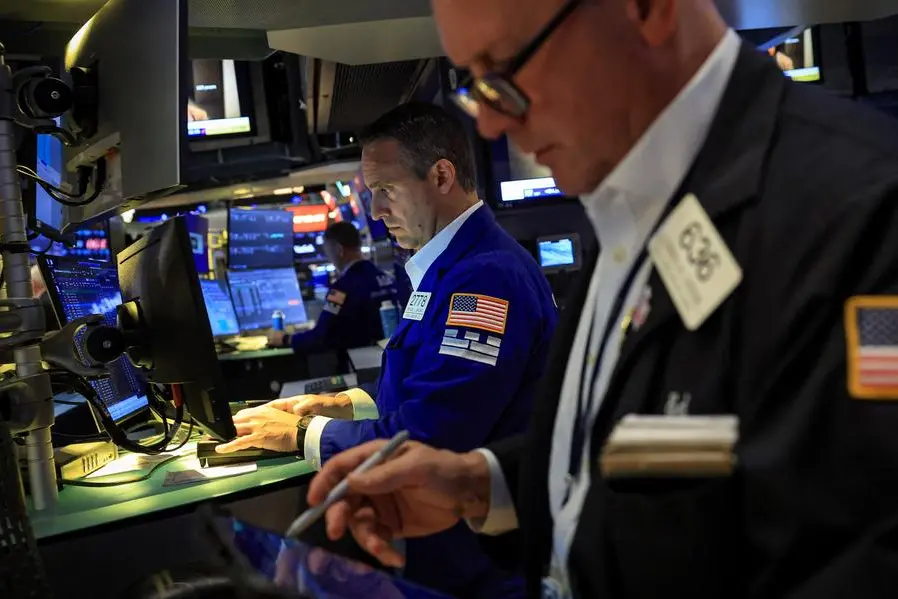
Stocks were under pressure on Thursday, with chipmakers in particular focus, albeit after incredible gains.
South Korea’s KOSPI sank 7.8%, extending Wednesday's slide of 2%, after an eye-watering second-quarter surge of 68% on soaring AI-related demand for memory chips. SK Hynix plunged 14%, and Samsung tumbled 9%.
That followed a 6% fall in U.S. semiconductor stocks on Wednesday, though in its case after an 87% second-quarter gain.
"The plunge in Asia semis today is more about a hangover from Wall Street," said Fabien Yip, a market analyst at IG, adding that profit-taking appeared to be the key driver.
"Layered on top is Apple's reported outreach to restricted Chinese memory makers for China-market devices, which introduces pricing threat to the Korean and Japanese incumbents."
There is also potentially some rebalancing going on, as investors use the new quarter to rejig positioning.
S&P 500 futures were steady, and Europe, which is less exposed to tech stocks, bucked the trend with the broad benchmark up 0.5%, albeit with tech stocks down nearly 2%.
Helping non-tech European shares was the continued fall in the price of oil.
Brent crude hit new four-month lows, down 1% at $70.88 a barrel, as U.S. President Donald Trump said talks with Iran had gone well in Qatar and more oil tankers transited through the Strait of Hormuz.
Gold bounced 1.4% to $4,078 an ounce after a drop of 14% in the second quarter.
(Reporting by Stella Qiu in Sydney and Alun John in London; Editing by Kevin Buckland, Clarence Fernandez and Joe Bavier)