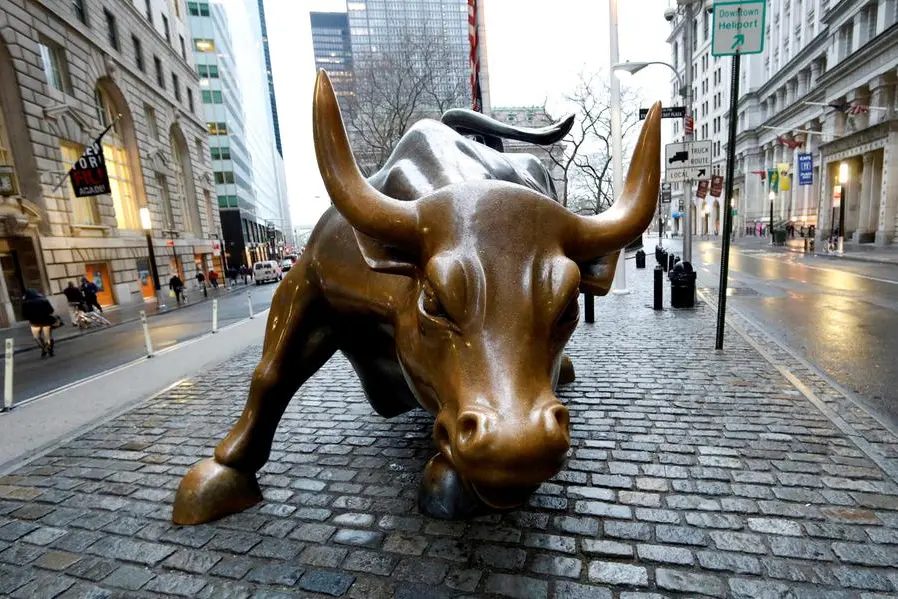
PHOTO
(The opinions expressed here are those of the author, a columnist for Reuters.)
LONDON - Of the many extraordinary aspects of the morphing U.S. economy, none stands out more than its escape from significant cyclical recession since mid-2009 — a roughly 17-year run that has compounded the stock market boom and eased funding for the AI transformation.
This is hardly the "Great Moderation" — the 1984-to-mid-2007 stretch of sharply reduced macroeconomic volatility. Today's economy is bumpy, politically noisy, marked by widening wealth gaps and already proving inflationary.
Yet investors have all but abandoned the idea of a downturn anytime soon. If it can withstand surging interest rates, tariffs and even this year's unprecedented global energy shock, it gets harder to see what would derail it.
Some of this resilience may be structural rather than simply cyclical, with a more services-heavy economy, stronger balance sheets and faster policy backstops helping absorb shocks that once might have triggered recession.
Yes, the 2020 pandemic recession was real, triggered by deliberate shutdowns to contain COVID-19. But it was not a cyclical downturn or an unwinding of excess. It was also heavily offset by massive government support and proved mercifully brief — a V-shaped slump and rebound as vaccines were developed at unprecedented speed. As such, it can almost be discounted in examining the performance of the overall economy over the past 80 years.
Strip out those two consecutive quarters of real GDP contraction in 2020 — the accepted definition of recession for most economists — and the world's largest economy is clocking its longest recession-free stretch since World War Two, by some distance.
We haven't seen a significant bust since the banking crash, when output contracted for four straight quarters through mid-2009, part of a stretch in which GDP posted five negative quarterly prints in 18 months.
Before now, the longest post-World War Two recession-free stretch was the 10-year expansion that ended with the dotcom bust. The 1960s managed nine unbroken years too. But neither comes close to the still-running 17-year stretch excluding the pandemic year.
This long stretch has not been entirely smooth: there have been four isolated quarterly contractions along the way. But none — including the first-quarter 2025 decline tied to a pre-tariff import surge — was followed by a second quarterly downswing.
That means as many as half of U.S. workers may never have experienced a nationwide cyclical recession in their working lives. The same may be true of many of today's traders and investors.
Recession-probability metrics have flashed red several times over the past six years — during the 2022 inflation and rate shock, after President Donald Trump's tariff sweep early last year, and again during this year's Iran war and fuel-price spike. But the downturns never came, and few now see one looming.
Just 5% of respondents in Bank of America's latest global fund manager survey expect a "hard landing" for the economy over the next 12 months.
AGING BULL
The absence of recession, alongside the buildup of aggregate wealth and savings, has helped entrench Wall Street's dominant "buy the dip" mentality for years. That has been reinforced by the concentration of market leadership in a handful of tech megacaps and, over the past three years, by the transformative AI theme.
However, strategists stress that you don't need to see a formal recession to see a shakeout in stock markets.
Deutsche Bank, for example, last year highlighted several large S&P 500 drawdowns that didn't involve recessions — including the 25% peak-to-trough fall in 2022 as interest rates surged, a near-20% recoil in 2018 amid FederalReserve tightening and China trade tensions, and another near-20% swoon in 2015-16 on concerns over China's growth and domestic political uncertainty.
None of these episodes was either triggered by or led to a recession.
Societe Generale analysts say the current U.S. equity bull market is remarkable in both scale and duration — an almost 400% gain in the S&P 500 over 13 years. But excluding the unusually brief plunge around the 1987 crash, they calculate that bear-market downturns over the past 150 years have taken more than two years on average to run their course, with recoveries to prior peaks taking an average of 11 years.
However, the SocGen team repeats the old adage that bull markets do not die of old age. "They generally succumb to tightening financial conditions, excessive leverage or economic shocks," they added.
Just how closely the long economic expansion and the long equity bull market remain entwined from here remains to be seen.
Perhaps most people's lack of experience with recession makes one less likely, by reinforcing confidence in quick corrections and rebounds. Yet that same inexperience may also breed complacency and carelessness about cycles that now seem, to some, long forgotten.
(The opinions expressed here are those of Mike Dolan, a columnist for Reuters.)
Enjoying this column? Check out Reuters Open Interest (ROI), your essential new source for global financial commentary. Follow ROI on LinkedIn, and X. And listen to the Morning Bid daily podcast on Apple, Spotify, or the Reuters app. Subscribe to hear Reuters journalists discuss the biggest news in markets and finance seven days a week.
(by Mike Dolan; Editing by Marguerita Choy)