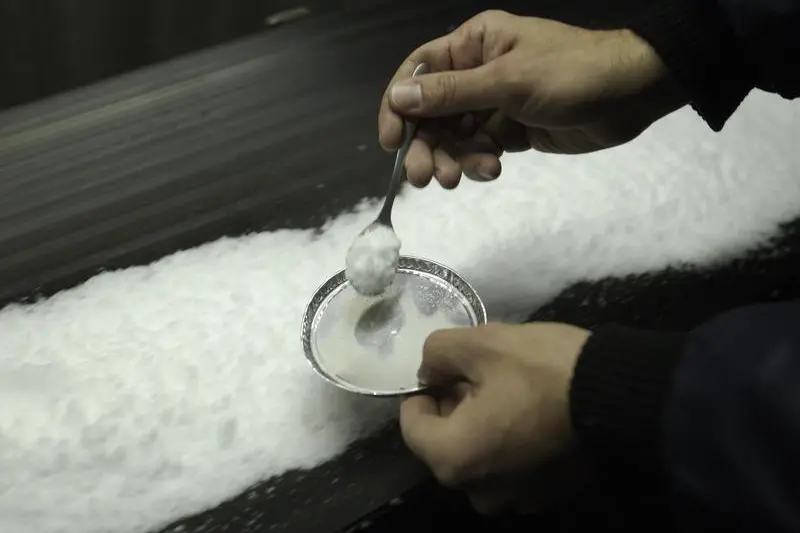
PHOTO
Saturday, May 13, 2017
Dubai: It’s called the ‘forgotten killer’ and not without reason. In just about everything we eat today, salt is stellar ingredient. And we are paying the price for it - hypertension, heart disease and a host of health conditions have their tie-ins with excessive salt consumption.
That’s the bad news. What’s worse news is that people continue to consume a third more salt than the maximum recommendation, said Dr Nausheen Khan, general practitioner, iCARE Multi-speciality Clinics, Dubai.
Sodium, the main component of salt, she says, is essential to human health however, excessive amounts of it can lead to a serious health trouble.
What compounds the problem is that in today’s times, overdependent as we are on packaged foods, salt is a hidden nasty in most foods.
“About three quarters of the salt people consume is hidden in processed food,” said Dr Khan.
“It is recommended that people eat no more than 6g of salt a day, which is about a teaspoon. Currently, people consume 8.1g a day, which is about a third more than the maximum recommendation.”
The main ingredient of salt is sodium, its level keeps on increasing as our salt intake increases. In order to dilute these excess amounts of sodium, our body holds on to water, thereby increasing the extracellular fluid and eventually leading to increase in blood volume.
Blood pressure can thus be raised owing to the extra fluid and extra strain on the delicate blood vessels leading to the kidneys. Increased blood volume increases the work of the heart and exerts pressure on the blood vessels. All this extra work and pressure can lead to stiffening of the blood vessels, which can ultimately lead to stroke, heart attack and heart failure.
BOX:
Hidden salts and obvious salts in foods we eat:
Check the product labels before purchasing to know how much sodium you are consuming.
Foods low in salt have <0.3g salt/100g (or 0.1 g sodium/100g)
Foods high in salt have >1.5 g salt/100g (or 0.6g sodium/100g) or more than 1.8g salt/portion (0.72g sodium/ portion)
Look beyond the promises
The promise The truth Salt/Sodium free Less than 5 mg of sodium/serving
Very Low sodium 35 mg of sodium or less/serving
Low sodium 140 mg of sodium or less/serving
Reduced sodium At least 25% less sodium than it’s regular version
Light in sodium or lightly salted At least 50% less sodium than regular version
No salt added or unsalted No salt is added during processing, but, the products may not be salt or sodium-free, unless stated
Potassium and Sodium: the essential balance
Sodium and potassium have opposite effects on heart health: High salt intake increases blood pressure, which can lead to heart disease, while high potassium intake can help relax blood vessels and excrete the sodium and decrease blood pressure.
People can make a key dietary change to help lower their risk by eating more fresh vegetables and fruits, which are naturally high in potassium and low in sodium and by eating less bread, cheese, and processed meat, as these and other processed foods are high in sodium and low in potassium.
Obvious salts
Table salt: Most-commonly used white salt. It is mined from rock salt or sea water; iodine is added.
Sea salt: Nutritional value more or less the same as table salt, but, is lacking in iodine.
Unrefined sea salt: Has more minerals than the previous two. It would come in different shades depending on its source e.g Red salt, Celtic sea salt, Himalayan salt.Whichever salt you choose, the key is moderation.
Natural sodium in foods: Most natural foods contain such a small amount of this nutrient that it does not make a significant contribution to daily intake.
Impact of salt on various body organs:
Heart:
High dietary sodium can lead to enlargement of the muscle tissue that make up the walls of the left ventricle, one of the main pumping chambers of the heart. Eventually, the walls of the chamber grow thicker and less efficient, which can lead to premature cardiovascular disease.
Blood vessels
A high-salt diet has shown to increase blood pressure and causes direct damage to the blood vessels.
Bones
Bone demineralization has shown to increase in people on high-salt diets. When sodium intake increases, the body gets rid of calcium in bones via urine. Result: brittle, weak bones that can lead to osteoporosis.
Kidneys:
A high-salt diet disturbs the balance of kidneys’ filtration process eventually reducing their function, less water removal, higher blood pressure and ultimately, kidney disease. High salt intake also causes Urinary Calcium Excretion, leading to an increased risk of forming renal stones.
Skin:
Persistently elevated levels of blood pressure could cause edema, a condition characterised by swollen hands, arms, ankles, legs and feet, attributed to fluid retention.
Stomach:
The relationship between chronic high salt intake and gastric cancer is well established, as evidenced by people of Northern China, Japan and Korea, where the intake of salt is the most. The incidence also increases in countries where people prefer salt-preserved meat and fish. Salt can act as an inflammatory agent of the stomach lining, thereby exposing it to carcinogens.
Liver:
Research suggests that excessive salt may cause liver damage and fibrosis due to oxidative stress. The balance between free radicals and anti-oxidants is disturbed in liver damage, creating more free radicals, increasing the inflammatory cells and promoting death of liver cells. When liver disease progresses, it can lead to cirrhosis, which is the permanent hardening, shrinking, scarring and reduced function of the liver.
Medical Conditions:
Hypertension:
A diet rich in sodium is one of the chief contributors of hypertension. Lowering blood pressure reduces the likelihood of a stroke or a heart attack.
Cardiovascular disease:
Raised blood pressure is a major risk factor for heart and circulatory diseases. Untreated high blood pressure can lead to thickening of the heart muscle which can reduce the effectiveness of the heart’s pumping action.
Obesity:
Salt is not directly related to obesity, but excessive consumption of processed foods, which are high in calories and salt, can contribute to obesity.
Vascular dementia:
A diet high in sodium raises blood pressure and constant blood pressure raises the chances of stroke. When one of the blood vessels of the brain gets blocked, either suddenly, following a stroke or a series of small strokes overtime, it can lead to vascular dementia. It has been observed that systolic BP greater than 180mmHg, high diastolic blood pressure or pulse pressure in midlife are associated with an increased risk of dementia later.
Meniere’s disease:
Increased salt intake disturbs the metabolic balance of sodium in the inner ear fluid. Meniere’s disease is the disease of the inner ear - responsible for balance and hearing. A patient experiences symptoms of vertigo, sometimes accompanied by nausea and vomiting, hearing problems and a ringing noise in the ear, lasting from a few minutes to several hours. In later stages, there is loss of hearing either unilaterally or bilaterally.
Asthma:
A high-salt diet can indirectly aggravate the symptoms of asthma and could lead to morbidity in asthmatic men. Bronchial hyperactivity, wheezing, are all aggravated by increased consumption of salty foods.
Diabetes:
Increased blood pressure possibly due to increased salt intake can directly increase the risk of diabetes. A study in Finland also suggested that a higher intake of salt was directly associated with an increased risk of diabetes.
Dyslipidemia:
A diet high in sodium, increases the risk for cholesterol build-up in arteries, alongside increasing the risk for high blood pressure.
Cancer:
Certain high-salt foods, e.g: preserved, salted foods such as meat and fish, and vegetables, can inflame the stomach lining and contribute to cancer.
Eastern countries like Japan and Korea preserve many foods with salts and stomach cancers are relatively common in these regions. The inflamed lining becomes a host for carcinogens.
BIG QUESTIONS
How to find the salt content?
Sodium is only a part of salt. To find the salt content, multiply sodium by 2.5
Sea salts are healthier?
Sadly, no. Sea and rock salts are as bad as table salt if consumed in excess.
By Mary Achkhanian Staff Reporter
Gulf News 2017. All rights reserved.