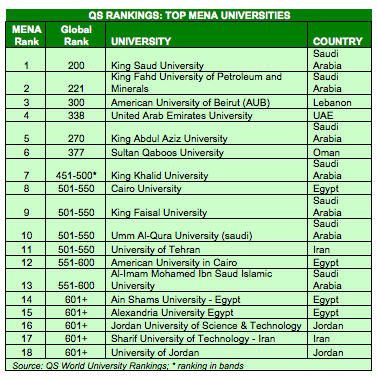
Riyadh-based King Saud University has emerged as the top ranked Middle East university, according to a survey of the world's finest higher education institutions.
"It is the oldest university in Saudi Arabia and has educated many members of the national business, political and academic elite, including the royal family," says a report by QS, a global career and education network that conducted the poll.
King Saud University, which came in 200th globally, is already ranked first among Muslim countries on the Webometrics rankings and is confident of further international recognition of its achievements in the coming years, says QS.
The QS ranking, now in its eighth year, measures some of the world's major universities on research quality, teaching quality, graduate employability and internationalisation.
QS' rankings are determined by using six criteria: academic reputation (worth 40% of the point score used to determine a university's rank), employer reputation (10%), faculty student ratio (20%), citations per faculty (20%), the number of international faculty members (5%), and the number of international students (5%).
While judging universities based on academic reputation has been criticised by many educators, QS believes it has its merits.
"Every criterion of every ranking that has ever been devised has attracted criticism, but here are the facts: to our knowledge the academic peer review indicator is based on the largest survey of its kind ever conducted to date; the academic peer review used in the QS World University Rankings is currently the only measure of research quality used in any global ranking that is truly discipline independent," says QS in a report.
TOP UNIVERSITIES
Not surprisingly, American universities dominated the list with 8 universities in the top 10. However, it was the U.K.'s University of Cambridge that emerged as the world's top university.
Hot on its heels were Harvard University and Massachusetts Institute of Technology, which made up the top three universities in the world. Yale, Oxford, Imperial College, University of Chicago, University of Pennsylvania and Columbia University - all American with the exception of Oxford - made up the 10 top universities in the world, according to the QS rankings.
SAUDI DOMINANCE
Seven Saudi universities made it to the list, the most by any Middle East country. The rest of the Gulf fared poorly with only UAE's Al Ain University and Oman's Sultan Qaboos University making the cut.
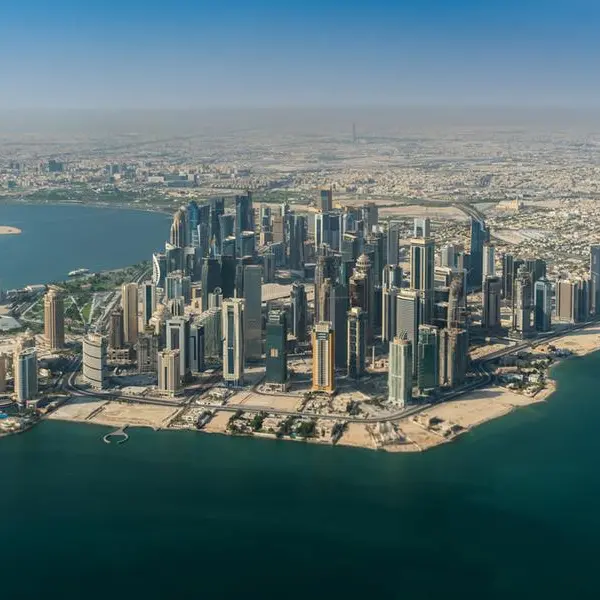
Notably absent were high-profile universities from Qatar such as the Qatari branches of Carnegie Mellon University, University College London, Texas A&M and Weill Cornell Medical College - perhaps because they are branches.
Four Egyptian and two Jordanian and Iranian universities each made up the 18 top MENA institutes.
The poor showing of MENA universities in the list is an indication of the lack of high quality institutions in the region - which is crucial for job creation and to arrest the great mismatch between skills required and skills on offer.
Al Masah Capital estimates that the MENA education market stands at USD75.3 billion, with USD44.9 billion in the Gulf alone. As a percentage of GDP, MENA countries spend 3.8%, compared to a global average of 4.4%.
"Government expenditure on education in some of the MENA countries such as Tunisia (6.9%), Jordan (4.9%), Saudi Arabia (5.6%) and Morocco (5.6%) is higher than that in OECD (5.4%) and North America (5.1%)," says an Al Masah report. "In terms of country clusters, Saudi Arabia accounts for the largest spending within GCC, while Tunisia leads in Maghreb."
Despite the investments, the lack of quality educational institutes in the region means that the region loses 182,000 students that went abroad to study, according to estimates.
"Some of the MENA countries are looking at foreign collaborations as a way to deal with this situation," says Al Masah Capital in a report.
For instance, the UAE currently houses Michigan State University, Rochester Institute of Technology, Middlesex University, London Business School and several other international universities," says Al Masah in the report.
Meanwhile, Qatar has Weill-Cornell University, Carnegie Mellon University, Texas A&M, Georgetown University and Virginia Commonwealth University.
There are close to USD32 billion in the Gulf at last count but the sector needs more than funds to compete with global universities.
Lack of teachers, poor educational rates, and social restrictions for women has hampered development in the sector. Until those issues are resolved, the region will remain far behind other emerging markets in the higher education department.
© alifarabia.com 2011