There's a man for every crisis and Daniel Truchi, Soc Gen's private banking boss, has a reputation for being in the right place when it matters. Banker Middle East caught up with him when he popped into Dubai on a tour of the Middle East
The 2008 - (light at the end of the tunnel not yet seen) economic period is proving to be something of a challenging time for bankers. No one stands easy, least of all the private bankers who cater to the demands of the select few known as the ultra high net worth individuals (UHNWIs).
The scale of the European sovereign debt crisis is, to paraphrase Donald Rumsfeld, 'an unknown unknown'. The European Banking Authority has admitted that more stress tests could be in the offing, while Europe could end up creating its own version of TARP as fears mount that a default by Greece could snowball (winter is coming) and take down Portugal and then Spain and Italy. Bailing out Europe's banks could costs trillions, possibly dwarfing the size of the US bailout of 2008. Is Greece about to become Europe's Lehman?
Lawrence Fink, the boss of asset manager BlackRock, reckons that a bailout fund could be as high as $2 trillion.
"Stabilising Europe is very costly. It could be as much as a couple of trillion dollars," he was reported as saying by Bloomberg, but he added that, "It's not lost money. It's no different than what the US Government did with TARP. In most cases, the US got its money back."
MAN OF THE MOMENT
One man who knows a thing or two about dealing with crises is Daniel Truchi, the Global Head of Private Banking at French bank
Société Générale.
Truchi joined Société Générale Hong Kong & Singapore in 1997 as the CEO of the Private Banking division in Pacific Asia just as the Asian currency crisis was erupting. His steady hand at the tiller meant that he was being considered for bigger challenges.
His stint in Asia Pac lasted 10 years, before he was ordered back to Paris as Global CEO of Private Banking in 2007, not a million years before the scandal over Jerome Kerviel exploded. Truchi is seen as the man who was instrumental in tackling that rather sensitive matter, which blew up in 2008, costing the bank around €5 billion ($6.6 billion). There is bound to be at least one Swiss bank, nursing a $2.3 billion loss, which could probably do with a few tips from Truchi on damage control.
"I'm not commenting on our competitors, but on the French banks and the Spanish banks I can say that we're much lower than our competitors in terms of risk," Truchi told Bloomberg's Stefania Bianchi, adding that the bank had no need for long-term financing.
MEET AND GREET
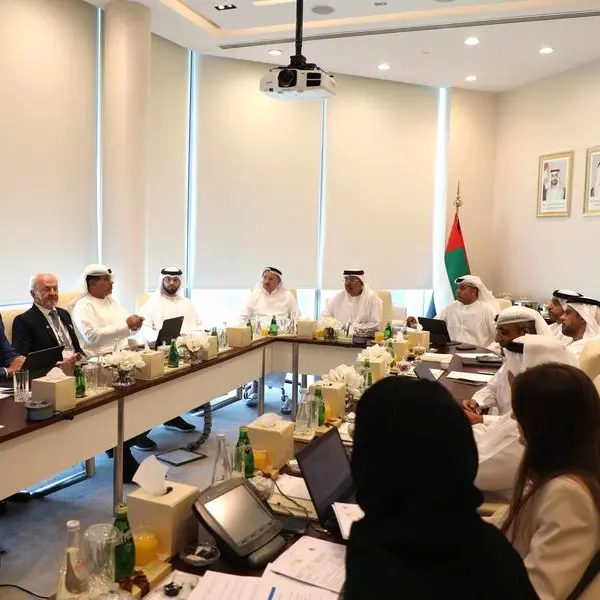
The private banking boss came to Dubai on a flying visit and took the time to speak to Banker Middle East's Joanna Andrews.
"I am here especially to see what the requirements of our clients are and to answer to their global needs all over the world. We have a very large team here in the Middle East and this is part of my usual trips to meet clients and to see what and how we can adapt ourselves to the requirements of the clients."
BME: Would you say you have got a sound balance sheet now, entering this crisis?
DT: The bank itself is financially solid. We have expressed a number of facts in terms of capital, in terms of liquidity, in terms of profits and in terms of exposure of risk to sovereign debt in Europe. As such I would like to convey the fact that the bank has an extremely good business model and they have to trust the bank as we trust our clients to go further in their investments.
BME: What has Soc Gen done to limit the risk?
DT: I think we have done a number of things; first of all we have reduced our sovereign debt risk. We have also increased our capital base, double, compared to 2007, so we are in [a] much better position than in 2007, so at this junction all [the] action plans have been [to] take to/from this crisis in better shape than we were before.
BME: How would you rate this crisis and how different is it to the crises we have seen in the past?
DT: I think it is probably [a] stronger crisis than the previous one, because it comes on top of the previous one and we are almost in a kind of double dip type of [recession], so the second hit is of course harder than the first one and that is definitely the case. I am quite positive on the issue of the crisis. Especially on the financial system really helping the financial system overall, so I am pretty confident on the way out of the crisis.
Of course there are a number of uncertainties, especially growth in Europe. Our scenario in the US is that we will not fall into a recession, while we may be in some small extent in Europe but aside of this uncertainty I think we should find the means and resources to get out of the crisis. As far as Société Générale is concerned, [we are] definitely very committed to entering the crisis in a better condition than most of our competitors.
BME: Obviously there is a lot of competition here. There are a lot of banks; do you think it is oversaturated?
DT: It is just a matter of capability, of offering a wide range of products and services, and you can serve clients on a niche type or [with] certain products. We are a bank that offers a very wide range of products and services, not only on financial instruments but [also] on financial planning, financial engineering, on tax, on succession planning. Our role here is to understand not only the financial needs of the clients but also the family needs of the clients and to answer them again worldwide, both in Europe when they want to buy an apartment or house in Paris or London, or if they want to invest in portfolio management here and there.
BME: And where are those opportunities. Where are you looking?
DT: I don't see the opportunities elsewhere but in Europe today, because there are not really big private banks elsewhere. The opportunities will probably come from European banks or eventually American banks who want to get rid of their private banking arms either partially or totally and this is what we are probably going to see. If some banks have to shrink their balance sheet, they may eventually dispose part of their private
banking arms.
The full and exclusive video interview with Daniel Truchi can be found online www.cpifinancial.net
© Banker Middle East 2011