PHOTO
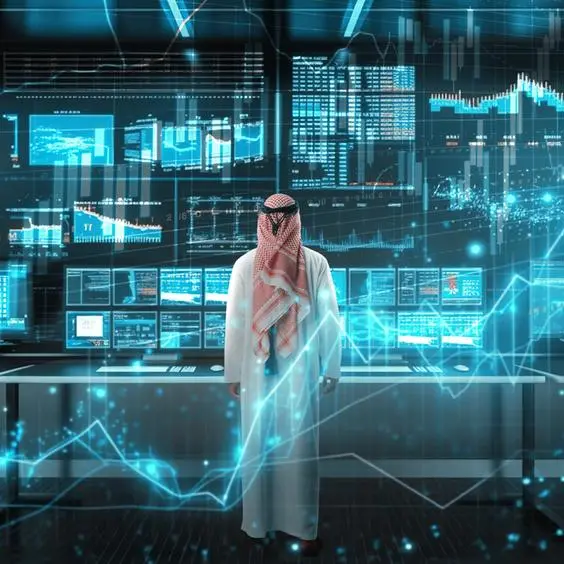
Lately, I have been feeling overwhelmed by the sheer amount of information that surrounds us. Every day brings a new technological development, a new artificial intelligence tool, a new digital platform, or a new prediction about the future.
One day, people are discussing Bitcoin. The next day, they are talking about cloud computing, data centres, machine learning, or the latest version of ChatGPT, Perplexity, Claude and on and on. Before one has had the chance to understand one innovation, another one appears.
What strikes me is not only the speed of these developments but also the expectation that everyone must keep up. We are constantly told that we need to learn new skills, adapt to new technologies, and prepare for a future that seems to be changing by the minute. There is an underlying message that those who fail to do so risk becoming irrelevant. It is difficult not to feel anxious in such an environment.
Artificial intelligence is perhaps the best example of this phenomenon. Hardly a day passes without a new article, webinar, training course, or social media post explaining how AI is transforming education, business, healthcare, research and creative work.
There are endless discussions about how to use AI more effectively, how to prompt it, how to integrate it into teaching, how to improve productivity, and how to remain competitive in a rapidly changing world.
Yet beneath the excitement lies a number of concerns that deserve equal attention.
One concern is the impact of AI on creativity. As someone who values creative thinking, I sometimes wonder what happens when answers become too easy to obtain. Creativity often emerges from struggle, reflection, curiosity, and even boredom. It requires time to think, question, and imagine.
When technology constantly provides information, suggestions, and ready-made solutions, there is a risk that our own creative muscles become weaker. The danger may not be that machines become creative but that humans become less so.
Another concern is the growing sense of intellectual fatigue. There is simply too much information to absorb. Every day introduces new concepts, new terminology, and new technologies that demand attention.
Instead of feeling informed, one often feels overwhelmed. The challenge is no longer finding information but deciding what deserves our attention and what can safely be ignored.
The ethical questions surrounding AI also deserve serious consideration. Public discussions often focus on whether students use AI to complete assignments or whether professionals rely on it too heavily in their work. These concerns are important, but they are not the only ethical issues at stake.
Recently, I learned more about the environmental costs of artificial intelligence. The enormous data centres that power AI systems require vast amounts of electricity and water.
As demand for AI grows, so does the demand for the resources needed to sustain it. This raises difficult questions about sustainability and responsibility. Technological progress is often presented as clean and virtual, yet the infrastructure behind it is very physical and carries real environmental consequences.
Perhaps this is what makes the current moment so complicated. Artificial intelligence offers remarkable possibilities, but it also presents significant challenges. It can increase access to knowledge while simultaneously contributing to information overload. It can support human creativity while also creating conditions that may weaken it. It can solve problems while generating new ethical and environmental concerns.
I do not believe the answer is to reject technological change. Nor do I believe it is wise to embrace every new development uncritically.
Instead, what is needed is a more balanced conversation—one that acknowledges both the opportunities and the costs.
2026 © All right reserved for Oman Establishment for Press, Publication and Advertising (OEPPA) Provided by SyndiGate Media Inc. (Syndigate.info).