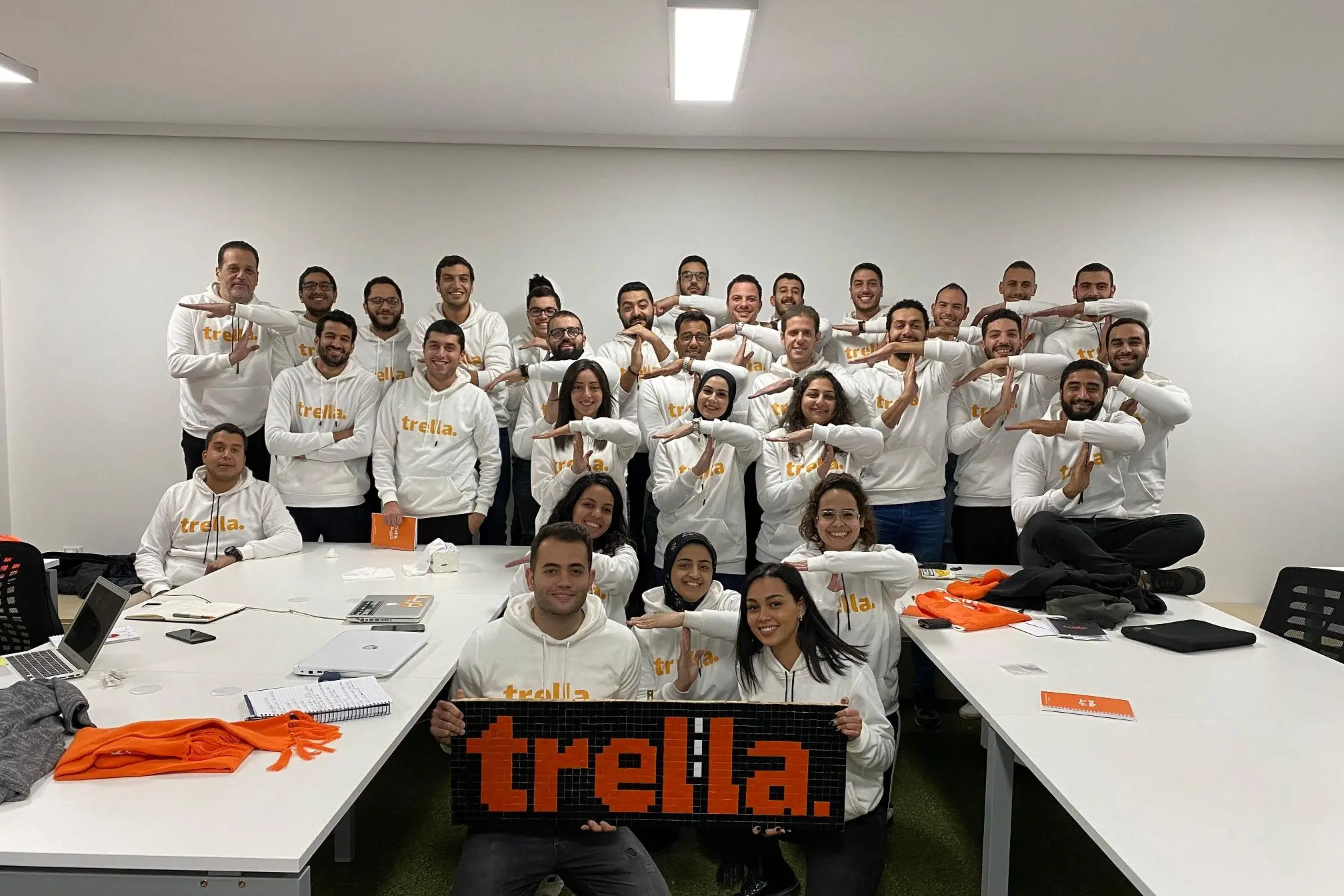
PHOTO
On June 21, Trella, an Egypt-based digital freight marketplace, made headlines by announcing that it had closed a $42 million funding round comprising $30 million in new equity and $12 million in debt facilities. The sum is especially remarkable for a two-year-old startup in Egypt, where most startups usually raise investments in the seven-dight range.
The round was led by Maersk Growth, the corporate venture arm of global multinational A.P. Moller, Maersk, and Saudi Raed Ventures. Other participating investors included Algebra Ventures, Vision Ventures, Next Billion Ventures, Venture Souq, Foundation Ventures and Flexport. The debt facilities are being provided by Lendable and other local financial institutions.
According to CEO Omar Hagrass, Trella aspires to make trucking and shipping more cost-effective and to enhance trade across borders. “We are trying to make economies more efficient and facilitate trade between countries. I think it is a very noble mission that keeps us going, and investors see that,” said Omar Hagrass.
Hagrass, who was part of Uber’s Expansion Team in the EMEA region for nearly four years before launching Trella, believes Trella has all it takes to attract investors. “The way investors look at this is three-fold: how big the problem the company is trying to solve is, how good the team is and how big the impact of the solution offered is. As long as we are ticking all three boxes and we are growing, investors are keen to put in some money.”
BATTLING INEFFICIENCY
In 2019, Hagrass founded Trella with three other entrepreneurs. All four saw great opportunities in the MENAP road freight market, which is worth $50 billion. Through technology, Trella promises solutions to some of the sector’s structural problems, including unreliability and inefficiency due to fragmented truck ownership.
“The cost of moving goods in Egypt is two to four times more expensive than it is in Europe and the US,” he said. “By making them more efficient, we bring the cost of moving goods down. This way we have started winning the market.”
Hagrass said that Trella has so far reduced the cost of moving goods by at least 17 percent on certain routes. Trella has landed more than 350 clients at the shipping end, including Coca-Cola, Maersk, Mondi, Henkel, Orascom and Cemex. More than 15,000 carrier partners are already on board.
By using the Trella app, which Hagrass believes is a game changer in the trucking business, carriers can book their own loads with the press of a button. Shipments can be tracked in real-time and users receive analytics on transportation performance.
“Before that, carriers used to make hundreds of phone calls every day just to be able to take one load,” Hagrass said. “Sometimes, they would spend three to five days idle because they did not have anyone to assign them any loads.”
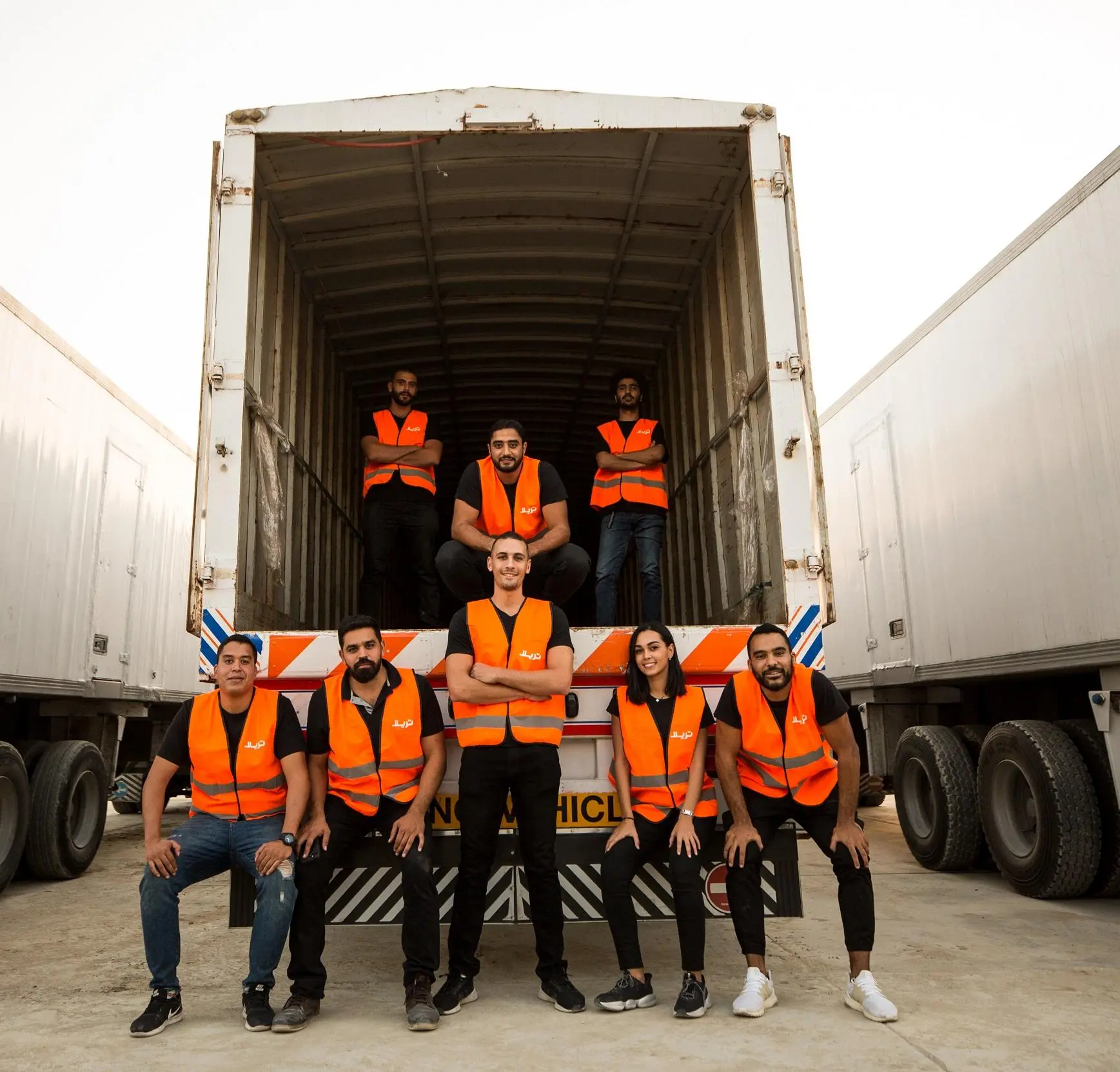
REVOLUTIONIZING THE BUSINESS
Besides load-booking, Trella aims to automate and digitize different facets of the business. Digitizing the money cycle and eliminating paperwork is a top priority for Trella, Hagrass said. Once this is achieved, Trella can grow its offerings in fintech or in other, adjacent lines of business.
“The only thing that changed in trucking in the last 200 years is that instead of moving goods by animal-powered vehicles, we are moving them with motor-powered vehicles,” he said. “Everything else is manual. Everything is super complex and intertwined to an extent in this part of the world.”
On the shipping side, Trella is also working on integrating its application with the ERP systems and warehouses of their shipper partners in order to make load bookings easier and faster, Hagrass explained.
Automation is “a constant process of deployment and improvement,” he said. “We have already automated a lot of these cycles, but automation is something that gets smarter over time. Those goals will be achieved in the next 12 to 18 months.”
In the meantime, Hagrass urges the Egyptian government to implement a set of regulations and safety measures to improve the trucking business ecosystem.
“There is a lot of learning from adjacent markets one of which are boxed trucks,” said Hagrass. “We are one of the few countries in the world that you can actually see what the truck is moving
In Egypt, trucks are still using flat beds on which goods are stacked with ropes, quite a safety hazard in a country with a high road traffic fatality.
He also hopes Egypt will follow in the footsteps of other African countries like Nigeria and Kenya and make GPS integration mandatory for trucks, a regulation that would improve traceability and efficiency.
Looking ahead, the 31-year-old entrepreneur said that the recent funds will be spent on technology and product development, new hires and geographic expansion. So far, Trella is operating in Egypt, Saudi Arabia and Pakistan, but the team is eyeing more markets in the GCC countries and East Africa.
“Trella is the fastest-growing land freight logistics aggregator in the region,” Hagrass said, “and the goal is to be the largest one.”
(Writing by Noha El Hennawy; editing by Seban Scaria)
Disclaimer: This article is provided for informational purposes only. The content does not provide tax, legal or investment advice or opinion regarding the suitability, value or profitability of any particular security, portfolio or investment strategy. Read our full disclaimer policy here.
© ZAWYA 2021




















