23 January 2006
DAMASCUS: When a police officer came to Riad Seif's house to personally invite him to coffee with the interior minister four years ago, Seif had a feeling it might be his last cup of coffee as a free man.
"Do I need to bring my pajamas and shaving kit," Seif recalls asking the officer on September 6, 2001. The officer said it wasn't necessary; Minister Mohammad Harba just wanted to speak to him. But when Seif arrived at the minister's office, Harba was nowhere to be found. Instead, there was a note instructing the officer to arrest Seif.
Seif, one of Syria's most charismatic and popular opposition leaders, was released from prison along with four other activists on January 18, seven months before the end of his five-year term. A former Parliament member, Seif was sentenced in 2002 to five years in prison for violating the Constitution.
He is one of the main architects of a movement called the Damascus Spring, launched in late 2000 as President Bashar Assad came to power. The Spring was characterized by a series of forums held throughout Syria, in which Syrians gathered for the first time in 30 years to discuss reforms and to demand an end to corruption and democratic change.
At the time, Seif, a member of Parliament since 1994 and a prominent businessman in Damascus, led the country's most prominent forum called the National Dialogue Forum.
But the fledgling movement came to an abrupt end in 2001 when Seif was told that if he held the forum, he would face arrest. Seif responded by inviting the Syrian-French intellectual and Sorbonne professor Burhan Ghalioun to speak before more than 400 people on September 5, 2001. The next day Seif was arrested.
In the coming months, nine other prominent figures were jailed. The Damascus Spring was officially put to an end.
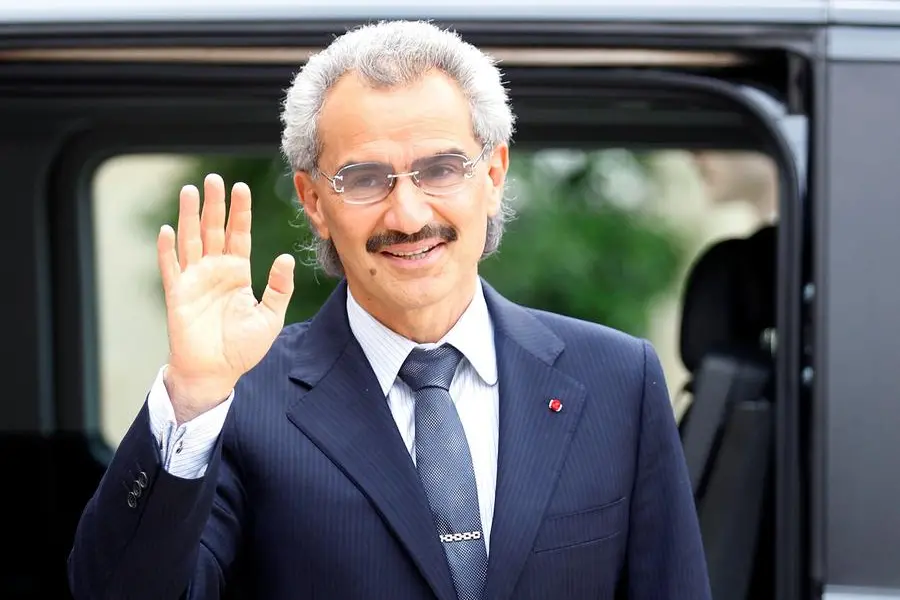
Four years, four months and 16 days later, Seif, 60, is back in his home, dressed in the robes of a politician; a blue pin-striped suit, black polished shoes and a crisp royal blue tie. He is one of the country's only well-known politicians - a man who some believe could be a viable alternative to the current regime. And, just hours after his release from prison, he seems ready to pick up where he left off.
"The Damascus Spring was a [moment of] hope in our movement to democracy," said Seif, whose hair has slightly grayed from his time in prison. "They thought they killed this hope. Yet we believe, though they've delayed it, they made it stronger."
Seif was born in the working class Sunni neighborhood of Midan. The son of a carpenter, Seif was brought up in a conservative Sunni household - an important factor which may allow him to rise in the political arena. He grew to become one of Damascus' most prominent businessmen in the 1980s, starting a men's T-shirt company called 400 that exported millions of dollars to the former USSR. He gained a reputation for being overly generous with his employees.
Seif first stepped into the world of politics in 1994, when he ran as an independent representative of Damascus in the Syrian Parliament. In his campaign, he addressed sensitive political and economic issues, seen as the cause of the anger of regime authorities.
He ran again for Parliament in 1998, but faced a series of economic and administrative problems which eventually led to Seif filing for bankruptcy. The financial loss was not nearly as bitter however as the death of his son in 1998.
Seif's most recent setback - spending over four years in prison - seems to have given him greater strength.
"I made use of my time in prison by organizing and sharpening my ideas in order to develop myself and better give to the people I love," said Seif, as his phone rings nonstop in the background.
Being behind bars did not prevent him from continuing to be involved politically. In October 2001, shortly after his imprisonment, Seif nominated himself for the Chamber of Industry elections. Most recently, in October 2005, he joined the Damascus Declaration, which united a wide-spectrum of opposition leaders in their calls for immediate democratic change in Syria.
Now that he has been released, Seif hopes he can rekindle a new movement. He has announced that he will form a new political party under the name National Liberal Party. (The formation of new political parties is illegal in Syria.) He believes the challenge will be to find a way to get the youth involved and to find honest, "clean" members to lend their support to a democratic and liberal system. He also believes Syria must re-build its broken image in the international community.
"Democracy is our fortune; it is coming any way" said Seif. "We are going to build as soon as possible democracy in Syria because this is the only way to save the country and to avoid catastrophes."
Many hope that Seif's release will help give a boost to the country's fractured opposition movement and moral support to those fighting for human rights.
"Seif represents one of the prominent figures in the opposition and what he started before [being sent to] prison and will continue now, will constitute an important document in building real opposition in Syria," said Anwar al-Bunni, another of the recently released opposition members, at his home on the evening of his release.
Others believe Seif lacks vision. Mazen Bilal, editor in chief of the Syria-Alghad Web site, doubts Seif is qualified to be an opposition leader, notwithstanding the importance of his experience. "He is a hard working person who has a dream, but doesn't
have a vision or an approach." said Bilal.
But with Syria under intense international pressure from a mounting UN investigation into the assassination of former Lebanese Prime Minister Rafik Hariri, the future of this democracy movement is uncertain.
"We shall try all possible means to make our aim come true and we shall extend the hands to all nations that are willing to help us, especially those who have the technology and civilization," said Seif. "If the suitable democratic environment is provided, Syria will be full of people like Riad Seif."