Football is set to replace gas as Qatar's key economic driver over the next decade.
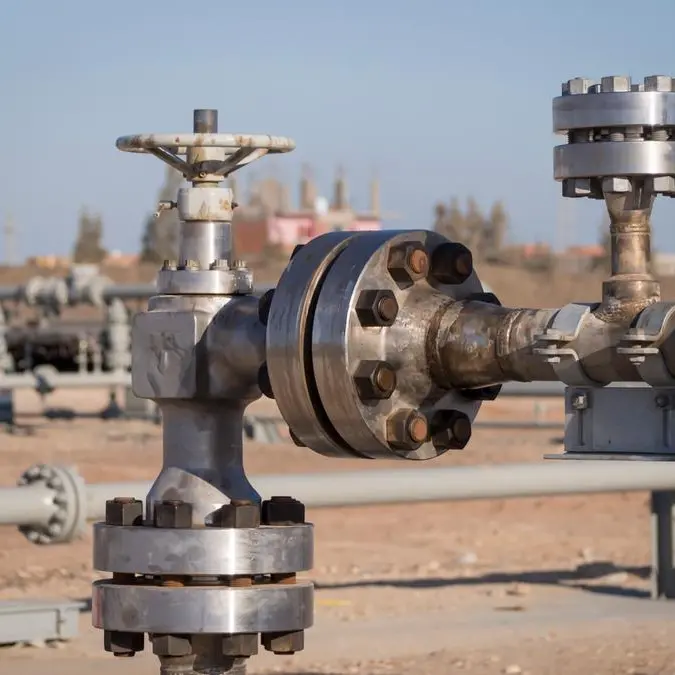
The world's largest liquefied natural gas exporter has posted double-digit GDP growth rates for much of the past decade, but the oil and gas sector grew by a meagre 0.8% in the first quarter as natural gas production reached a plateau.
Overall, the economy is still expected to grow 5.3% in real terms as the non-oil sector steps up to make up for flat hydrocarbon output, according to Qatar's General Secretariat for Development Planning (GSDP).
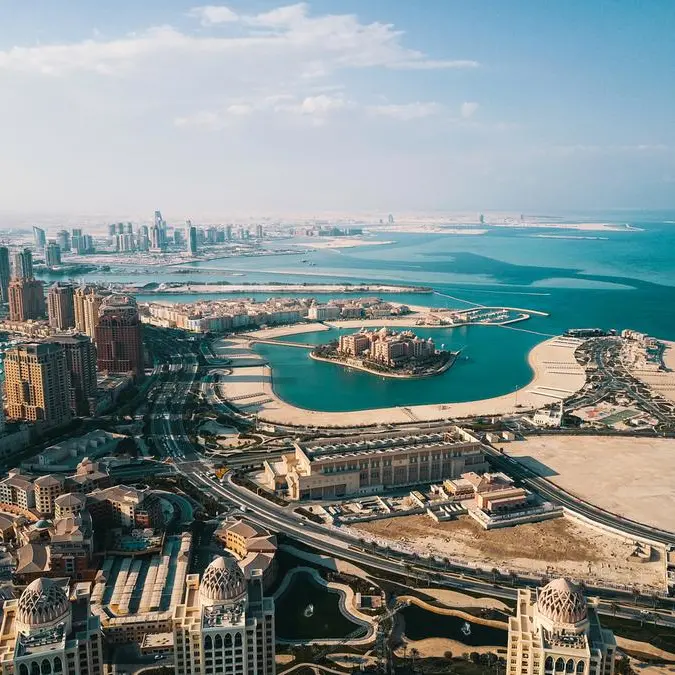
Much of the impetus will come from the FIFA World Cup which will be hosted by Qatar in 2022 and, even though the event is still years away, the authorities are working hard to complete the infrastructure as they prepare to show off Doha to the wider world.
"Qatar's economy is on track and more or less where we expected it to be," said Dr Saleh Al Nabit, secretary general of GSDP.
"Growth now and over the medium term will depend on performance in the non-oil and gas economy and we anticipate robust performance across industry, construction and services in both 2013 and 2014."
The GSDB estimates that growth in the non-oil and gas economy sector will rise to 9.8% in 2013, climbing another 10.3% in 2014, as World Cup-related projects get underway.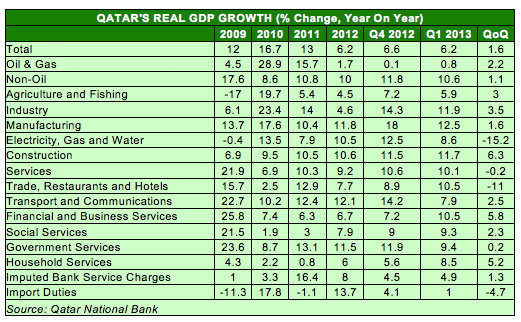
Projects worth more than USD 29 billion are expected to be awarded this year, according to NBK Capital. This will add to the USD 27.5 billion already awarded this year by the authorities.
All in, the authorities are expected to award an estimated USD 56.5 billion this year ‑ twice the value of contracts awarded in 2012.
"The package of contracts associated with the local roads and drainage program that is managed by the public works authority, Ashghal, is likely to be the main focus of project activity," said NBK analysts Omar Al-Nakib and Mohamed F Al-Mutawa in a note to clients.
Management consultancy Deloitte expects contracts worth USD 3 billion are expected to be awarded for the flagship Lusail Real Estate Development Company over the next year for infrastructure and roads as part of developing the new Lusail City 2.
"Additionally, new contracts up to USD 3.3 billion are expected to be awarded as part of Doha's New Port project by the end of 2013."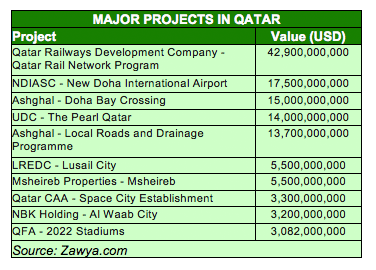
CONGESTION AND BOTTLENECKS
Preparations for the FIFA World Cup and the five-year National Development Strategy program, will ensure that the country's infrastructure will receive a massive upgrade.
Up till now Qatar has depended on its natural gas production and this would go a long way in ensuring diversification of the economy. Yet there are clear challenges ahead.
"Delivery of a large number of big projects in a confined geographical space poses challenges and, unless well-executed, could have adverse effects for businesses in the rest of the economy," the GSDP warns in its report.
"Congestion, bottlenecks, disruption to services and the prospect of cost escalation for materials might pose difficulties to firms and discourage new investments during a period of intense construction activity."
Companies are reporting hiring sprees, with six out of 10 respondents in Qatar planning to hire over the next three months - with 25% expecting to hire between six to 10 positions, according to a Bayt.com and YouGov survey.
Inflation is also expected to pick up as the foreign labour force makes demands on housing, transportation and infrastructure.
Qatar's break-even oil price, which currently stands at a moderate USD 67 per barrel, could also rise if the authorities spend heavily on key projects.
The GSDP estimates that a 10% increase in capital outlays could cut the fiscal surplus by one full percentage point of GDP in 2014.
Still, there is little need to worry about Qatar's short-term fiscal issues. Standard & Poor's estimates the country has a net external creditor position of USD 50 billion, even though total external debt has been rising over the past few years.
NEW ECONOMY
The heavy investments in the non-oil sector will also help in lifting the country's battered real estate market.
Deloitte expects the country to invest USD 200 billion over the next 10 years in construction projects, which would serve as a major boon for real estate developers and construction companies.
"A significant demand for affordable properties, especially in the run-up to the 2022 FIFA World Cup, is anticipated," Deloitte said in a report. "Currently, supply of housing is scarce and with an increase in population forecast in Doha over the coming years, construction of affordable residences will increase."
The next few years could see tremendous evolution in Qatar, as the country's economic make up changes from being gas-dependent to a well-rounded economic hub, rivalling Dubai and the wider UAE.
However, infrastructure spend will have to be backed by more robust economic reforms and changes to the country's business environment to encourage private-sector growth.
In addition, falling oil production and flat natural gas output, means the onus of development will fall on the non-oil sector.
"Looking further out, growth in Qatar's non-oil and gas economy and its competitiveness will increasingly depend on the gains that can be made in efficiency and productivity," said GDSP.
Creating efficiencies and improving production will definitely be worthwhile endeavors as the country weans itself off hydrocarbon dependence and embarks on a new chapter of growth.
© alifarabia.com 2013