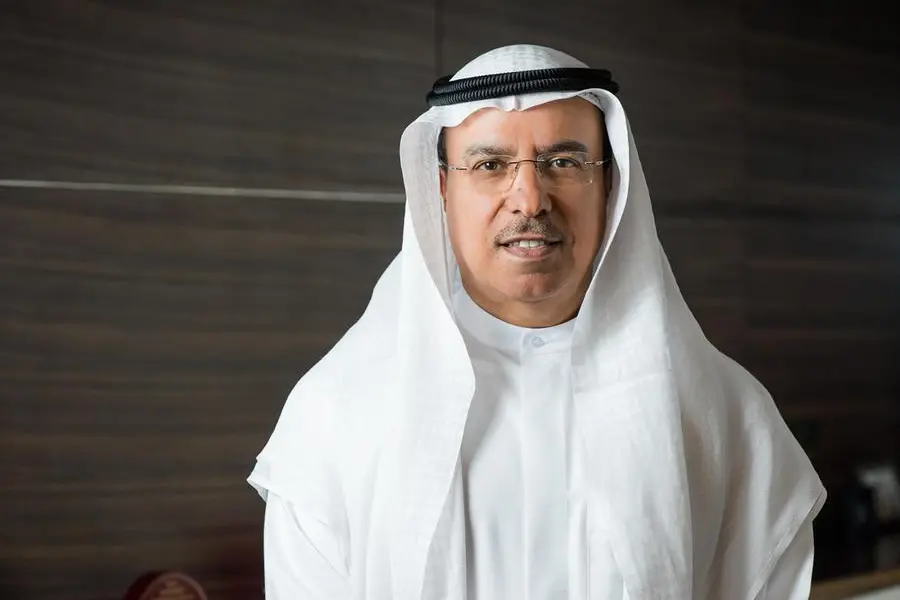
Mohammed Alabbar has always been a man in a tearing hurry.
Over the last ten years, his inputs - as head of Dubai Department of Economic Development and then as chairman of Emaar Properties - have accelerated Dubai's push to be a fully-integrated global economy.
Now, on the threshold of the biggest multilateral event that Dubai is hosting in its short history, Alabbar's observations on what the near future has in store will be as relevant.
Gulf News: There is an impression that Dubai is getting to be more expensive to do business from. Your comments.Alabbar: Calculating the cost of doing business in any country or city is an extremely complex procedure and involves numerous factors. Without a scientific method of analysing all of these factors giving a definitive statement of fact is impossible.
It is a global trend that the cost of doing business from any city in the world has been on the increase.
Having said that, Dubai and its authorities are doing everything at their disposal to make the emirate a global destination for businesses to operate from. We are fully on top of the situation.
In the case of Dubai, there is a need to make a clear distinction here between the concepts of expensive and cost-effective.
Dubai has invested heavily in establishing and maintaining the city's state-of-the-art infrastructure and continuously streamlines procedures and regulations to ensure that it is investor-friendly.
Factors such as easy accessibility, an efficient financial services industry, excellent internal transport networks and a highly skilled workforce places it in the league of most efficient and cost-effective business centres such as Frankfurt, Singapore or Chicago, to name but three.
The speedy processing of visas, work permits and other government documents, the transparent systems in place and simple and unambiguous regulations all make for efficiency in the setting up and running of businesses in Dubai. That is the reason why over 200 nationalities live and work in Dubai.
The recent World Bank report on 'Better Governance for Development in the Middle East and North Africa' places the UAE well above many of the countries in the MENA region.
Inflation remained low at 2.2 per cent in 2002 and the per capita income of the UAE at $20,602 is among the highest in the world.
And, of course, there is no tax on personal and corporate income. Today, business outlets in the UAE can be set up within a day, especially in places such as Dubai Technology Commerce and Media Free Zone.
Is there any move by DED to address the issue of rising costs for businesses?DED's stated mission is to create an ideal environment for the private sector to do business. Containing inflationary costs for businesses is of prime concern, and the best way of achieving this is to ensure that all processes are efficient and cost-effective.
The DED is committed to confirming Dubai as a centre for business and investment excellence, one in which good corporate governance is a given. We are also determined to further streamline the process of actually setting up a new business venture in Dubai.
The DED has already set up sectoral bodies comprising leading businessmen from different sectors, which meet regularly with department officials to discuss crucial issues related to the sector. This regular interaction between is a significant step towards involving the private sector in public policy formulation.
More than ever before, Dubai is competing with other regional destinations for businesses to set up shop here. This has only accelerated in the post Iraq War phase. What are the steps DED is taking to ensure Dubai stays ahead of the others?Dubai has always welcomed competition because it induces real growth. We are happy that the neighbouring countries are investing in innovative real estate and infrastructure projects because the effect will result in a synergistic growth climate for the entire region.
The projects being initiated across the region will complement Dubai's efforts and will result in collective growth. We need at least five more Dubai's in the region, which services a vast population of over 1.2 billion consumers.
While we welcome the fact that other countries in the region are seeking to compete with Dubai as a destination for business and investment, we believe that the foresight and pioneering vision that has created modern Dubai has placed us ahead of other cities in terms of offering a stable, efficient and transparent business environment.
Dubai began its diversification drive when other GCC nations were still investing in oil-related industries. It then moved to establish robust infrastructures, which would create investor confidence.
The DED is committed to adding value to the proposition of doing business in Dubai. The simple fact that we have pioneered freehold property ownership for foreigners shows that we are intent on providing a stable and long-term business platform.
DED is currently revising its industrial policy. What was the impetus behind the move? Could you give an insight into how the new Policy will look like?It is imperative that the long-term strategy of Dubai must include focus on industry and manufacturing as these sectors form an important aspect of a country's growth. The DED has been working on plans to broaden its industrial policy in line with the requirements of the current growth and development in the emirate.
In co-ordination with Dubai Municipality, the DED has already commissioned a feasibility study on setting up a model industrial zone in Dubai. The study is expected to be completed by the end of the year and further plans will be announced in due course, based on the results of the study.
You have been a leading voice in Dubai's diversification drive. What would be the projected share of the non-oil sector?Dubai has become one of the world's fastest growing economies in the past decade. In the past five years, its non-oil GDP has grown by an average of 8 per cent a year, according to fairly conservative figures released by the Federal Ministry of Planning. Last year, the economy as a whole grew by 7.5 per cent with parts of the non-oil economy registering a 9.5 per cent growth.
It is a stated fact that the oil sector last year contributed to only 7 per cent of Dubai's GDP in comparison to 24 per cent in 1993. The government estimates that by 2010, the oil economy will account for less than 1 per cent of the GDP.
Tourism has been a significant factor in Dubai's growth and in fact has contributed twice as much as that of oil. By 2010, DTCM has forecast that the number of tourists will touch 15 million. View this within the perspective that we are a small city with a population of about a million people.
The growth in Dubai is also being driven by the work on the big government and private real estate projects. The development in real estate has been further fuelled by low interest rates.
By 2006, which is just the blink of an eye, Dubai will have consolidated its regional and global position as an economic crossroads, a hub for aviation, a new model class centre for the financial services industry and a first-class tourism and MICE destination. It will also be the region's premier property investment axis.
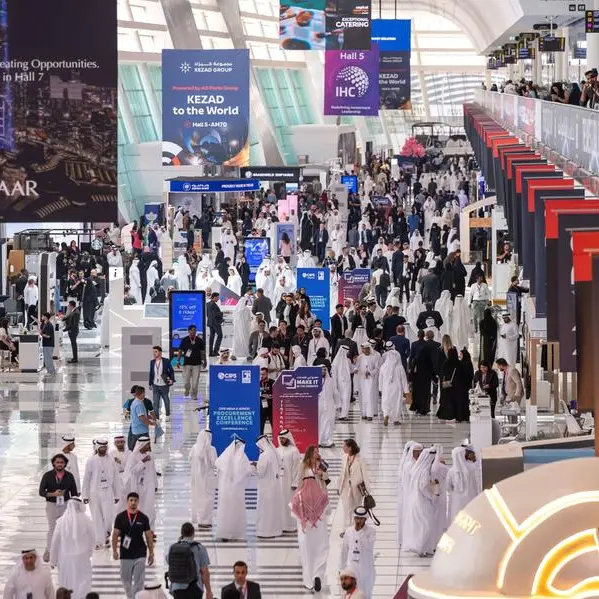
And a word on Dubai 2003...A lot has already been said and written about Dubai 2003. It is, without doubt, the biggest opportunity that Dubai has ever had to showcase its unsurpassed achievements to a global audience. That Dubai and the entire country will benefit economically and strategically from Dubai 2003 goes without saying.
This event is truly a defining moment for Dubai and the UAE. I want everyone who lives here to take a moment to truly appreciate what is happening here. Each citizen, each resident, each visitor should stop and look at what we are witnessing - a truly historical event.
That Dubai was able to become the host for this prized international event is no accident. Dubai 2003 is the culmination of millions of man-hours of plain hard work.
The World Bank and the IMF chose Dubai as the venue for their conference only after a long study of the economic and track record of the city and the whole of the UAE over the past three decades.
From the construction workers putting the finishing touches to the venue, the baggage handlers at the airport and the traffic policeman at every intersection to the ministers, the bankers and the strategists, Dubai 2003 is a collective effort, an effort that illustrates the incredible energy of Dubai and the unique culture that we have - one that says nothing is impossible.
Gulf News