08 January 2012
Tunisia's travails over the past year paid off as it shot up in the Economist Intelligence Unit (EIU) Democracy Index 2011.
Tunisia experienced the biggest increase of any country in its democracy score in 2011. It moved from an authoritarian to a hybrid regime.
"2011 was an exceptionally turbulent year politically, characterised by sovereign debt crises and weak political leadership in the developed world, dramatic change and conflict in the Middle East and North Africa (MENA) and rising social unrest throughout much of the world," said the EIU in a report. "It featured important changes in democracy, both in the direction of unexpected democratisation and a continuation of decline in democracy in some parts of the world."
Still, anti-democratic forces also fought hard to hold their ground, with 48 countries out of an index of 167 nations saw a decline in their scores. Only 41 countries saw their scores rise and 78 remained the same.
But that could also mean greater upheavals in the future as young populations rising against well-entrenched regimes. That was clear in MENA when the decades-old rules of President Zine El Abidine Ben Ali in Tunisia, Hosni Mubarak in Egypt, Moammer Gaddafi in Libya and Abdullah Ali Saleh in Yemen finally came to an end.
"Why did the Arab uprisings occur after a long period in which authoritarian governments appeared to have been successfully consolidating their control? The interplay of a number of factors may provide an explanation: electoral fraud; succession crises; economic distress; increasing corruption; and neighbourhood effects," says the EIU.
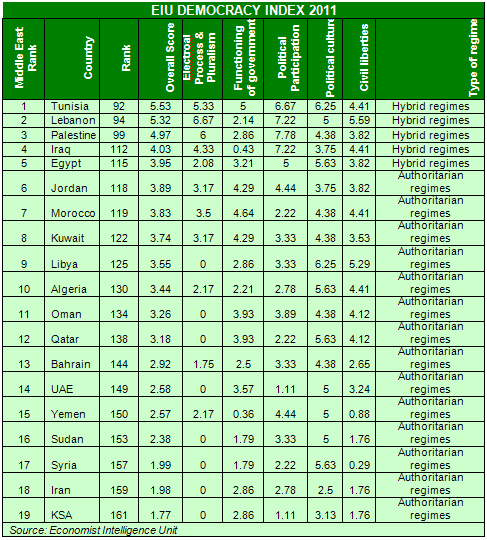
Still, for all the efforts made by pro-democracy forces in Middle East and North Africa, the region remains the most repressive in the world, with 15 out of 20 countries categorised as authoritarian.
"Almost all governments in the region continue to restrict political freedoms," says the EIU. "Prior to the Arab spring there was some limited political reform in the region in recent years, including the establishment of representative assemblies in several Gulf states. But these reforms have certainly not changed fundamentally the political system in these states, in which the executive branch still dominates and is unaccountable."
Saudi Arabia fared the worst in the region, with all the other Gulf states also finding themselves at the bottom of the index. All the GCC states fared even worse then Lebanon, Iraq, Palestine and Egypt, suggesting they have a long way to go before they can be considered somewhat democratic.
Enormous oil rents are the means by which governments in the region have entrenched autocratic rule, says the EIU. "Rulers can finance far-reaching patronage networks and security apparatuses. Oil revenue removes the need to levy taxes, thereby reducing accountability. Civil society is very weak throughout most of the region."
This was evident across all the rich Gulf states that ordered salary hikes, housing schemes and additional benefits and schemes to appease disgruntled citizens.
Other Middle East states also are going through more pains before they can reap the rewards of freedom. In Egypt, the continued dissatisfaction of the Supreme Council of Armed Forces has led to protests and violence despite the successful elections.
In Syria, anti-Assad citizens are facing tremendous violent resistance from the regime, while Libya and Yemen are still picking up the pieces of the civil war in the respective countries.
"Tunisia was the pioneer of this year's Arab revolutions, and has made the most progress," says the EIU, especially as the October 23rd elections for a 218-member constituent assembly were held successfully.
The Egyptian revolution has been a much more turbulent affair than its Tunisian counterpart, and one of the main differences between the two experiences has been in the nature of Islamist politics, says the EIU. Whereas Hizb al-Nahda faces hardly any significant challenges to its dominance of the Islamist political scene in Tunisia, the Muslim Brotherhood has to deal with a resurgent Salafi movement pushing a radical Islamist agenda.
Despite the epic and historic triumph of democratic forces in the region, MENA citizens are part of the 53% of the global population that remains either under complete authoritarian regimes or hybrid regimes.
GLOBAL OUTLOOK
Even Europe was not immune as the pressure of the sovereign debt crisis saw seven western European states.
The main reason has been the erosion of sovereignty and democratic accountability associated with the effects of and responses to the euro zone crisis (five of the countries that experienced a decline in their scores are members of the euro zone--Greece, Italy, Portugal, Spain and Ireland). Most dramatically, in two countries (Greece and Italy) democratically elected leaders have been replaced by technocrats.
"The near-term political outlook for Europe is disturbing. The European project is under serious threat and disputes within the EU are ever sharper," says the EIU.
Not surprisingly, Nordic nations emerged as the most democratic nations. Norway, Iceland, Denmark and Sweden were the top four democratic countries in the world. New Zealand, Australia, Switzerland, Canada, Finland and the Netherlands made up the 10 most democratic nations on earth, according to the EIU index.
At the other end of the spectrum, three Middle East nations found themselves among the ten least democratic nations on earth - Saudi Arabia (161st), Iran (159th) and its close ally Syria (157th) were in the bottom ten. North Korea is the least democratic nation on earth, followed by Chad, Turkmenistan, Uzbekistan, according to the index.
Tunisia's travails over the past year paid off as it shot up in the Economist Intelligence Unit (EIU) Democracy Index 2011.
Tunisia experienced the biggest increase of any country in its democracy score in 2011. It moved from an authoritarian to a hybrid regime.
"2011 was an exceptionally turbulent year politically, characterised by sovereign debt crises and weak political leadership in the developed world, dramatic change and conflict in the Middle East and North Africa (MENA) and rising social unrest throughout much of the world," said the EIU in a report. "It featured important changes in democracy, both in the direction of unexpected democratisation and a continuation of decline in democracy in some parts of the world."
Still, anti-democratic forces also fought hard to hold their ground, with 48 countries out of an index of 167 nations saw a decline in their scores. Only 41 countries saw their scores rise and 78 remained the same.
But that could also mean greater upheavals in the future as young populations rising against well-entrenched regimes. That was clear in MENA when the decades-old rules of President Zine El Abidine Ben Ali in Tunisia, Hosni Mubarak in Egypt, Moammer Gaddafi in Libya and Abdullah Ali Saleh in Yemen finally came to an end.
"Why did the Arab uprisings occur after a long period in which authoritarian governments appeared to have been successfully consolidating their control? The interplay of a number of factors may provide an explanation: electoral fraud; succession crises; economic distress; increasing corruption; and neighbourhood effects," says the EIU.
Still, for all the efforts made by pro-democracy forces in Middle East and North Africa, the region remains the most repressive in the world, with 15 out of 20 countries categorised as authoritarian.
"Almost all governments in the region continue to restrict political freedoms," says the EIU. "Prior to the Arab spring there was some limited political reform in the region in recent years, including the establishment of representative assemblies in several Gulf states. But these reforms have certainly not changed fundamentally the political system in these states, in which the executive branch still dominates and is unaccountable."
Saudi Arabia fared the worst in the region, with all the other Gulf states also finding themselves at the bottom of the index. All the GCC states fared even worse then Lebanon, Iraq, Palestine and Egypt, suggesting they have a long way to go before they can be considered somewhat democratic.
Enormous oil rents are the means by which governments in the region have entrenched autocratic rule, says the EIU. "Rulers can finance far-reaching patronage networks and security apparatuses. Oil revenue removes the need to levy taxes, thereby reducing accountability. Civil society is very weak throughout most of the region."
This was evident across all the rich Gulf states that ordered salary hikes, housing schemes and additional benefits and schemes to appease disgruntled citizens.
Other Middle East states also are going through more pains before they can reap the rewards of freedom. In Egypt, the continued dissatisfaction of the Supreme Council of Armed Forces has led to protests and violence despite the successful elections.
In Syria, anti-Assad citizens are facing tremendous violent resistance from the regime, while Libya and Yemen are still picking up the pieces of the civil war in the respective countries.
"Tunisia was the pioneer of this year's Arab revolutions, and has made the most progress," says the EIU, especially as the October 23rd elections for a 218-member constituent assembly were held successfully.
The Egyptian revolution has been a much more turbulent affair than its Tunisian counterpart, and one of the main differences between the two experiences has been in the nature of Islamist politics, says the EIU. Whereas Hizb al-Nahda faces hardly any significant challenges to its dominance of the Islamist political scene in Tunisia, the Muslim Brotherhood has to deal with a resurgent Salafi movement pushing a radical Islamist agenda.
Despite the epic and historic triumph of democratic forces in the region, MENA citizens are part of the 53% of the global population that remains either under complete authoritarian regimes or hybrid regimes.
GLOBAL OUTLOOK
Even Europe was not immune as the pressure of the sovereign debt crisis saw seven western European states.
The main reason has been the erosion of sovereignty and democratic accountability associated with the effects of and responses to the euro zone crisis (five of the countries that experienced a decline in their scores are members of the euro zone--Greece, Italy, Portugal, Spain and Ireland). Most dramatically, in two countries (Greece and Italy) democratically elected leaders have been replaced by technocrats.
"The near-term political outlook for Europe is disturbing. The European project is under serious threat and disputes within the EU are ever sharper," says the EIU.
Not surprisingly, Nordic nations emerged as the most democratic nations. Norway, Iceland, Denmark and Sweden were the top four democratic countries in the world. New Zealand, Australia, Switzerland, Canada, Finland and the Netherlands made up the 10 most democratic nations on earth, according to the EIU index.
At the other end of the spectrum, three Middle East nations found themselves among the ten least democratic nations on earth - Saudi Arabia (161st), Iran (159th) and its close ally Syria (157th) were in the bottom ten. North Korea is the least democratic nation on earth, followed by Chad, Turkmenistan, Uzbekistan, according to the index.
© alifarabia.com 2012