PHOTO
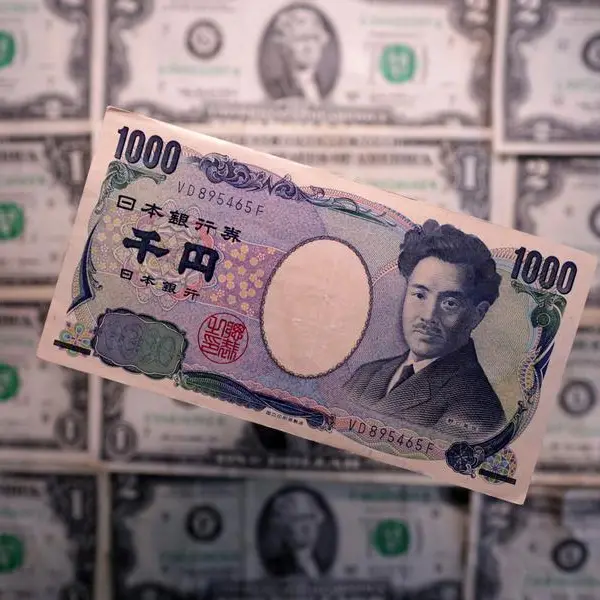
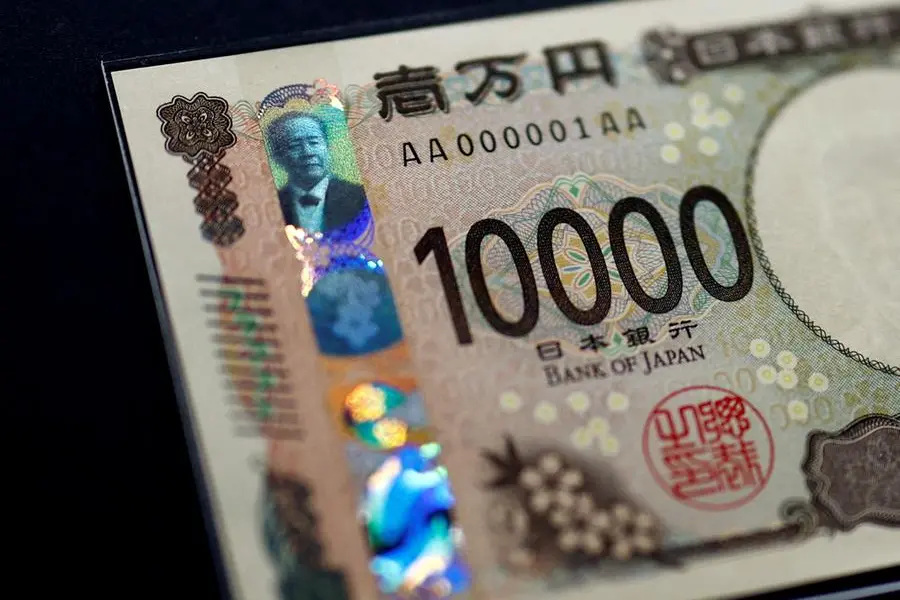
SINGAPORE - The yen was pinned near four-decade lows on Friday, with markets on heightened intervention watch as neither a U.S.-Iran peace deal nor a rate hike in Japan managed to arrest its prolonged slide.
The Japanese currency edged up 0.2% against the U.S. dollar at 161.12 yen, steadying after dropping to a two-year low on Thursday, though holidays in the U.S. and much of Asia kept liquidity thin.
Most other currencies were little changed as shipping in the Strait of Hormuz returned to normal after the signing of the U.S.-Iran peace deal earlier this week, though question marks remain over whether the truce will hold.
The British pound was steady at $1.3202 after Greater Manchester mayor Andy Burnham triumphed in a by-election in Makerfield, setting the stage for a likely challenge to Prime Minister Keir Starmer for the leadership of the ruling Labour Party.
But the Japanese currency has found little relief even after the Ministry of Finance's dollar-selling intervention earlier this year and the Bank of Japan hiked interest rates to a 31-year high last week. Concerns around the spending plans of Japanese Prime Minister Sanae Takaichi have undermined investor confidence and prompted speculation that more intervention could follow.
"Large speculative yen short positions have not eased despite the BOJ’s rate hike this week," analysts from DBS wrote in a research report.
"Japan’s tolerance for yen weakness appears close to its limit," the note added. "Policymakers may deploy both rhetoric and further market interventions to curb yen depreciation, with falling oil prices also offering some support to the currency."
Japan's annual core inflation stayed below the central bank's 2% target for a fourth straight month in May, data showed on Friday, as fuel subsidies offset rising raw material costs from the Middle East conflict.
"While the government’s fuel price caps have so far kept a lid on consumer prices, we expect the pass-through of higher energy costs to utilities charges and other goods and services to lift inflation to around 3.5% by early-2027," analysts from Capital Economics wrote in a research note.
Minutes from the central bank's meeting in April released on Friday and comments from BOJ Deputy Governor Ryozo Himino earlier also cautioned about the risks of more rate hikes tied to the inflationary impulse from the Iran war.
"Our view is that Japan’s Ministry of Finance will likely defend the 161.95 level the first couple of times it’s tested, deploying similar firepower to what we saw in April and May — around ¥11.7 trillion," said Tony Sycamore, market analyst at IG in Sydney. "That would mean they would have used roughly 11–12% of their total reserves in a relatively short period, with little noticeable impact," he added. "At that stage, they would need to become far more selective with future interventions to preserve flexibility and credibility, keeping plenty of ammunition in reserve."
Other currencies were largely steady. The U.S. dollar index , which measures the greenback's strength against a basket of six currencies, held at 100.82 after climbing to a one-year high on Thursday, supported by more hawkish rhetoric from new Fed Chair Kevin Warsh.
Fed funds futures are pricing an implied 38.5% probability of a 25-basis-point hike at the U.S. central bank's next two-day meeting in July, up sharply from an 8% chance a week ago, according to the CME Group's FedWatch tool.
The euro was flat at $1.1457. The Australian dollar slipped 0.1% to $0.7011, while its kiwi counterpart held steady, fetching $0.5752. Bitcoin was down 0.2% at $62,897.38, while ether slid 0.3% to $1,703.18.
(Reporting by Gregor Stuart Hunter Editing by Shri Navaratnam)