PHOTO
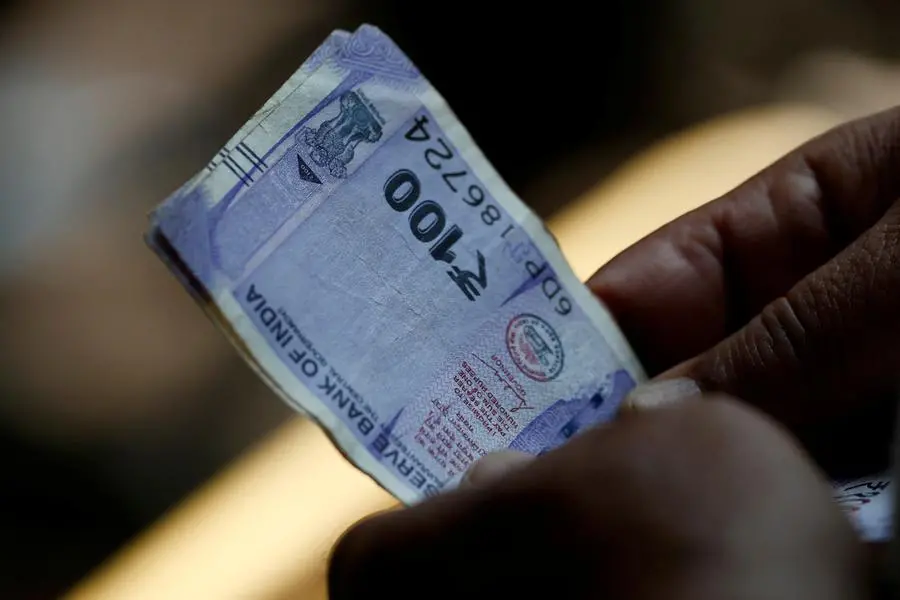
MUMBAI - The Indian rupee's valuation versus other major currencies calculated on a trade-weighted basis has fallen to its lowest in more than a decade, hit by the Iran war-driven surge in crude oil prices and chunky foreign portfolio outflows.
The South Asian currency's 40-currency real effective exchange rate, which accounts for inflation differentials between different economies, fell to 92.72, the Reserve Bank of India's latest bulletin released late on Thursday showed.
The REER is now hovering well below its long-run average of 98.25, pointing to a deeply undervalued rupee against historical norms.
Relatively subdued inflation in India has weighed on the REER in recent months, adding to the impact of the rupee's roughly 4.5% year-to-date decline, analysts said. The currency hit a record low of 95.21 per dollar in late March.
Despite the extent of the rupee's undervaluation, analysts see little near-term scope for a recovery.
While the rupee is highly undervalued on a REER basis relative to historical ranges, it is likely to remain under pressure in the near term due to dollar demand "from ramp-up in oil imports to secure supplies and by sizeable equity outflows amid heightened risk aversion," analysts at BofA Global Research said in a note.
The March reading caps a roughly 15-point decline from late-2024 highs, marking one of the sharpest real depreciations episodes in years.
A weaker real-effective exchange rate helps make exports out of India more competitive, while increasing the cost of imports. It also offers foreign investors a cheaper entry point to the currency, even while hitting the value of their existing investments in Indian equities and fixed income in foreign currency terms.
A narrower six-currency gauge suggests the rupee’s undervaluation is starker. The rupee's 6-currency REER declined to 89.61 in March, the lowest on record for data going back to April 2015 and well-below the series average of nearly 100.
The U.S., China, United Arab Emirates, Russia, Saudi Arabia and Singapore were the country's 6-largest trading partners in the 2024-2025 fiscal year, trade ministrydata show.
"For long-term investors, the rupee's current valuation provides an attractive entry point,” V. Anantha Nageswaran, India's chief economic adviser, told Bloomberg News on Thursday.
The Indian central bank has assumed a dollar-rupee exchange rate of 94 in its forecasts for fiscal year 2026-27. A 5% depreciation from those levels would add about 40 bps to inflation and 25 bps to growth, per RBI estimates.
(Reporting by Jaspreet Kalra; editing by Nimesh Vora and Ronojoy Mazumdar)