Behind our high-rises are hardy men and hardier machines.Putzmeister at Burj Dubai, for instance. To pump up concrete for the tallest building in the world. Like its mascot, the strong and reliable elephant, a 'workhorse' with the tough lumbermen in tropical forests.
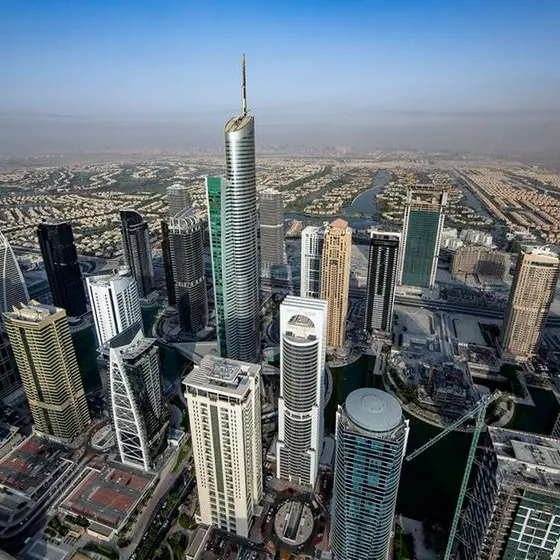
Adventure reaching for the sky (almost literally!) is how the 700-m Burj Duabi, to be the tallest building in the world, can be described. Fourteen months into construction, it is now 48 storeys above ground zero, or ground level. Though amazed by such structures, the nitty-gritty of the construction process escapes most of us. Concrete, for instance, is pumped up. The pumps that do this have to be pretty strong, and that's why Putzmeister has chosen the elephant, strong and reliable, as its mascot.
Work is progressing uninterrupted at Burj Dubai despite the high outside temperatures (up to 50 C), the high-strength concretes, which are sometimes difficult to pump, and the sophisticated architecture of the structure. As heights increase, demands made on pumping technology intensify. Putzmeister has developed super high-pressure pumps to meet such demands. These machines are designed for extreme delivery pressure.
The delivery and installation of various Putzmeister concrete pumps, booms, delivery lines and shutoff valves have been completed. The concreting of the base plate, the storeys at basement level and the three tower wings up to "Level 04" was carried out first with several truck-mounted concrete pumps. This was done through both the pipeline on the placing booms and fixed delivery lines.
Unimix, responsible for concrete placement, delivery and pumping, used a stationary Putzmeister standard pump for the central core, which basically runs 8 to 12 floors ahead. The stationary Putzmeister had standard ZX delivery line (DN 125) up to a height of about 80 metres (Level 22). Concrete delivery is looked after by experienced Putzmeister service engineers, who were involved in working out specifications of the super high-pressure pumps and details of the concreting plan. Putzmeister specialists were at the side of Unimix and site management personnel during the subsequent installation of the pipelines and booms.
As heavy-duty concrete which is difficult to pump is being used, a concrete pressure of 130 bar has already been reached at Level 22. The continuously rising delivery pressures - over 200 bar are expected must not only be built up by Putzmeister concrete pumps, but the pipelines, couplers and connected isolating gate valves must also be able to handle it reliably. Putzmeister therefore uses strengthened high-pressure lines (ZX 150 Zentrifix) with special welded collars.
The extreme variations in pressure and temperature means a lot of strain in the concrete delivery lines.
Moreover, due to the enormous dimensions, settlement of several decimetres is anticipated in the building.
To compensate for this particular pump-line stress, Putzmeister has developed a special system for bearing and mounting the riser pipe. It is now patent-pending.
High-strength concretes, pressure reserves: To be able to carry the increasing loads as height increases, only concretes with high compressive strength are being used for Dubai's most spectacular construction.
According to the original plans, the distribution of the individual mixture breakdowns was: base plate: C80A (maximum particle size 20 mm); up to Level 26 (95 m) for walls C80A (maximum particle size 20 mm); up to Level 126 (452 m) - for walls C80 (maximum particle size 14 mm); up to Level 154 (570 m) for walls C60.
Concretes with compressive strength C50 are compulsory for concreting the decks of all storeys.
The concrete C80A with 20 mm maximum particle size was initially intended only for placement up to heights of 95 m, but this class, with slightly modified mixture breakdown, has further uses. C80A has a cost advantage compared to C80 with 14 mm maximum particle size, as well as good pumpability.
Super-high-pressure pumps: Putzmeister's super-high-pressure pumps, Model BSA 14000 SHP-D, designed for extreme delivery pressure. Two super-high-pressure pumps and one "normal" high-pressure pump (to clean delivery lines and be a standby) are placed about 70 m from the centre of the tower in a central pumping area. From here, two concrete delivery lines run to the 'A' wing of Burj Dubai. In the building, the two main lines divide into four legs, each of which runs to a stationary boom.
A fifth line is provided for standby operation. Three of the lines are connected to the stationary booms of the MX 28 model, which are fitted to the auto-climbing wall formwork of the wing.
The MX 28 booms are freestanding on 16-m-high tubular columns. They are anchored with girders to the working platform of the respective wall formwork. A hydraulic Doka climbing system raises Putzmeister booms like this from one concreting section to the next, together with the formworks.
The concreting work in the central heart of the building is continued by a fourth, even larger MX stationary boom with a 32-m reach. This MX 32 is set up on a 20-m-high tubular column and secured in the shaft with I-beams to a Doka wall formwork. The climbing process is also hydraulic.
The stationary Putzmeister booms used at the Burj Dubai each have four arm segments and are designed as flexible Z-folding booms. The MX booms do not require additional counter-weights, so their slewing range is not obstructed, either by neighboring erection cranes or by construction protrusions or formworks.
Construction World 2006