PHOTO
Oil prices fell on Friday as possible further talks between the U.S. and Iran at the weekend and a 10-day ceasefire between Lebanon and Israel raised investor hopes that the war in the Middle East could be nearing an end.
Brent crude futures declined by $3.09, or 3.11%, to $96.30 a barrel at 0942 GMT. U.S. West Texas Intermediate crude futures fell $4.01, or 4.23%, to $90.68 a barrel.
"Oil prices are reacting very sensitively to escalation or de-escalation headlines," said UBS analyst Giovanni Staunovo, after U.S. President Donald Trump indicated that an Iran deal "is very close" on Thursday.
At those levels, Brent futures were heading for a 1.2% gain for the week, and WTI futures were on track for a 6% drop from last Friday's close.
Addressing a key sticking point in talks to end the Iran war, Trump said Tehran had offered not to possess nuclear weapons for more than 20 years.
"We're going to see what happens. But I think we're very close to making a deal with Iran," Trump told reporters outside the White House on Thursday.
Oil prices have fallen below $100 per barrel but remained elevated this week above $90, off the back of 50% rises in March.
The temporary nature of the Israel-Lebanon ceasefire, Israel's goal of significantly weakening the Iranian regime, and unlikely prospects for the Strait of Hormuz reopening immediately all provided a floor to prices, PVM analyst Tamas Varga said.
Israel's campaign in Lebanon has been a major obstacle to securing a peace deal sought by Trump to end the war he launched with Israel in late February.
U.S. and Iranian negotiators have scaled back their expectations for a comprehensive peace deal and are instead seeking a temporary memorandum to prevent a return to conflict, two Iranian sources told Reuters on Thursday.
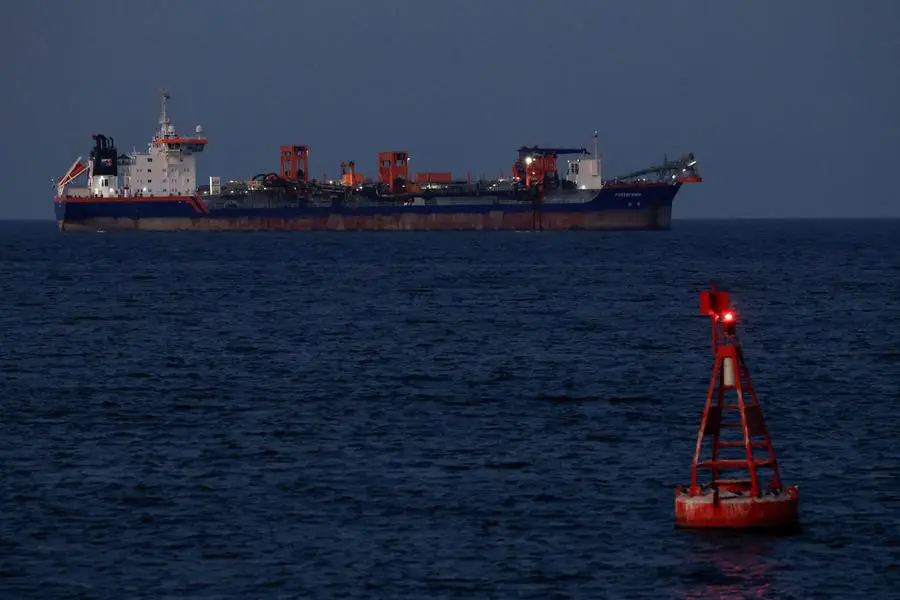
Also on Friday, France and Britain will chair a meeting of around 40 nations aimed at signalling to the U.S. that its allies are ready to play a role in restoring flows through the Strait of Hormuz once conditions allow.
"Once the dust settles the hard work begins getting the ships in and out, and getting them into the right locations. There is no doubt a normalization is still months away and the current tightness will continue to underpin the refined product market," Saxo Bank analyst Ole Hansen said.
Analysts from ING estimate that roughly 13 million barrels per day of oil flow has been disrupted by the closure of the Strait.
(Reporting by Robert Harvey in London, Helen Clark in Perth; Editing by Sonali Paul and Joe Bavier)